Open pit mining in 2026 barely resembles the dust-choked, diesel-heavy operations your grandfather knew. The industry has crossed a threshold: and there’s no going back.

Here’s the thing: autonomous equipment adoption jumped from less than 1% in 2020 to over 4% of all mining machinery today. That might sound modest until you realize we’re talking about 200-ton haul trucks rumbling through pits 24/7 without a single human behind the wheel. The economics alone are forcing every major operator to reconsider how they dig holes in the ground.
But autonomy is just one piece of the puzzle. Five distinct technologies are converging right now to reshape what open pit mining actually means: from the way we find ore to the way we move it, process it, and monitor every inch of the operation in real time.
Let’s break down what’s actually happening on the ground.
1. Autonomous Haul Trucks and Drills Are No Longer “Experimental”
Forget the pilot projects and proof-of-concept demos. Autonomous equipment has arrived at scale.
More Read

China just deployed 100 fully autonomous, all-electric haul trucks at a single open-pit coal mine. Australia’s Roy Hill iron ore operation converted 78 haul trucks to autonomous systems: creating what’s now the world’s largest fully autonomous mine. These aren’t PR stunts. These are production fleets.

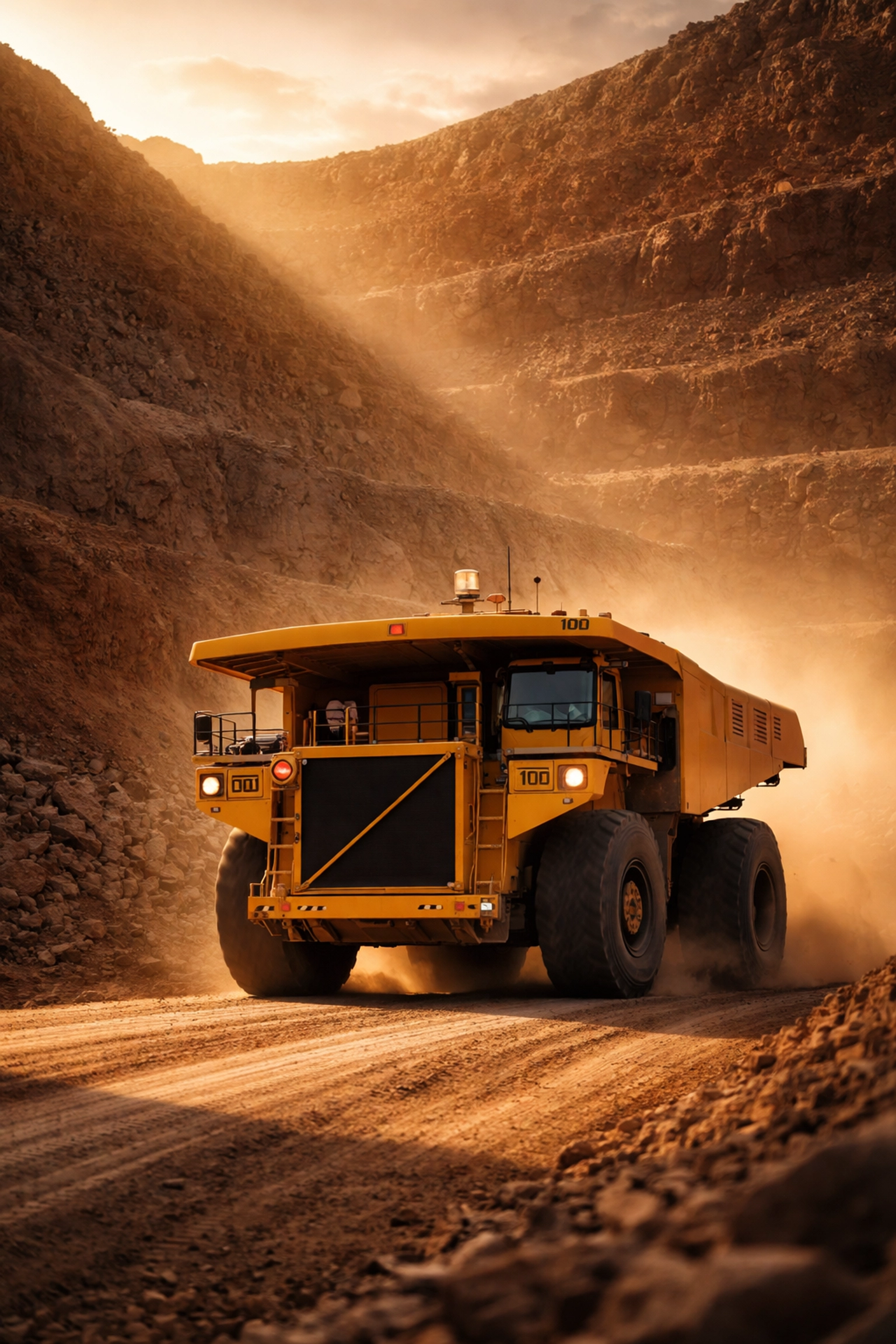
The case for autonomy comes down to three brutal realities:
More Read

Productivity climbs. Autonomous trucks don’t take lunch breaks. They don’t call in sick. They run consistent shift patterns without the fatigue-induced slowdowns that plague human operators during hour 10 of a 12-hour shift.
Safety incidents drop. Fewer humans in the pit means fewer humans getting hurt. Period.
Labor shortages become manageable. Try recruiting experienced haul truck operators to remote sites in Western Australia or northern Chile. Good luck. Autonomous systems let you run operations from central control centers in Perth or Santiago.
The equipment isn’t cheap: we’re talking millions per unit plus the infrastructure investment. But for high-volume operations moving 50+ million tonnes annually, the math works out fast.
2. Electric Haulage Is Eating Diesel’s Lunch
The electrification wave isn’t coming. It’s here.
Electric haul trucks, loaders, and drills are systematically replacing their diesel-powered predecessors across open pit operations worldwide. The drivers? Carbon targets, fuel costs, and increasingly strict air quality regulations that make diesel exhaust a liability rather than just an annoyance.
Australia, Canada, Sweden, Finland, and Chile are leading the charge: not coincidentally, these are also countries with strong renewable energy infrastructure and national policies that reward decarbonization. When you can power your fleet with solar or wind instead of $3/gallon diesel, the operational savings stack up quickly.
Some operators are even experimenting with hydrogen fuel cell trucks for the really big stuff: the 300+ ton class where battery weight becomes a constraint. The technology isn’t mature yet, but the trajectory is clear.

The air quality benefits matter more than you’d think. Open pit mines are essentially giant bowls that trap emissions. Swap diesel for electric and you’re not just cutting carbon: you’re creating a safer breathing environment for every worker on site.
3. AI-Driven Exploration and Processing Optimization
Here’s where things get genuinely interesting.
Machine learning algorithms are now analyzing geological data sets: drill results, geochemical assays, geophysical surveys: and identifying deposit targets that human geologists might miss entirely. We’re talking about pattern recognition across millions of data points, correlating subtle signatures that indicate mineralization potential.
The results speak for themselves: AI-driven exploration has cut discovery time and costs by 20-30% at operations that have fully adopted these systems.
But exploration is only half the story. AI is also transforming ore processing in real time.
Modern processing plants adjust their settings automatically based on the specific characteristics of incoming ore feed. Harder rock? Different mineral composition? Varying moisture content? The AI adapts parameters on the fly to maximize metal recovery: squeezing more value from every tonne that hits the crusher.
The old approach was essentially “set it and forget it” with periodic human adjustments. The new approach is continuous optimization, every minute of every shift.
This isn’t theoretical. Major copper and iron ore operations are already running these systems in production environments, and the recovery improvements are measurable in percentage points: which translates to millions in additional revenue annually.
4. Drones and Remote Sensing Have Become Non-Negotiable
Five years ago, drones at mine sites were still somewhat novel: useful for promotional videos and occasional survey work. Today, unmanned aerial vehicles equipped with LiDAR and hyperspectral cameras are as essential as excavators.
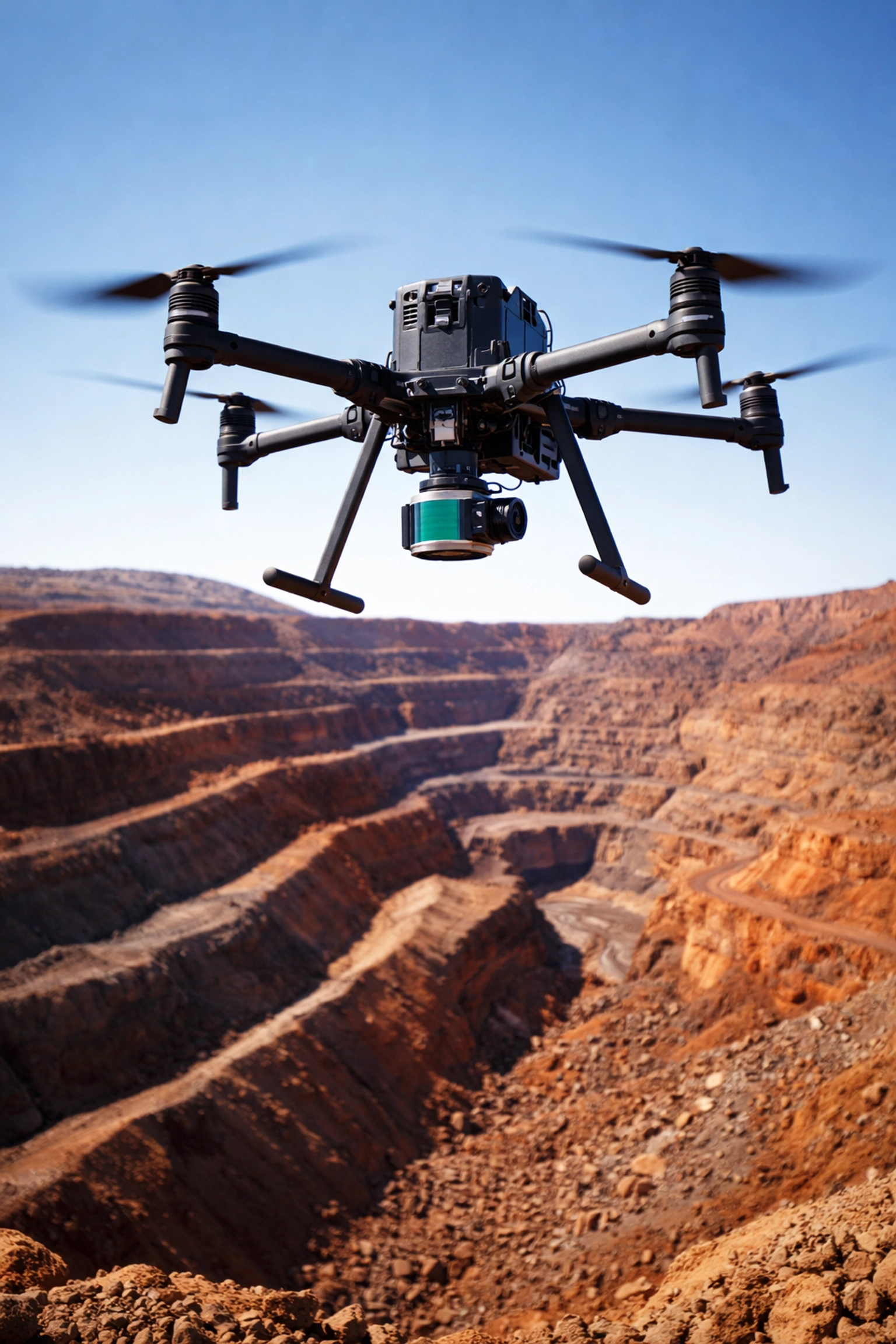
The applications are everywhere:
Pit mapping and monitoring. Drones capture high-resolution aerial imagery faster and cheaper than traditional ground-based surveying. A single drone flight can map an entire pit in hours: work that used to take survey crews days.
Stockpile measurement. Knowing exactly how much material sits in your stockpiles sounds mundane until you realize the inventory management implications. Accurate measurements mean better production planning and fewer surprises at quarter-end.
Slope stability assessment. Pit walls failing unexpectedly kills people and halts operations. Regular drone surveys with LiDAR can detect subtle movement indicators before they become catastrophic failures.
Blast pattern verification. Before detonation, drones confirm drill hole placement matches the designed pattern: catching errors that would otherwise waste explosives or leave hard toes that wreck equipment.
The hyperspectral cameras are particularly interesting for open pit mining applications. They can identify mineral signatures from the air, helping geologists track ore boundaries and grade variations in near real-time.
5. IoT Sensors and Predictive Maintenance Are Killing Downtime
Every piece of equipment in a modern open pit operation is now a data source.
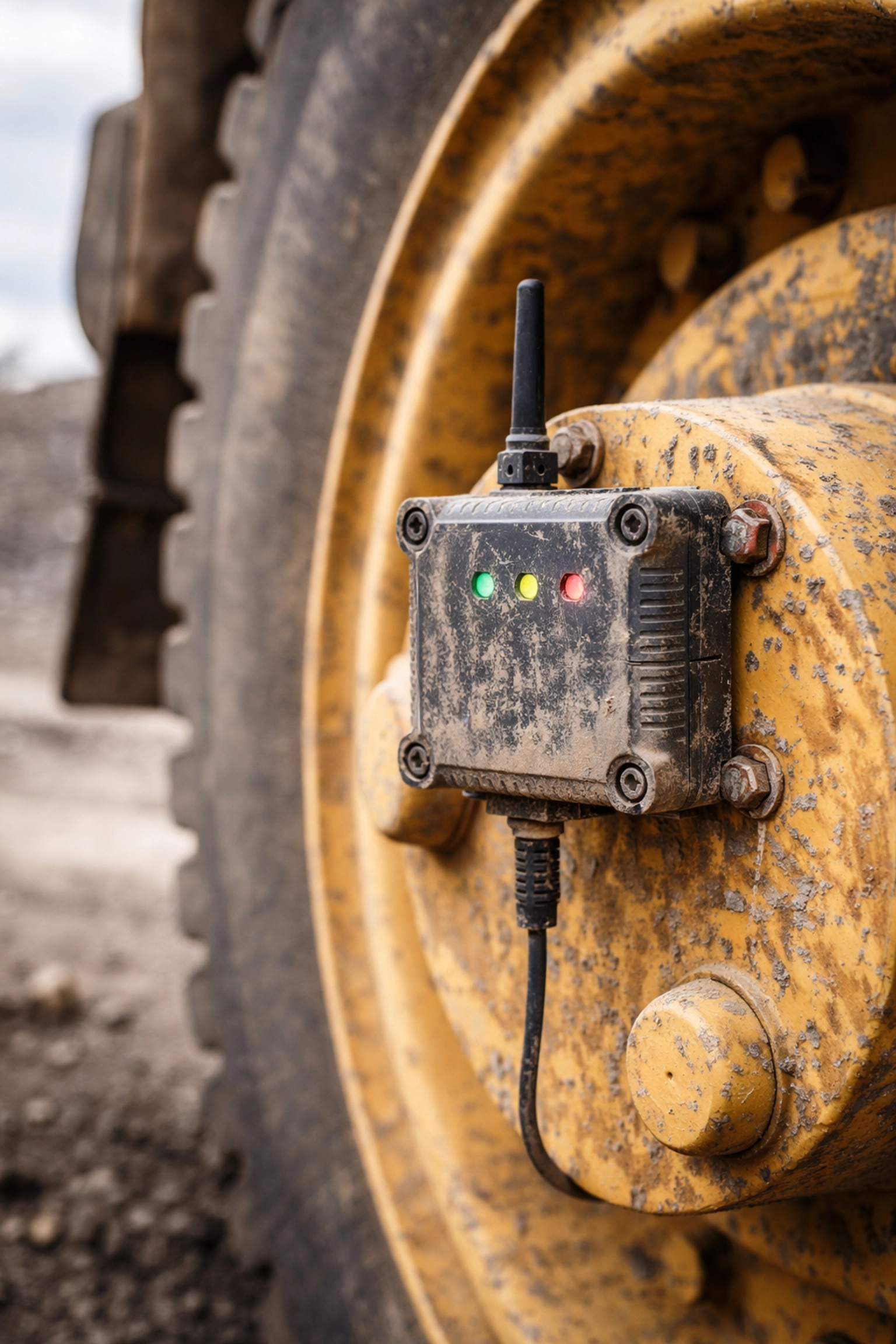
IoT sensors embedded throughout mining operations continuously stream information from haul trucks, excavators, drills, conveyor belts, pumps, and crushers. Temperature, vibration, pressure, fuel consumption, cycle times: all of it flows into central analytics platforms.
The game-changer is predictive maintenance.
Traditional maintenance schedules are conservative by design. You replace parts at fixed intervals to avoid failures, which means you’re often swapping components that still have useful life remaining. Predictive maintenance flips this approach: AI analyzes sensor data to identify the specific machines that are trending toward failure and schedules intervention just before problems occur.
The downtime savings are substantial. Unplanned equipment failures in open pit mining don’t just cost repair dollars: they cascade through the entire operation. A dead haul truck blocks pit ramps. A failed crusher halts processing. A seized conveyor backs up material flow across the site.
Smart mine systems are also increasingly integrated with renewable energy installations. Solar arrays and wind turbines at pit peripheries reduce grid dependence and cut operating costs while improving the carbon profile of operations.
The Convergence Effect
Here’s what makes 2026 different from previous technology cycles in open pit mining: these five technologies aren’t evolving in isolation. They’re converging.
Autonomous trucks generate massive data streams that feed AI optimization systems. Drone surveys provide inputs for blast pattern algorithms. IoT sensors monitor electric equipment performance in ways that diesel machinery never allowed. The whole stack reinforces itself.
Mining companies that adopt one technology find themselves naturally pulled toward the others. The infrastructure investments: connectivity, data platforms, skilled personnel: overlap enough that integration becomes more attractive than piecemeal adoption.
The operations that figure this out first will enjoy compounding advantages: lower costs, higher recovery rates, better safety records, and easier permitting in an era of intensifying environmental scrutiny.
Those that don’t? They’ll find themselves increasingly uncompetitive, stuck with legacy cost structures in an industry where margins matter more than ever.
The game has changed. The question now is whether you’re playing the 2026 version or still running the 2015 playbook.
For more coverage of mining technology and operational trends, visit Skillings Mining Review.