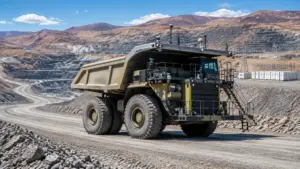
The Caterpillar 6015 hydraulic shovel continues to hold position in the mid-size mining equipment segment, serving surface operations that require digging capacities between 8 and 12 cubic meters. The machine’s specifications and operational profile make it relevant for operators evaluating loader fleet composition against current productivity benchmarks.

Core Specifications
The Cat 6015 runs on a C27 engine producing 615 kW (824 hp) gross power, with an operating weight of 140,000 kg (308,000 lb). Standard bucket capacity sits at 8.1 m³ (10.6 yd³), with maximum digging height ranging from 12.8 to 13.2 meters depending on configuration. Maximum digging reach extends 13.9 to 14.7 meters, and the unit travels at speeds up to 3.7 km/h.
These numbers position the 6015 between compact excavators and ultra-class shovels: a bracket that serves mines requiring flexibility in bench height and haul truck matching. The machine typically pairs with 90- to 136-tonne haul trucks, completing loading cycles in four to five passes depending on material density and operator technique.
Surface Mining Deployment
The 6015 finds application in coal, copper, iron ore, and aggregate operations where bench geometry doesn’t justify ultra-class equipment. Operators deploy these units in secondary loading roles, ramp development, and sites with variable geology that benefits from a smaller footprint.

More Read

Fuel consumption averages 65 to 75 liters per hour under standard loading conditions, translating to operating costs that scale with diesel prices and utilization rates. Maintenance intervals follow Caterpillar’s standard hydraulic shovel protocol, with major component rebuilds typically required between 10,000 and 15,000 operating hours depending on material abrasiveness and operator practices.

Productivity Metrics
Productive capacity varies by material. In coal applications, the 6015 moves 1,200 to 1,500 bank cubic meters per hour. Harder materials: copper ore, iron ore, overburden: see rates drop to 800 to 1,200 BCM/h. Cycle times average 28 to 35 seconds in competent material with proper truck spotting.
The hydraulic system’s response time affects these numbers. The 6015 uses Caterpillar’s electronically controlled hydraulic architecture, which provides dig force up to 1,290 kN and crowd force to 1,210 kN. These figures determine how the machine handles varying rock conditions without stalling or requiring excessive repositioning.
More Read

Efficiency Considerations
Operator visibility from the cab, hydraulic system efficiency, and bucket design all factor into real-world productivity. The 6015’s cab sits 7.2 meters above ground level, providing sightlines to truck beds and surrounding traffic. LED lighting packages improve night shift operations, which account for 40 to 60 percent of runtime at many 24-hour sites.
Electronic monitoring tracks bucket payload, cycle counts, fuel burn, and component temperatures. This data feeds into fleet management systems that correlate shovel performance with downstream crusher throughput and overall mine plan adherence. Operators watching utilization rates typically target 85 to 90 percent availability, with the remaining time allocated to scheduled maintenance and shift changes.
Competitive Context
The 6015 competes with comparable machines from Komatsu, Hitachi, and Liebherr in the mid-size hydraulic shovel category. Purchase price for a standard unit runs $4 million to $5 million depending on configuration and regional pricing. Total cost of ownership calculations include parts availability, dealer service networks, and resale value: factors that vary by geography and commodity cycle timing.
Mines evaluating the 6015 typically compare it against both larger shovels with higher capital costs and smaller excavators with lower hourly production. The decision hinges on reserve life, ore grade distribution, and whether the operation can absorb the productivity of a larger unit without creating bottlenecks at the crusher or waste dump.
What Operators Should Monitor
Fleet planners tracking the mid-size shovel segment should watch parts lead times, particularly for hydraulic components and undercarriage. Supply chain disruptions that emerged in 2024 and 2025 continue to affect component availability for mining equipment across manufacturers.
Diesel price volatility remains a variable. Each $0.10 per liter change in fuel cost shifts hourly operating expense by approximately $6.50 to $7.50 for the 6015, which compounds across multi-unit fleets running 6,000 to 7,000 hours annually.
Technology integration deserves attention. Autonomous and semi-autonomous shovel systems are advancing, though adoption in the mid-size category lags behind ultra-class units where capital intensity justifies earlier deployment. Operators should assess whether retrofit packages will be available for existing 6015 units or if future autonomy requirements will necessitate fleet replacement.
The Cat 6015’s role in the mining equipment landscape reflects broader industry dynamics: matching machine capacity to reserve characteristics, balancing capital efficiency against production targets, and managing lifecycle costs in commodity price environments that shift faster than equipment replacement cycles.