Here’s the thing nobody wants to admit: Chile’s copper dominance is built on borrowed time, and the timer is water.

While everyone fixates on permitting delays and lithium’s AI-driven demand surge, the Atacama Desert is quietly running dry. And when the world’s most productive copper region can’t access water, 2026 production targets become wishful thinking.
The math is brutal. The solutions are expensive. And the clock is already ticking.
The Driest Place on Earth Just Got Drier
The Atacama Desert holds the uncomfortable distinction of being “the driest non-polar landscape on Earth.” Some meteorological stations there have recorded zero precipitation for years at a stretch. Not low rainfall. Zero.
That’s not hyperbole. That’s geology.
More Read



Between 2009 and 2022, Chile’s surface water availability declined nearly 20 percent. In a country already operating at the edge of hydrological viability, that’s not a statistic: it’s a crisis unfolding in slow motion.
Local communities are asking existential questions: “How are we going to plant crops or feed our animals?” These aren’t abstract concerns. They’re survival calculations happening in real-time while mining operations pull millions of cubic meters of water annually from the same stressed aquifers.
More Read

The competition isn’t theoretical anymore.
Desalination: The Expensive Lifeline
Mining companies operating in the Atacama have pivoted hard toward desalination. It’s no longer optional infrastructure: it’s existential.
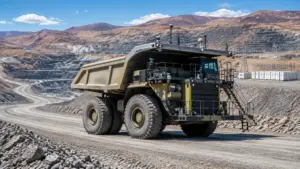
Major producers are pumping seawater from the Pacific Coast, running it through energy-intensive desalination plants, then transporting it uphill to mine sites perched at 3,000+ meters elevation. The energy costs alone are staggering. The capital expenditure to build these facilities runs into hundreds of millions per project.

Here’s where it gets uncomfortable: desalination solves the scarcity problem but creates a cost problem. And in a commodity business where margins compress during price downturns, water is becoming a fixed cost that can’t be hedged or deferred.
It’s a structural shift. Water costs per ton of copper produced are climbing year-over-year, and there’s no relief valve. The only direction is up.
Meanwhile, older operations still relying on groundwater extraction face growing regulatory pressure and community opposition. That’s not a problem you can engineer around: it’s a social license issue that can shut down operations faster than any technical constraint.
Infrastructure Vulnerabilities Are Real
The Mantoverde Desalination Plant strike in late 2025 was a wake-up call. When workers at the facility walked out, production at the connected mine immediately ground down. No water, no production. Period.
That’s the new reality for Atacama operators. Desalination plants are single points of failure. They require continuous operation, trained staff, reliable power, and maintenance windows that don’t disrupt mine operations. Any disruption cascades directly into production losses.

And here’s what makes this particularly nasty: desalination infrastructure isn’t redundant. Most operations have one primary facility. Some have backup groundwater permits, but those are increasingly restricted. If your desal plant goes offline: whether from labor action, equipment failure, or power disruption: you’re throttling production within days.
The vulnerability is structural, not operational. You can’t stockpile water the way you can diesel fuel.
The 2026 Production Calculus
Chile produces roughly 5.3 million metric tons of copper annually: about a quarter of global supply. The Atacama region dominates that output. Escondida, Collahuasi, Chuquicamata, Radomiro Tomic: these aren’t just mine names. They’re critical infrastructure for global electrification.
Global copper demand is projected to reach approximately 27 million metric tons in 2026. That’s a tight market even if Chilean production stays flat.
But it won’t stay flat if water constraints bite harder.
Operators are already factoring water availability into production guidance. Publicly, companies talk about “sustainable water management” and “efficiency improvements.” Privately, they’re running scenario planning on what happens if desalination capacity can’t scale with mine expansion plans.
The gap between official production targets and water-constrained reality is widening. And 2026 is when that gap starts showing up in actual output numbers.
The Cost Structure Is Shifting
Mining executives hate surprises. Water scarcity is delivering one: it’s fundamentally changing the cost curve for Chilean copper.
Traditional cost drivers: energy, labor, consumables: are still there. But water has moved from footnote to headline item on the cost ledger. Desalination and long-distance water transport are now material enough to affect all-in sustaining costs (AISC).

For new projects, water infrastructure is becoming a development-stage requirement rather than an operational consideration. That means longer lead times, higher upfront capital, and more project risk before first production.
For brownfield operations, retrofitting for desalinated water means capital campaigns that compete with ore body expansions and processing upgrades. CFOs are being forced to choose: invest in water security or invest in throughput. You can’t always do both.
That’s a needle that’s almost impossible to thread in a capital-constrained environment.
What Happens Next
The optimistic case: technology improves, costs come down, and desalination capacity scales smoothly ahead of demand. Mining companies execute flawlessly, communities accept the tradeoffs, and Chilean production grows modestly into 2027.
The realistic case: water constraints become a permanent drag on production growth. Some operations run below nameplate capacity during dry years. New project timelines stretch as water permitting adds 12-18 months to development schedules. Chile’s share of global copper supply peaks and begins a slow decline.
The pessimistic case: a major desalination facility suffers extended downtime during peak demand. Community conflicts over water allocation intensify. Regulatory restrictions on groundwater extraction tighten faster than replacement capacity comes online. Chilean production growth stalls entirely, and 2026 output comes in materially below guidance.

The market hasn’t fully priced in the pessimistic case yet. But operators on the ground in the Atacama know which scenario feels most plausible right now.
The Strategic Implications
Water scarcity in the Atacama isn’t just a Chilean problem: it’s a global copper problem. The concentration of production in a single hyper-arid region creates structural risk that doesn’t get enough attention in supply-demand models.
Diversification is the obvious answer. But opening new copper districts takes 10-15 years minimum. By the time alternative supply comes online, we’ll be deep into the post-2026 deficit cycle that’s already baked in.
Meanwhile, every major copper consumer: from EV manufacturers to data center operators: depends on Chilean production staying online and growing. There’s no Plan B that doesn’t involve either lower consumption or much higher prices.
The Atacama’s water problem is everyone’s copper problem. We’re just starting to realize how tight the margin for error really is.
The Bottom Line
Water availability in the Atacama isn’t a distant environmental concern: it’s an active constraint on 2026 production. Desalination provides a technical solution but introduces cost and vulnerability issues that didn’t exist a decade ago.
Chilean operators are adapting. They’re investing billions in water infrastructure. But adaptation isn’t the same as abundance, and efficiency improvements can’t conjure water that doesn’t exist.
The uncomfortable truth: copper production in the world’s most critical mining district is now fundamentally linked to the operational performance of desalination plants and the availability of Pacific seawater pumped uphill through desert pipelines.
That’s not the foundation you want for a supply chain supporting global electrification.
But it’s the foundation we’ve got. And 2026 is when we find out how solid it really is.