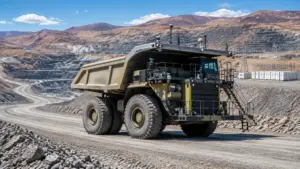
The mining industry has a new playbook in 2026, and it’s not what the exploration cheerleaders want to hear. Instead of chasing greenfield discoveries, major producers are doubling down on what they already own: pushing existing mines deeper, extending lifespans, and squeezing every ounce from infrastructure that’s already paid for.

Call it pragmatism. Call it capital efficiency. But the University of Queensland‘s latest research on 366 brownfield sites across 58 countries reveals something darker: the industry is systematically locking itself into higher-risk, longer-duration operations at locations that were never designed for this level of intensity.
Welcome to the brownfield trap.
Why Brownfield Wins Every Time
The economics are brutal and they’re not subtle. Greenfield projects: new mines built from scratch: can require 15 years to permit and develop. Brownfield expansions cut that timeline by 50% to 70%. When you’re trying to capitalize on copper at record prices or gold margins exceeding $3,000 per ounce, speed matters.
Then there’s the infrastructure advantage. Mills, processing facilities, power lines, tailings storage, transportation networks: all already in place. The upfront capital requirement for brownfield expansion is a fraction of what greenfield demands. You’re not building a mine. You’re just digging deeper at one that already exists.
More Read



Regulatory pathways tell the same story. Once a site is permitted, expansions can proceed as “business as usual” with significantly less public scrutiny. Environmental impact assessments that would take years for a new project get streamlined. Community opposition that would stall a greenfield proposal gets managed as incremental change. The regulatory machinery treats mine-life extensions and deeper excavations as routine permitting steps: not fundamental shifts in risk profile.
And the commodity environment is supercharging this trend. Large-scale mining deals are projected to rise 45% through 2026 as major producers compete for assets with established infrastructure. They’re not hunting for the next tier-one discovery. They’re outbidding each other for the right to expand what’s already producing.
More Read

The Trap: Deeper, Longer, Riskier
What looks like efficiency on the front end becomes compounding risk on the back end. The Queensland research reveals that even as the number of new mines entering production declines, overall output continues to rise. The industry isn’t diversifying its footprint: it’s intensifying at existing locations.
Push a mine deeper and you’re not just extending a timeline. You’re changing the technical, environmental, and social risk equation. Groundwater interactions shift. Geotechnical stability becomes more complex. Energy consumption per ton of ore increases. Tailings volumes grow. Community impact multiplies over decades rather than the original planned life-of-mine.
But regulatory frameworks haven’t caught up. Incremental expansions get approved using the same playbook as routine operational changes. The cumulative environmental and social impacts of extending a mine from 20 years to 40 years, or pushing extraction zones from 500 meters to 1,500 meters, rarely get reassessed as the step-change they actually represent.

The research team used satellite imagery and socio-environmental risk analysis to map these dynamics across the 366 brownfield sites. What they found should make investors uncomfortable: nearly 80% of analyzed brownfield mines operate in locations facing multiple high-risk conditions. Water scarcity. Weak governance. Limited press freedom. Indigenous land rights conflicts. These aren’t edge cases. They’re the norm.
And as mines dig deeper and stay operational longer, those risks don’t stay static: they compound. A mine that was manageable at surface levels becomes a different proposition at depth. Water management systems that worked for 15 years start failing at year 25. Communities that accepted initial disruption become less tolerant as decades stretch into generations. The regulatory assumption that brownfield expansion is low-risk ignores these cumulative dynamics entirely.
The Numbers Don’t Lie
Copper dominates brownfield capital spending at nearly 50% of total investment. That’s not surprising given copper’s central role in electrification and the supply deficit forecasts that have pushed prices to record levels. Gold follows at 17.5%, iron ore at 14.4%, and nickel at 6.3%.
These allocation patterns reflect a hard truth: the industry is betting its future on extracting more from what it already controls rather than discovering new tier-one deposits. It’s a rational response to permitting timelines, capital constraints, and commodity fundamentals. But it’s also a structural shift that concentrates operational risk and geographic exposure.

Geography tells the same concentration story. Chile leads global brownfield development with 25.2% of capital, driven overwhelmingly by copper expansion in the Atacama. The United States accounts for 11.4%: a mix of gold in Nevada, copper in Arizona, and phosphate in the Southeast. Australia holds 10.1%, split between iron ore in the Pilbara and copper-gold in South Australia.
Three countries. Half the brownfield capital. That’s not diversification. That’s dependency.
What Happens Next
The brownfield trap isn’t a problem that solves itself. The favorable economics that drive expansion today will look different when those deeper, longer operations hit technical limits or when community opposition hardens after decades of cumulative impact.
Miners pushing existing operations harder need to recalibrate risk models that were designed for shorter mine lives and shallower excavation. Water management strategies built for 20-year horizons break down at 40 years, especially in water-stressed regions like Chile or Western Australia. Tailings facilities engineered for one volume profile face different stability questions when that volume doubles.
And the regulatory gap remains unaddressed. Permitting frameworks that treat brownfield expansion as routine operational adjustments create a blind spot for cumulative risk. A mine that extends its life three times through incremental expansions never gets the same comprehensive reassessment that a greenfield project faces. The technical reality changes. The regulatory scrutiny doesn’t.

For investors, the brownfield trend looks like capital efficiency until it doesn’t. Operating margins are strong when commodity prices are high and production timelines are fast. But mines that push technical limits at depth, in water-scarce regions, with aging infrastructure, and under intensifying community scrutiny carry tail risks that don’t show up in discounted cash flow models.
The industry knows this. They’re choosing brownfield expansion anyway because the alternative: waiting 15 years for greenfield permits while competitors capture market share: isn’t a viable strategy in today’s commodity cycle. But that doesn’t make the trap any less real.
2026 marks the inflection point where brownfield dominance shifts from pragmatic strategy to structural dependency. The mines getting deeper. The operations running longer. And the risks compounding in ways that regulatory frameworks weren’t built to assess.
That’s not a prediction. That’s already happening across 366 sites in 58 countries. The data is clear. The trap is set.