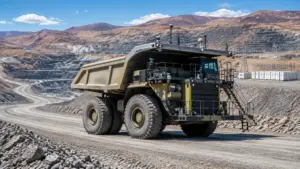
Zambia is executing one of the most aggressive copper expansion programs in Africa's history. The country is deploying roughly $10 billion in private mine capital and another $12 billion in power infrastructure to triple national copper output to 3 million metric tonnes by 2031: a production target that would vault Zambia into the top tier of global suppliers.

The math is striking. Zambia produced 890,346 tons of copper in 2025, an 8% year-over-year increase. The country is now on pace to breach 1 million tons in 2026 for the first time in decades. To hit 3 million metric tonnes in five years means sustaining a compound annual growth rate of roughly 28% through the end of the decade.
That's not incremental expansion. That's structural transformation.
The investment surge reflects both opportunity and necessity. Global copper demand is accelerating across electrification, renewable energy systems, electric vehicle production, and data center infrastructure. At the same time, supply constraints are tightening across major producing regions, creating a strategic opening for jurisdictions that can deploy capital quickly and reliably.
Zambia is betting it can be that jurisdiction.
More Read



The Capital Deployment
The $10 billion in private mine capital is concentrated among a handful of major producers. First Quantum Minerals, which accounts for nearly half of Zambia's national output, is committing $1.25 billion to construct the S3 processing plant at Kansanshi, Africa's largest copper mine. The facility is designed to process high-grade sulfide ore and extend the mine's operational life well into the 2040s.
International Resources Holding, Barrick Mining Corporation, and Vedanta Resources are also deploying significant capital across expansion projects, processing upgrades, and new mine development. The capital intensity required to triple output in under a decade is substantial. Mining operations at this scale demand not just new ore processing capacity but also expanded haul roads, tailings facilities, water management systems, and concentrator infrastructure.
More Read

The second $12 billion investment is arguably more critical. The Copperbelt Energy Corporation estimates Zambia will need to add 10 gigawatts of new power generation capacity by 2030 to support the mining expansion. That's a near-doubling of the country's current grid capacity.
Mining is energy-intensive. Copper smelting and refining require consistent, high-volume electricity supply. Zambia currently relies on hydropower for roughly 85% of its electricity generation, but the system is constrained. Seasonal water fluctuations create supply volatility, and legacy infrastructure limits transmission capacity to remote mining sites.
Without the power expansion, the production targets become unachievable. The capital allocation reflects that reality.
Why Now
The timing of Zambia's copper push is not coincidental. Global copper markets are entering a structural deficit driven by simultaneous demand growth across multiple sectors. Electric vehicles alone are expected to consume 475 kilotons of copper in 2026, up approximately 110 kilotons from 2025. Data centers supporting AI infrastructure are adding additional load. Renewable energy projects require copper-intensive transmission networks.
Meanwhile, supply-side constraints are mounting. Major producing regions face ore grade decline, permitting delays, community opposition, and aging infrastructure. New mine development timelines are stretching into decades rather than years. The gap between demand growth and supply response is widening.

Zambia is positioning itself to capture that spread. The country benefits from established mining infrastructure, a relatively stable fiscal environment, and regulatory clarity that has attracted international capital. Companies like Prospect Resources have pivoted from Zimbabwe to Zambia's copper-gold belt specifically citing the investment environment.
The geopolitical dimension is also significant. As Western economies and their allies seek to diversify critical mineral supply chains away from concentrated sources, Zambia represents an alternative sourcing option in a friendly jurisdiction. The country's copper expansion aligns with broader strategic objectives around supply chain resilience and energy transition mineralization.
The Production Pathway
To move from 890,000 tons to 3 million metric tonnes in five years requires both brownfield expansion at existing operations and greenfield development of new projects. First Quantum's Kansanshi S3 plant represents the former. The facility will process sulfide ore that previous infrastructure couldn't handle economically, unlocking reserves that were previously stranded.
Other producers are following similar playbooks. Barrick is expanding its Lumwana operation in northwestern Zambia, while Vedanta is investing in processing upgrades at Konkola Copper Mines. The combined effect is a systematic ramp-up across the country's major producing assets.
Artisanal and small-scale mining also contributes to national output, though the sector's production data is less transparent. The government has taken steps to formalize artisanal operations and integrate them into official supply chains, both to capture additional revenue and to address environmental and labor concerns.
The production pathway is aggressive but not unprecedented. Other copper jurisdictions have executed similar expansion programs when capital, infrastructure, and market conditions aligned. The question is execution risk.

Infrastructure Bottlenecks
Energy infrastructure represents the single largest execution risk to Zambia's copper expansion. The 10 GW power generation target by 2030 requires not just capital but also engineering capacity, fuel sourcing, and grid integration. Zambia is pursuing a mix of hydropower expansions, solar installations, and potential coal-fired generation to meet the load requirements.
The Copperbelt Energy Corporation's $12 billion estimate includes generation assets, transmission infrastructure, and distribution networks. The timeline is tight. Power projects often face construction delays, permitting challenges, and financing gaps. If the electricity expansion lags the mine expansion, production targets become unachievable regardless of ore availability.
Transportation infrastructure is a secondary concern. Zambia is landlocked, and copper concentrate must move by rail or truck to ports in Tanzania, South Africa, or Mozambique for export. The country is investing in rail upgrades and corridor improvements, but logistics costs remain higher than coastal producers.
Water management is another constraint. Copper processing requires significant water volumes, and the Copperbelt region faces seasonal water stress. Mining companies are investing in water recycling systems and exploring alternative sourcing options, but the issue adds operational complexity.
Economic and Fiscal Impact
The copper expansion carries significant economic implications for Zambia. The mining sector already accounts for roughly 70% of export earnings and is a major contributor to government revenue through royalties and taxes. Tripling copper output would fundamentally reshape the country's fiscal position and GDP growth trajectory.
Government officials have projected that the expansion could add several percentage points to annual GDP growth through the end of the decade. The direct employment impact is also substantial. Modern mining operations employ skilled technical workers, and the expansion is creating demand for engineers, geologists, equipment operators, and processing specialists.
The broader economic multiplier extends to logistics, equipment suppliers, construction contractors, and service providers. Mining expansions generate ancillary economic activity that often exceeds the direct operational footprint.

The fiscal challenge is managing commodity price volatility. Copper prices fluctuate based on global demand conditions, inventory levels, and macroeconomic factors. Zambia's revenue base becomes more exposed to those fluctuations as mining's share of the economy grows. The government has implemented fiscal stabilization mechanisms, but the structural dependency on copper revenue remains.
Geopolitical Positioning
Zambia's copper expansion occurs against a backdrop of intensifying competition for critical mineral supply chains. Western governments and allied economies are actively working to reduce dependence on concentrated mineral sources and diversify procurement options. Copper sits at the center of that strategy.
The U.S. Defense Logistics Agency has mapped copper as a critical supply chain risk given its centrality to electrification and renewable energy. European Union critical mineral initiatives similarly prioritize copper sourcing diversification. Zambia represents a democratic, English-speaking jurisdiction with established mining infrastructure and legal frameworks familiar to international investors.
The country is leveraging that positioning. Zambian officials have engaged with U.S., European, and allied government representatives to discuss supply chain partnerships, infrastructure financing, and technical cooperation. The pitch is straightforward: Zambia can deliver reliable, scalable copper supply from a politically aligned jurisdiction.
That positioning matters in a commodity market increasingly shaped by strategic considerations rather than purely commercial factors. Price alone no longer determines sourcing decisions when supply chain security enters the calculation.
Execution Challenges
The ambition is clear. The execution is uncertain. Tripling copper output in five years requires everything to work: capital deployment, construction timelines, equipment procurement, workforce development, power infrastructure, logistics coordination, and regulatory approvals.
That's a lot of moving parts. Mining projects routinely face delays, cost overruns, technical complications, and external disruptions. Weather events, equipment failures, labor disputes, and permitting challenges all create execution risk.
The power infrastructure timeline is particularly tight. Generation projects typically require 3-5 years from development to commissioning, and Zambia needs 10 GW online by 2030 to support the mining expansion. That leaves minimal margin for delays.
International copper markets are also dynamic. If prices decline significantly, some expansion projects may become economically marginal. If competing jurisdictions accelerate their own production ramps, Zambia faces increased supply competition. If demand growth slows due to economic conditions or technology shifts, the production expansion may outpace market absorption capacity.
The country is making the bet that copper demand will remain robust, that capital will continue flowing, and that infrastructure development will keep pace with production targets. Those are not unreasonable assumptions, but they're also not guaranteed outcomes.
Source: Skillings Mining Review (Data as of February 17, 2026)