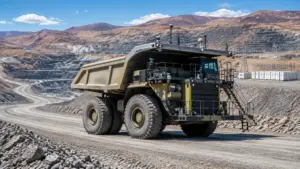
Glencore finalized a strategic land access agreement with state miner Gecamines this week, unlocking previously restricted ore zones at its Kamoto Copper Company operations in the Democratic Republic of Congo and positioning the Swiss mining giant to nearly double copper output by 2035 despite posting its third consecutive year of earnings declines.

The deal grants Glencore access to additional land in the Kolwezi mining hub that will help KCC reach an annual copper output target of 300,000 tonnes and extend the asset’s operational life into the mid-2040s. That’s a 20-year extension. In an industry struggling with structural copper deficits, extending mine life matters more than exploration promises.
“This agreement will allow us to unlock the full potential of KCC,” Glencore’s chief operating officer for Africa said in a statement accompanying the announcement. The improved land access is expected to boost productivity and lower unit costs at the operation, where Glencore holds a 75% stake acquired in 2013, with Gecamines controlling the remainder.
The DRC Footprint
Glencore operates two copper-cobalt mines in the DRC’s Lualaba Province. Kamoto Copper Company represents the partnership with Gecamines, while Mutanda Mining operates as a fully-owned Glencore subsidiary, though the DRC government is preparing to take an equity position in that asset as well.

More Read

The Kolwezi district hosts some of the world’s richest copper-cobalt deposits. It’s also one of the most politically complex operating environments in global mining. Glencore’s ability to hammer out land access agreements with state entities demonstrates operational staying power that smaller players can’t replicate.

The timing isn’t coincidental. Copper prices have been hammering record highs on supply constraints and surging demand from electrification and data center buildouts. The International Copper Study Group projects a refined copper deficit of approximately 475 kilotons in 2026, up roughly 110 kilotons from 2025 alone.
Glencore is moving to capture that upside despite near-term earnings pressure.
More Read

Scaling Despite Earnings Headwinds
The land access announcement comes as Glencore posted its third straight year of declining earnings, pressured by weaker coal prices and operational disruptions across several key assets. But management is betting on copper to carry the portfolio forward, not backward-looking coal revenues.
The DRC agreement anchors a broader capital deployment strategy aimed at scaling copper production from current levels to nearly double by 2035. Glencore estimates capital intensity at approximately $16,200 per tonne of copper-equivalent capacity: competitive in an industry where greenfield development often exceeds $25,000 per tonne.
Peak development spending could reach $4.5 billion in 2031, when four major copper projects advance simultaneously. Total group investment at peak could approach $11 billion. That’s not a rounding error. That’s a bet on structural copper tightness persisting for another decade.
Management indicated the growth plan can be self-funded through expected EBITDA growth to between $16 billion and $20 billion by 2030, avoiding the dilutive equity raises that have plagued peers attempting similar expansions.
Production Timeline and Strategy
Glencore expects 2026 to represent the low point for copper production volumes, with output beginning to climb from 2027 onward as the KCC expansion and other projects ramp. The company is essentially deferring production into a tighter market rather than chasing volume in an oversupplied environment.
That’s strategic patience in an impatient industry.

The phased approach allows Glencore to sequence capital deployment, avoid construction bottlenecks, and derisk execution by spreading major project timelines across multiple years. It also positions the company to capture higher realized prices as global copper deficits widen in the late 2020s.
Here’s the production build-out Glencore is targeting:
| Project Phase | Target Year | Incremental Capacity (kt Cu) | Cumulative Output |
|---|---|---|---|
| KCC Land Expansion | 2028-2030 | +75 | 300 |
| African Portfolio Optimization | 2029-2032 | +120 | 420 |
| Additional Brownfield Projects | 2033-2035 | +180 | 600+ |
The KCC expansion alone adds production equivalent to a mid-tier copper miner’s entire output. And Glencore is executing this without the permitting nightmares facing new mine development in North America or Europe.
The Critical Minerals Angle
The DRC operations produce cobalt as a byproduct of copper mining, positioning Glencore as a key supplier of battery-grade cobalt to electric vehicle manufacturers. As governments classify copper and cobalt as critical minerals essential to energy transition supply chains, the strategic value of African production grows.
China controls approximately 70% of global cobalt refining capacity, but Glencore’s vertically integrated operations in the DRC provide a non-Chinese supply alternative that Western automakers and battery producers increasingly value. That optionality creates pricing power.
The land access agreement strengthens Glencore’s negotiating position with both downstream customers and the DRC government, which has been increasingly assertive about capturing more value from the country’s mineral wealth.
Geopolitical Risk Management
Operating in the DRC requires navigating resource nationalism, regulatory uncertainty, and infrastructure constraints that would overwhelm most mining companies. Glencore’s willingness to engage directly with state miners like Gecamines and accommodate government equity stakes demonstrates an operational flexibility that differentiates the company from peers.
The land access deal wasn’t just a commercial negotiation. It was a geopolitical agreement that required coordination across multiple government ministries, provincial authorities, and state entities. Glencore’s ability to close these deals reflects institutional relationships built over decades of continuous operations in the region.

That matters more than most investors realize. In an industry where resource nationalism is rising globally, Glencore’s demonstrated ability to work within complex political environments provides a competitive moat that financial engineering can’t replicate.
Capital Allocation and Self-Funding
Glencore’s assertion that the copper expansion can be self-funded through EBITDA growth to $16-20 billion by 2030 assumes copper prices remain structurally supported by persistent supply deficits. That’s not a stretch given current market dynamics.
The company generated approximately $12 billion in EBITDA in 2025, meaning management is forecasting 33-67% EBITDA growth over five years primarily through volume increases and cost optimization rather than price appreciation. If copper prices strengthen beyond current levels, the financial picture improves further.
The self-funding strategy allows Glencore to avoid the debt accumulation that constrained Anglo American and forced asset sales. It also positions the company to maintain investment-grade credit ratings while executing a major capital program: critical for accessing project financing on favorable terms.
What This Means for Copper Markets
Glencore’s DRC expansion adds meaningful supply to a market where new mine development has stalled. But the timeline matters. Production growth doesn’t materialize until 2027 at the earliest, with major volume increases coming in the early 2030s.
That supply response lag is exactly what’s driving copper deficit forecasts for the next several years. Demand from electrification, data centers, and defense spending is accelerating now. Supply growth is years away.
Glencore’s strategy essentially acknowledges that structural tightness will persist long enough to justify patient capital deployment. The company is building for the 2030s, not the 2020s.
The Bigger Picture
The Gecamines land access agreement represents more than a single project milestone. It’s a signal that major miners are committing capital to long-duration copper expansion in jurisdictions that many investors consider too risky.
Glencore is making a calculated bet that operational expertise in complex environments creates excess returns that offset geopolitical risk. The DRC has copper. The DRC has infrastructure. The DRC has a government willing to negotiate with competent operators.
That combination matters more than political stability when you’re building a 20-year mine plan.
For an industry facing unprecedented copper demand from multiple sources simultaneously, Glencore’s willingness to deploy $11 billion into African copper expansion demonstrates conviction that supply deficits are structural, not cyclical.
The land access deal secures ore. The capital plan secures production growth. And the self-funding model secures balance sheet flexibility.
That’s how you scale in a supply-constrained market. Not through M&A premiums and balance sheet leverage, but through operational execution in places where others won’t go.
2026 marks the production low point. The decade ahead looks very different. And Glencore just secured the land to make that growth happen.