The United States has an aluminum problem that nobody in Washington likes to talk about in polite company. We are addicted to foreign metal. For decades, we’ve watched our domestic primary smelting capacity wither away, replaced by a reliance on imports that has reached a staggering 85% of our national demand.

That is not just a supply chain inefficiency. It is a strategic vulnerability.
But the tide is finally turning. Emirates Global Aluminium (EGA) and Century Aluminum (NASDAQ: CENX) have officially broken ground on a massive 750,000-tonne smelter in Inola, Oklahoma. This isn’t just another industrial project. It is the first new primary aluminum smelter built on American soil since 1980.
Forty-six years of silence in the American smelting sector has ended.
The 85% Stranglehold
To understand why the Inola project matters, you have to look at the brutal numbers. Right now, the U.S. produces a fraction of what it consumes. We rely on Canada, the Middle East, and elsewhere to keep our aerospace, automotive, and defense industries running.
More Read

Here is the kicker: as the world pivots toward the “shiny AI revolution” and mass electrification, the demand for high-purity aluminum is skyrocketing. You can’t build a modern power grid or a lightweight electric vehicle without it. Yet, for nearly half a century, we’ve been content to let our domestic production base rot.

The Inola facility, branded as Oklahoma Primary Aluminum, aims to shatter that dependency. By producing 750,000 tonnes annually, this single plant will more than double current U.S. primary production.
Doubling production with one site. That’s not a typo. It’s a testament to how far we’ve fallen and how aggressively we need to climb back.
More Read

The Power Couple: EGA and Century
The joint venture structure behind this project is a calculated play. EGA holds a 60% stake, bringing the heavy-duty capital and proprietary technology. Century Aluminum holds the remaining 40%, providing the domestic operational boots on the ground and a deep understanding of the U.S. regulatory and supply chain landscape.
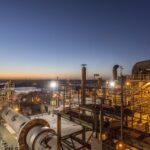
This partnership bridges a critical gap. EGA is a global titan in smelting design and construction. They aren’t just building a factory; they are importing the world’s most advanced smelting technology: their proprietary EX series: to a country that has been operating on legacy tech for decades.
This is a strategic shift similar to what we’ve seen in other sectors. For instance, the way mining ESG reporting will change the way you access capital in 2026 is forcing companies to rethink where and how they build. This isn’t about cheap labor; it’s about efficient, high-tech, and strategically located production.
Why Inola? The Logic of Location
Choosing Inola, Oklahoma, wasn’t a dart-throw at a map. The site is located at the Tulsa Port of Inola on the McClellan-Kerr Arkansas River Navigation System.
The strategic calculus here isn’t subtle:
- Logistics: Direct access to the Mississippi River system allows for the efficient movement of bulk freight.
- Energy: Smelting is an energy-intensive game. Oklahoma offers a mix of traditional and increasingly renewable energy sources that can support the massive draw of a 750k-tonne facility.
- Downstream Integration: This is where it gets interesting. U.S. Aluminum Company has already signed on to explore building a fabrication plant nearby.
This is the “multiplier effect” in action. You don’t just get 1,000 permanent jobs at the smelter; you get an entire ecosystem of fabrication and manufacturing that follows the metal. It’s exactly the kind of consolidation we’re seeing in other metal sectors, like the strategic shift in gold consolidation or the rush to secure copper reserves.

The EX Technology: Efficiency or Bust
In the smelting world, energy is the predator that kills projects. The reason U.S. smelters closed over the last 40 years wasn’t just labor costs: it was the inability to compete with the energy efficiency of newer plants overseas.
EGA is deploying its state-of-the-art EX technology in Oklahoma. This is the most advanced smelting tech ever installed in the United States. It’s designed to lower power consumption per tonne of aluminum produced while maximizing output.
But there’s a deeper layer to this. The Department of Energy’s Office of Clean Energy Demonstrations has kicked in $500 million to support the construction. That’s a massive vote of confidence: and a clear signal that the U.S. government views domestic aluminum production as a “critical metal” priority.
We are seeing a similar urgency in the copper markets, where Eldorado’s $2.8B Foran buy is seen as a move to get ahead of a looming crunch. Aluminum is no different. You can’t have a green transition without the metals to build it.
The 2026 Inflection Point
March 1, 2026, marks an inflection point for the U.S. mining and metals industry. For years, the narrative has been one of decline and outsourcing. Suddenly, we are talking about groundbreakings, 4,000 construction jobs, and a target for first production by the end of the decade.
The timeline is ambitious. Construction is slated to go full-bore through the end of 2026, with the goal of hitting the market as the global “copper crunch” and other metal shortages begin to peak.
But let’s be real: groundbreakings are easy. Commissions are hard. The industry is currently littered with projects that look great on paper but struggle with the “nasty” realities of permitting and grid integration. However, with $500M in federal backing and the technical muscle of EGA, the Oklahoma project has a better shot than most.

Market Implications and the 2030 Outlook
If this plant reaches its 750,000-tonne capacity by 2030, the U.S. aluminum market will look fundamentally different. We will still be importers, sure. But we won’t be beggars.
For investors, the Century Aluminum (CENX) play is the one to watch. This project transforms them from a domestic operator struggling with legacy assets into a partner in a world-class, tech-forward facility. It’s the kind of long-term growth play that stands out in an era where mining companies are often accused of overpaying for growth.
Meanwhile, the broader industry is watching. If Oklahoma succeeds, it provides a blueprint for “re-shoring” other critical metal processes. We’ve already seen interest in silver, copper, and tungsten properties ramping up as companies realize that domestic supply chains are the only way to insulate themselves from geopolitical volatility.
The Bottom Line
The Inola smelter is a loud, 750,000-tonne middle finger to the idea that American primary manufacturing is dead.
It’s been 50 years since we’ve seen a project of this scale. In that time, we’ve offshored our expertise, our jobs, and our security. Breaking ground in Oklahoma doesn’t fix all of that overnight. The road to 2030 is long, and the energy challenges are real.
But for the first time in nearly half a century, the U.S. is actually building something that matters in the aluminum space. It’s about time.

What Happens Next?
The focus now shifts to the construction phase and the securing of long-term energy contracts. In a world where copper prices and supply risks dominate the headlines, aluminum is quietly positioning itself for a massive comeback.
The strategic calculus is simple: you can’t disrupt geology, and you can’t build a future on imports alone. The Inola groundbreaking is the first step toward a more self-reliant, industrially capable America.
Welcome to the new reality of US metals. It’s going to be a wild ride to the end of the decade.