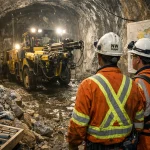
Mendoza uranium mining is a subject most local politicians would rather ignore over a glass of Malbec. For decades, the narrative in this corner of Argentina has been dictated by the “water is worth more than gold” slogan, a sentiment that calcified into Law 7722: the legislative wall that effectively mothballed the province’s massive mineral potential. But the conversation is changing. It has to.

The brutal reality is that Argentina is currently performing a high-stakes act of economic hypocrisy. The country operates three nuclear reactors: Atucha I, Atucha II, and Embalse: and it is setting records in uranium dioxide production. Yet, it imports the vast majority of its yellowcake. It’s sitting on one of the most significant uranium endowments in the Southern Hemisphere, specifically in Mendoza, while cutting checks to foreign suppliers.
The strategic calculus here isn’t subtle: energy security is finally starting to outweigh provincial protectionism.
The Jaguar Catalyst: $25 Million Says the Door is Ajar
If you want to know where an industry is headed, stop listening to the press releases and start following the capital. In 2025, Jaguar Uranium made its debut on the NYSE American, raising approximately $25 million specifically to target Argentinian assets. This wasn’t a speculative “vulture fund” play. This was a calculated move to revive two of the most historically significant uranium projects in South America: Huemul and Sierra Pintada.
Huemul was Argentina’s first uranium mine, operating from 1955 to 1975. Sierra Pintada was the last. These aren’t “greenfield” gambles where the geology is a mystery. These are proven districts with existing regional infrastructure and a legacy of nuclear industry presence.
More Read

Jaguar’s roadmap is clear: exploratory drilling is slated for late 2026 or early 2027. That’s not a distant “maybe.” That’s a fiscal calendar reality. The company is betting $25 million that the permitting shifts we’re seeing aren’t just political theater. They are betting that Mendoza is finally ready to grow up.


The Skillings Perspective: We’ve Seen This Movie Before
At Skillings, we’ve been tracking these cycles for over a century. We’ve seen jurisdictions shut their doors in a fit of environmental zeal only to quietly reopen them when the grid starts flickering or the debt starts mounting. Mendoza is currently in the “quietly reopening” phase.
More Read

The “Daily 14” expansion of our coverage isn’t just about more content; it’s about tracking these specific inflection points. The shift in Mendoza isn’t happening because people suddenly stopped caring about the environment. It’s happening because the ESG frameworks of 2026 are light-years ahead of the 1990s.
Modern mining isn’t the “nasty” business it was when Sierra Pintada was shuttered in 1998 amid court-ordered halts. Today, mining ESG reporting is a core component of a company’s valuation. Jaguar knows this. The provincial government knows this. Even the protestors, deep down, know that the “old ways” of mining are dead.
The Legislative Labyrinth: Law 7722 and the Path to “Yes”
Let’s talk about the elephant in the room: Law 7722. Passed in 2007, this law prohibits the use of certain chemicals: specifically cyanide, mercury, and sulfuric acid: in mining processes. Since uranium leaching typically requires sulfuric acid, the law was a de facto ban on uranium production.
However, the “Mendoza Uranium Opening” isn’t necessarily about repealing the law in one fell swoop. It’s about technical carve-outs and the “Malargüe District.”
Malargüe, the southernmost department of Mendoza, has a long history with mining and a population that is far more receptive to the industry than the urbanites in Mendoza City. There is a concerted effort to create a “Mining Intelligence Zone” where the restrictions of 7722 are applied with technical nuance rather than blunt-force trauma.
If Jaguar can prove: through rigorous, transparent exploration: that they can extract uranium without threatening the provincial watershed, the political cover for a permitting shift becomes a lot easier to sell.
Why 2026 is the Inflection Point
The timeline for Mendoza’s uranium reactivation is converging with a global supply crunch. As we’ve noted in our copper price forecasts, the world is desperate for the raw materials of the energy transition. Uranium is the backbone of that transition’s “baseload” requirement.
- Argentina’s Nuclear Expansion: With the ongoing development of the CAREM-25 small modular reactor (SMR) project, Argentina needs a domestic fuel source. Relying on imports for a homegrown reactor technology is a strategic failure that the current administration seems keen to rectify.
- The $25M Exploration Window: Jaguar’s 2025 capital raise gives them a two-year runway to complete geological investigation and technical studies. By late 2026, the data will be undeniable.
- Regional Competition: Mendoza is watching neighboring provinces like San Juan reap the rewards of massive copper and gold investments. While San Juan builds a future, Mendoza has been resting on its viticulture laurels. The “FOMO” (Fear Of Missing Out) in provincial politics is real.

The Sierra Pintada District: Sleeping Giant
Sierra Pintada isn’t just a mine; it’s a district. Historically, it was the powerhouse of Argentine uranium. When it was shuttered, it wasn’t because the ore ran out. It was a combination of low global prices and a localized environmentalist surge.
Today, the mineralization is known to extend well beyond the previously exploited pits. We’re talking about a polymetallic opportunity that could anchor the province’s economy for thirty years. But you can’t disrupt geology, and you certainly can’t ignore the environmental remediation that still needs to happen at the old site.
The irony? Reactivating the site is likely the fastest way to fund and complete the environmental cleanup of the legacy tailings.
The “Daily 14” Context: Broadening the Scope
This story is a perfect example of why we’ve expanded our daily content at SMR OPS 100K. You can’t understand the uranium market by looking at a price chart in a vacuum. You have to look at the intersection of NYSE capital raises, provincial legislation in Argentina, and global nuclear trends.
Whether it’s Rio Tinto doubling down on lithium or the ongoing legal rifts between Newmont and Barrick, the mining industry in 2026 is defined by these complex, interlocking narratives.
What Happens Next?
Don’t expect a ribbon-cutting ceremony in Mendoza tomorrow. The process will be slow, litigious, and noisy. But the momentum is undeniably shifting.
Jaguar Uranium is currently the tip of the spear. If they successfully navigate the permitting process for their 2026/2027 drilling campaign, the floodgates will open. Other juniors and mid-tiers are already scouting the perimeter, waiting to see if the “Mendoza Opening” is a genuine policy shift or a fleeting political promise.
Here is the outlook for the remainder of 2026:
- Q3 2026: Finalization of Environmental Impact Assessments (EIAs) for the Huemul project.
- Q4 2026: Potential legislative “clarifications” regarding the use of leaching agents in the Malargüe district.
- Early 2027: First modern exploratory drill rigs on the ground at Sierra Pintada.
The Bottom Line
Mendoza is at a crossroads. It can continue to be a one-trick pony, dependent on the grape and the tourism dollar, or it can reclaim its title as a strategic energy hub.
The “vineyards” aren’t going anywhere. But the “void” left by the absence of mining is becoming too expensive to ignore. Argentina’s energy security depends on Mendoza’s ability to reconcile its environmental fears with its economic reality.
For the operators and investors watching this space, the message is clear: watch Malargüe. If the door opens there, it opens for the whole province. And based on the current trajectory, that door isn’t just being knocked on: it’s being unlatched.
The clock is ticking. 2026 is the year we find out if Mendoza has the stomach for the nuclear age, or if it will keep importing its future from abroad.

For more deep dives into the 2026 mining landscape, check out our full sitemap or explore our latest lithium rebound analysis.