Everyone talks about the $2,500+ gold price. Analysts obsess over the Fed, the dollar, and geopolitical jitters. But here is the reality that rarely makes the headlines: the easy gold is gone. We are no longer in the era of "nugget hunting" or simple panning. Today, the mining industry is fighting a war of attrition against declining ore grades and increasingly complex mineralogy.

Gold extraction has transitioned from a mechanical process to a high-stakes chemical and digital discipline. In 2026, the difference between a profitable Tier-1 asset and a multi-billion dollar write-down comes down to recovery percentages. A 2% gain in efficiency isn't just a technical achievement; it is tens of millions of dollars in free cash flow.
If you aren't looking at the metallurgy, you aren't looking at the business.
The Cyanide Hegemony: Why It Still Rules
Despite the environmental pushback, cyanide leaching remains the undisputed heavyweight of gold processing. It is the industry standard for a reason: it works. The process: cyanidation: dissolves gold from the ore into a solution using a dilute sodium cyanide mixture.
But modern extraction has moved beyond simple tank leaching. We are seeing a massive shift toward Carbon-in-Pulp (CIP) and Carbon-in-Leach (CIL) circuits. The logic is simple: by introducing activated carbon directly into the slurry, the gold is "adsorbed" onto the carbon particles.
More Read



The strategic calculus here isn't subtle: CIL is increasingly preferred for ores with "preg-robbing" characteristics: where the ore itself contains organic carbon that would otherwise steal the gold from the solution. Companies like Lundin Gold have refined these recovery flows to maximize output in high-grade environments. They aren't just mining; they are managing a massive chemical balance sheet.
Flotation: Dealing with the Refractory Bottleneck
When the gold is locked inside sulfide minerals like pyrite or arsenopyrite, cyanide alone won't touch it. This is "refractory" ore, and it is the bane of the modern gold miner. Enter flotation.
More Read
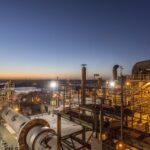
Flotation is a physico-chemical separation process. It doesn't dissolve the gold; it concentrates it. By using specific reagents that make gold-bearing particles "hydrophobic" (water-fearing), miners can hitch those particles to air bubbles. The bubbles rise to the surface, forming a mineral-rich froth that is skimmed off.
In 2026, the industry is seeing a resurgence in flotation-cyanidation combinations. We are seeing operations concentrate the gold first, then use high-pressure oxidation (POX) or bacterial leaching to "break" the sulfide cage before final cyanidation. It is expensive. It is energy-intensive. But with grades dropping, it is the only way to move the needle.
Gravity Separation: The Old Guard’s New Teeth
There is a common misconception that gravity separation is for small-scale miners with sluice boxes. That’s a mistake. Modern centrifugal concentrators: think Falcon or Knelson concentrators: are engineering marvels. They use high G-forces to separate heavy gold particles from lighter gangue material.
The beauty of gravity is its cost. No chemicals. Low power. Per ounce, it is the cheapest recovery method on the planet. Most modern plants now install a gravity circuit at the "head" of the mill to catch coarse gold before it ever hits the cyanide tanks. This reduces the residence time needed in the leaching circuit and lowers the overall reagent cost.
We recently saw Macmahon selected for the Poboya underground project in Indonesia, an operation where complex underground mineralogy requires a sophisticated blend of these traditional and modern recovery steps.

The Efficiency Crisis: 95% vs. 70%
Here is the data point that should keep CEOs awake at night: recovery rates are diverging.
In simple alluvial deposits, we are seeing recovery rates exceeding 95%. That’s the dream. But for the refractory, deep-seated deposits that represent the future of the industry, that number is dropping toward 70-80%.
That 15-20% gap is the "innovation tax." To bridge it, the industry is leaning into:
- Automated Sensors: Real-time analysis of pulp density and reagent concentration.
- AI-Driven Grinding: Using machine learning to optimize the "liberation" of gold particles during the crushing phase.
- Tailings Retreatment: Using modern tech to extract gold from waste piles that were abandoned decades ago because the technology didn't exist to process them.
It isn't just about finding more gold; it's about not throwing away the gold you've already found.
The Sustainability Pivot: Thiosulfate and Non-Toxic Alternatives
The industry's "social license to operate" is no longer a buzzword; it's a permit requirement. We’ve seen 7 mistakes companies make with mining ESG reporting, and at the top of that list is the failure to address chemical waste.
Cyanide is effective, but it is a PR nightmare and a regulatory lightning rod. This has opened the door for thiosulfate leaching. Thiosulfate is non-toxic and works exceptionally well for ores with high copper content (which interferes with cyanide).
Newer breakthroughs, like the trichloroisocyanuric acid method developed at Flinders University, are hitting the pilot stage in 2026. By using saltwater-activated reagents, these methods can dissolve gold and recover it using recyclable polymers. This isn't just "green mining": it's an attempt to bypass the massive costs associated with cyanide detoxification and tailing dam maintenance.

2026 Outlook: The Inflection Point
As we look at the remainder of 2026, gold extraction is entering a period of forced evolution. The "easy" oxide ores are largely depleted in Tier-1 jurisdictions. The future is deep, it is refractory, and it is technically punishing.
The strategic calculus is shifting toward "modular" processing. Instead of building massive, inflexible $2 billion mills, operators are looking at flexible circuits that can be tuned as the ore body changes. We see this trend mirrored in other commodities, like Rio Tinto’s expansion in the lithium space, where processing flexibility is the key to managing variable ore grades.
Furthermore, the integration of eco-friendly mining technology is no longer an optional "extra." It is a core component of the extraction flow. If you can’t get the recovery rates up while keeping the chemical footprint down, the project simply won't get funded.
The Bottom Line
Gold extraction in 2026 is no longer just about metallurgy. It’s about energy management, chemical precision, and data integration. The companies that will win this decade aren't necessarily those with the most gold in the ground: they are the ones with the most gold in the vault after the recovery losses are tallied.

The days of 95% recovery as a "given" are over. We are in the era of the "hard ounce." Every fraction of a percent matters. Every reagent drop counts.
As the industry converges at critical industry conferences, the conversation has shifted. It’s no longer just "where is the gold?" It’s "how much of it can you actually keep?"
In the current market, that is the only question that matters.