The invisible hand of the market is currently being choked by a copper wire.

Most analysts spent the last three years talking about the “energy transition” like it was a slow, manageable shift. They were wrong. As of March 2026, the copper market hasn’t just tightened: it has fractured. The structural deficit we are facing today, projected to sit between 150,000 and 330,000 tons of refined copper this year, is the final nail in the coffin for traditional commodity cycle investing.
If you’re still waiting for the “correction” to buy back into major miners, you’re likely going to be left standing on the sidelines while the industry moves without you. The old playbook: buying low on cyclical dips and selling high: is dead. We are now in an era of policy-driven demand that doesn’t care about your P/E ratios or interest rate whispers.
There’s not enough to go around. It’s that simple.
The AI Squeeze and the Defense Trap
Nobody wants to admit that our “shiny AI revolution” is actually a massive industrial drag. Every time a tech giant announces a new data center cluster for generative AI, they are effectively placing a massive, non-negotiable order for copper.
More Read

AI infrastructure and the massive grid electrification required to support it are driving demand that is fundamentally decoupled from the general economy. Even if consumer spending slows down, the build-out of the AI backbone continues. These companies have deeper pockets than any manufacturer in history, and they will outbid the construction and automotive sectors for every ton of cathode available.


But it’s not just Silicon Valley. Defense spending is surging. In a world of increasing geopolitical friction, the “electrification of the battlefield” means more copper in everything from guided munitions to tactical EVs. When defense and national security become the primary drivers of demand, price sensitivity disappears. Governments will pay $12,000 per metric ton: or more: because they have to. This makes the 2026 deficit structural, not cyclical.
More Read

The Supply Side: Geology Doesn’t Care About Your Stock Price
The math for 2026 is grim. Mine supply growth is projected at a measly 1.4%. That is roughly 500,000 metric tons lower than what analysts were forecasting just twelve months ago.
Why the shortfall? Because you can’t disrupt geology.
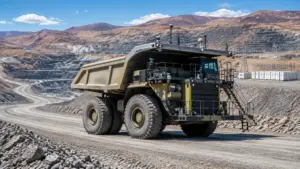
We are seeing a brutal “chickens-coming-home-to-roost” moment for the majors. Ore grades are declining at the world’s largest pits. You have to move more rock, use more energy, and spend more capital just to keep production flat. To make matters worse, roughly 6.4 million tonnes of production capacity: a staggering 25% of global output: is currently stalled.
These projects aren’t waiting for higher prices; they are trapped in ESG purgatory or regulatory quagmires. We’ve seen this play out recently with Chilean copper output hitting five-month lows, despite the resolution of high-profile strikes. The issues are deeper than labor disputes; they are about aging infrastructure and the sheer difficulty of extracting metal from the ground in 2026.
The Geopolitical Fracturing of Copper
If you’re investing in copper miners today, you aren’t just a commodity investor; you’re a amateur political scientist. The geographic concentration of copper is becoming a strategic liability. Chile and Peru, the traditional backbones of global supply, are struggling.
In Chile, the impact of recent election cycles on mining policy has created a cloud of uncertainty that has throttled long-term capital expenditure. Investors are realizing that the “safe” jurisdictions of yesterday are the “risky” ones of today.
This has forced the market to look elsewhere, leading to a surge in interest in the “frontier” regions. Africa has emerged as the strategic anchor for the 2026 supply chain. The Lobito Corridor investments are no longer just “nice-to-have” development projects; they are the literal lifelines for Western copper supply.
However, this shift brings its own set of headaches. Resource nationalism is on the rise. We’ve identified 15 countries where mining projects just got riskier, and many of them are copper-rich. When a government realizes they sit on the “new oil,” they tend to want a much bigger piece of the pie. Just look at the Oyu Tolgoi mine update: revenue share demands are the new normal.
Inventory Geopolitics: The Record Buffer
Here is the kicker: traditional supply buffers are being weaponized.
As of early 2026, US COMEX inventories hit a record 503,400 metric tons. That sounds like a safety net, right? Wrong. That inventory isn’t there to smooth out market volatility; it’s being hoarded by traders and entities anticipating tariffs and trade wars.

This geopolitical fracturing of inventories means that even if there is copper “on the books,” it might not be available to the factory in Ohio or the battery plant in Germany. We are moving toward a “just-in-case” supply model, which adds a permanent scarcity premium to the price. When you combine this with the 2026 Critical Minerals Scoreboard, it’s clear that copper is the most vulnerable player on the field.
How to Invest When the Rules Have Changed
The 2026 copper deficit changes the way you should look at your portfolio. You can no longer just buy the “Big Four” and hope for the best. Here is how the strategy has shifted:
- Value the Permit, Not the Ore: In 2026, a ton of copper in a permitted, ESG-cleared project in a Tier-1 jurisdiction is worth five times more than a ton of copper in a “giant” discovery that will take 15 years to develop. The market is rewarding the “Permit-to-Production” pipeline speed over total resource size.
- Watch the “AI-Adjacent” Miners: Look for companies that have direct off-take agreements or strategic partnerships with tech giants. These miners are essentially being “pre-paid” to produce, insulating them from broader market volatility.
- Jurisdiction is the New Alpha: The “safe havens” are fewer than they used to be. You need to be looking at projects that have clear government backing, such as those benefitting from the US Senate’s new critical minerals law.
- The Substitution Myth: Analysts like to say high prices will lead to aluminum substitution. Sure, for low-end wiring, that happens. But you can’t put aluminum in a high-performance AI chip or a high-density EV motor without sacrificing efficiency. The “substitution” argument is a crutch for people who don’t understand the tech.
The Bottom Line
The projected copper price of $12,000+ per metric ton for 2026 isn’t a “bull case” anymore; it’s the base case. The deficit is no longer a looming threat: it is the current reality.
As we track the commodities surge following the Fed’s latest signals, it’s clear that copper is leading the pack. Unlike lithium, which has seen its own volatile price outlook, copper’s demand is too broad and its supply too constrained for a simple “boom-bust” cycle.
Welcome to the new reality. There’s not enough metal, there are too many buyers, and the geography of mining has never been more complicated. If your investment strategy hasn’t adapted to this structural shift, you aren’t just behind the curve: you’re about to be flattened by it.