Caption: The era of commodity-driven price volatility is giving way to government-backed stability in the critical minerals sector.

The era of the “cheapest wins” mining model is officially dead. For decades, the global market operated on a simple, brutal logic: if China could produce it for less, Western miners didn’t stand a chance. We called it the race to the bottom. In reality, it was a slow-motion surrender of industrial sovereignty.
But as we cross into the second quarter of 2026, the script has been flipped. We’ve entered the Price-Floor Era.
Mining is no longer just about digging dirt; it’s about market design as a tool of national security. Governments and heavy industry players in the U.S., Japan, and the EU are finally realizing that you can’t build a “green revolution” on the shifting sands of spot market volatility. They are now backing miners with guaranteed price floors, long-term offtakes, and strategic buffers.
The race to the bottom is over. The race for stability has begun.
More Read

The China Playbook and Why It Finally Failed
To understand why 2026 marks the inflection point, you have to look at the wreckage of the last decade. China’s strategy was never a secret, but it was incredibly effective: compress prices, flood the market, and wait for Western juniors to bleed out. Once the competition was bankrupt, the supply chain was theirs.

China’s critical minerals export controls were the final wake-up call. By the time 2025 rolled around, the “free market” in rare earths and uranium had proven to be a liability, not an asset.
The strategic calculus here isn’t subtle: if you want a domestic supply chain, you have to make it investment-grade. You can’t ask a pension fund to back a multi-billion dollar mine when the price of the commodity can be halved overnight by a policy shift in Beijing.
More Read

So, the floors went in.
Rare Earths: The $110/kg Line in the Sand
The most visible sign of this shift is the landmark deal between Lynas Rare Earths and Japan. For years, NdPr (Neodymium-Praseodymium) prices swung wildly. No more. The establishment of a $110 per kilogram price floor for NdPr: backed by Japanese strategic interests: has effectively de-risked the sector.
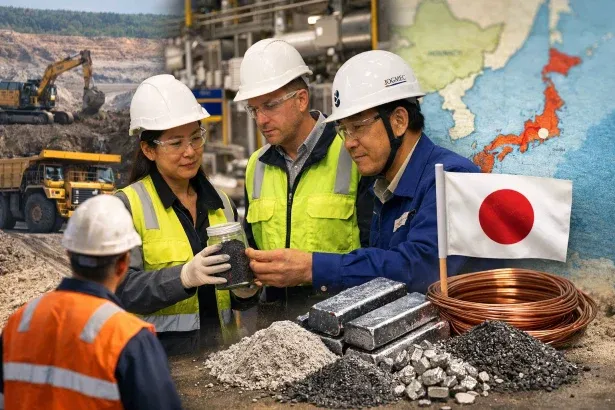
This isn’t a subsidy in the traditional sense. It’s a hedge. When prices are high, Lynas reaps the rewards. When China tries to tank the market, the floor holds. This allows for long-cycle planning that was previously impossible.
We’re seeing the same logic play out stateside. Deals involving MP Materials and companies like USA Rare Earth are no longer just about the ore in the ground. They are about the “market design” that ensures the Round Top project or Mountain Pass stay viable even if the spot price dips.
The U.S. government is now treating “market design” as a weapon. Multiple agencies have developed a broader critical minerals price floor system, utilizing contracts-for-differences and strategic purchasing. They are signaling to the world that they will no longer allow Western production to be priced out of existence.
Uranium: Energy Security as a Price Guarantee
If rare earths are the brains of the modern economy, uranium is the heart. The shift here has been even more dramatic.
For years, the uranium market was a graveyard of “care and maintenance” signs. Then came the realization that the “shiny AI revolution” and the push for SMRs (Small Modular Reactors) require an astronomical amount of carbon-free baseload power.
Cameco and Kazatomprom aren’t just selling to the highest bidder anymore. They are locking in long-term contracts that prioritize volume and price certainty over short-term spot gains. In the U.S., the Department of Energy’s $2.7 billion commitment to expand domestic uranium enrichment is effectively a massive, decade-long price floor.

The DOE isn’t just buying uranium; they are buying the existence of a domestic industry. This is a fundamental shift in how mining is financed. When the government designates a mineral as vital for energy security, the downside risk evaporates for investors.
Suddenly, uranium isn’t a speculative play. It’s a utility play.
Why 2026 is the New Benchmark
What makes 2026 the definitive year for this trend? It’s the convergence of three brutal realities:
- Supply Inelasticity: You can’t “disrupt” geology. A new mine takes 10 to 15 years to go from discovery to production. We are now at the point where the deficit is no longer a forecast: it’s the reality.
- The End of Globalization: The “just-in-time” supply chain has been replaced by “just-in-case.” Manufacturers are willing to pay a premium for minerals that aren’t subject to geopolitical blackmail.
- The Cost of Capital: With interest rates remaining “higher for longer” compared to the 2010s, the margin for error in mining has vanished. Without a price floor, the cost of capital is simply too high for most new projects.
Let’s look at the numbers. In 2026, we’re seeing NdPr demand up roughly 110 kilotons from 2025 alone. Uranium requirements for 2026 are tracking at levels not seen since the pre-Fukushima era. These aren’t rounding errors. These are structural deficits.

The strategic calculus isn’t just about avoiding a shortage. It’s about preventing a total industrial paralysis. If a car manufacturer can’t get the magnets for its EV motors or a utility can’t get the fuel for its reactors, the economic damage is orders of magnitude higher than the cost of a $110/kg price floor.
The Risks: Inflation and Innovation
Of course, this isn’t a risk-free utopia. Building a floor under commodity prices is, by definition, inflationary. When you decide that you won’t buy the cheapest available material because of where it comes from, you are choosing to pay more.
There’s also the risk of “gold-plating” the industry. If miners are guaranteed a profit regardless of efficiency, the incentive to innovate can dwindle. However, the current crop of projects: from Ghana’s bauxite initiatives to high-tech copper processing: suggests that the pressure to perform remains high.
The real danger is a fragmented market where different “blocs” have different floors, creating a messy, inefficient global trade environment. But for the miners on the ground, that’s a secondary concern. Their primary concern is survival. And for the first time in a generation, survival is being underwritten by national policy.

The Inevitable Conclusion
The Price-Floor Era is the mining industry’s coming-of-age moment. We are moving away from the “wild west” of spot price speculation and toward a structured, strategic industrial base.
Miners are no longer just commodity sellers; they are critical infrastructure providers.
The deals we’re seeing today: Lynas, Cameco, MP Materials: are the blueprints for the rest of the decade. Any junior miner looking to get a project funded in 2026 better have an offtake agreement that looks like a floor, or they’ll find the capital markets have a very short memory for “market-driven” promises.
The race to the bottom has ended because we finally realized where that bottom leads: a complete reliance on a single, increasingly hostile supplier. In 2026, stability is the only currency that matters.
The floor is set. Now, let’s see who can actually build on it.