The prevailing narrative about mining in Chile has been one of slow-motion paralysis. Most analysts will tell you the country is a graveyard for junior capital, strangled by a state that wants a piece of every pie and a regulatory maze that has no exit. They’re wrong.

CleanTech Lithium (CTL) just proved it.
The signing of the Special Lithium Operating Contract (CEOL) with Chile’s Ministry of Mines for the Laguna Verde project isn’t just another corporate update. It’s a loud, definitive answer to the question of whether Western juniors can actually operate under President Boric’s National Lithium Strategy. A 40-year term. Contractual certainty with the Chilean state. Total de-risking of the most contested part of the lithium cycle: the right to exist.
This isn’t just a win for CTL. It’s a roadmap for the entire 2026 critical minerals scoreboard.
The 40-Year Shield: Why Term Length Matters
In mining, time is the only currency that truly matters. Most juniors are lucky to get a permit that lasts long enough to satisfy a single bankable feasibility study. CTL just secured a four-decade runway.
More Read

For Laguna Verde, this 40-year CEOL is the “Holy Grail.” It provides the stability required to attract the massive capital expenditures necessary for Direct Lithium Extraction (DLE) at scale. When you’re looking at a resource of 1.9 million tonnes of lithium carbonate equivalent (LCE), you aren’t building a mine; you’re building a generational asset. You don’t do that on a 10-year handshake.

The strategic calculus here isn’t subtle: by granting a 40-year term, the Chilean government is signaling that they are finally ready to move past the rhetoric and into production. They need the royalty revenue. CTL needs the security. It’s a marriage of necessity that removes the “nationalization” bogeyman from the table.

More Read

De-Risking the “Chile Discount”
For the last three years, any company with “Lithium” and “Chile” in their name has traded at a brutal discount. Investors were terrified of the “Kast vs. Boric” fallout and the shifting sands of Chile’s mining policy.
But here is where the narrative shifts. The CEOL is a binding legal contract. It isn’t a permit that can be revoked at the whim of a local bureaucrat. It is a state-level commitment. For CleanTech Lithium, this move transforms their balance sheet from a speculative exploration play into a de-risked infrastructure project.
The market has been waiting for a “transformational event.” This is it. While other explorers are fleeing difficult jurisdictions: look no further than the Western uranium exodus from Kazakhstan: CTL has doubled down on Chile and won. They’ve traded a bit of upside for the ultimate prize: the right to stay.
Laguna Verde by the Numbers: 1.9Mt of Leverage
Let’s talk about the rock. Or, more accurately, the brine.
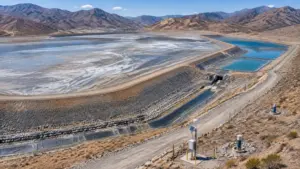
Laguna Verde isn’t just a speculative plot of land. The updated resource estimate stands at 1.9 million tonnes of LCE. Of that, 0.84 million tonnes are in the Measured and Indicated category.
- 1.9Mt LCE Resource: That is a top-tier global asset.
- 0.84Mt M+I: This is the high-confidence core that backs the 40-year plan.
- 99.78% Purity: CTL’s pilot plant already produced battery-grade carbonate back in late 2024.
That purity level is critical. As the lithium forecast for 2026 shows, the market is no longer interested in “technical grade” sludge. If you can’t produce battery-ready material, you don’t have a project. CTL has already cleared that hurdle. The CEOL simply provides the legal vessel to carry that technical success to the finish line.

The DLE Factor: ESG as a Tactical Weapon
You can’t talk about lithium in Chile without talking about water. The old-school evaporation pond model is essentially dead in the eyes of the Chilean public and the current administration. It’s too slow, too thirsty, and too visible.
CleanTech Lithium has leaned into Direct Lithium Extraction (DLE) since day one. This wasn’t just an engineering choice; it was a political one. DLE allows for the reinjection of brine, maintaining the integrity of the salar’s water table.
This technological alignment with the state’s environmental goals is exactly why CTL was at the front of the line for a 40-year CEOL. They didn’t fight the new “green” reality; they used it as a shield. In a world where mining ESG reporting mistakes can sink a multi-billion dollar project overnight, CTL’s approach should be studied by every developer in the Lithium Triangle.
The Path to Production: Q2 2026 and Beyond
Now that the CEOL is inked, the clock starts ticking on the Final Investment Decision (FID). The company is currently barreling toward the publication of its Preliminary Feasibility Study (PFS).
Usually, a PFS is a “nice to have” for a junior. For CTL, it’s the firing pin. With the 40-year contract in place, the PFS will be evaluated through a completely different lens by institutional lenders. The risk premium has just been slashed.
Expect the following milestones to dominate the next 18 months:
- PFS Publication: Confirming the economics of a 20ktpa+ operation.
- Strategic Partner Search: Now that the CEOL is secured, major OEMs (think Volkswagen, Ford, or Samsung) will be much more comfortable taking an equity stake.
- Environmental Impact Assessment (EIA): The final local hurdle, made significantly easier by the DLE-reinjection model.
The strategic calculus here is simple: CTL has the resource, they have the tech, and now they have the state’s permission for the next four decades. That’s a trifecta you rarely see in the junior lithium space.

Chile vs. The World: A Safe Haven?
It’s ironic. A year ago, Chile was seen as a high-risk jurisdiction due to resource nationalism. Today, compared to the chaos in African bauxite or the regulatory whiplash in North America, a 40-year contract with the Chilean state looks like the safest bet on the board.
While copper output in Chile hits five-month lows due to aging assets and labor disputes, the lithium sector is being reborn as a high-tech, state-partnered industry. CTL is the poster child for this new era.
The Verdict
CleanTech Lithium’s 40-year CEOL is a transformational de-risking event. Period.
It ends the existential dread that has haunted the project’s valuation. It proves that the Chilean government is willing to play ball with companies that respect their environmental and social mandates. And most importantly, it clears the path for Laguna Verde to become one of the most significant lithium producers in the Western Hemisphere by the end of the decade.
The “Chile Discount” for CTL is officially dead. Now, the real work: and the real value creation: begins.
The strategic window for lithium is shifting. Demand is being driven by the AI revolution’s energy needs and the relentless push for EV supply chain independence. CTL just positioned itself at the absolute center of that vortex.
2026 is the inflection point. Those who ignored the signals in Chile are about to find out how expensive that mistake was.