Since 1912, Skillings Mining Review has tracked the tectonic shifts of the extractive industries. Over 114 years of history, we’ve seen speculative bubbles, post-war reconstructions, and the meteoric rise of China. But what we are witnessing in March 2026 is fundamentally different.

The market has spent the last decade treating copper like a cyclical commodity: a metal that swings with the ebbs and flows of global manufacturing. That era is dead. Copper has undergone a structural reset, blowing past the $13,000 per tonne mark not as a temporary peak, but as a definitive new floor.
The driver isn’t just a recovery in global trade. It’s a collision between two of the most copper-intensive shifts in human history: the total overhaul of the global energy grid and the ravenous, unyielding expansion of AI infrastructure.
Welcome to the new reality. If you’re waiting for a “correction” back to 2023 levels, you’re going to be waiting a long time.
The AI Collision: More Than Just “Tech”
The narrative around copper for the last five years was dominated by Electric Vehicles (EVs). While EVs remain a massive demand sink, the shiny AI revolution has suddenly accelerated the timeline.
More Read

AI data centers are not just about chips and software; they are massive physical machines that require incredible amounts of power and cooling. To move that power, you need copper. Lots of it. We’re talking about massive busbars, complex cooling systems, and the underlying electrical grid upgrades required to keep these “brain factories” humming.

The demand profile is shifting from “consumer discretionary” (cars and gadgets) to “critical infrastructure.” You can delay buying a new car. A sovereign nation or a tech giant cannot easily delay building the AI infrastructure that determines their future competitiveness. This creates “inelastic demand”: the kind of demand that pays whatever it takes to secure supply.

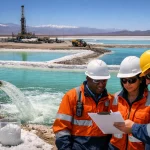
Operational safety and industry intelligence drive 2026 mining strategies.
More Read

The $13,000 Floor: Why This Isn’t a Bubble
UBS recently raised its December 2026 target to $13,000 per tonne, and frankly, they’re just catching up to the ground truth. The structural tightness in the market is no longer a forecast; it’s a lived reality for procurement officers.
Look at the numbers. We are staring down a projected 407,000-tonne deficit for 2026. This isn’t a rounding error. It’s a crisis. The market is screaming for refined metal, but the supply-side struts are buckling.
The most telling metric? Treatment and Refining Charges (TC/RCs). For those not in the weeds: these are the fees miners pay smelters to turn ore into metal. When ore is plentiful, fees go up. Right now, settlements have effectively hit $0/tonne. Smelters are so desperate for copper concentrate that they are essentially working for free just to keep the lights on. That is a market in a state of extreme physical shortage.

Internal data shows the widening gap between AI-driven demand and current extraction rates.
The Permitting Crisis: Geology vs. Bureaucracy
You can’t disrupt geology. You also can’t “innovate” your way out of a fifteen-year permitting cycle.
The industry is currently trapped in a “Permitting Crisis” that makes the 2026 deficit look like a prelude. Even as prices soar, the timeline to bring a new greenfield project online remains stagnant. Environmental regulations, while necessary, have become a midstream bottleneck that the “Green Transition” is now tripping over.
Ironically, the very policies designed to accelerate the energy transition are often the ones throttling the supply of the minerals needed to build it. We see this in the United States, we see it in South America, and we see it in Europe.
While projects like Oyu Tolgoi in Mongolia offer massive scale, they are also subject to shifting revenue-share demands and geopolitical risks that keep investors on edge. The “Permitting Crisis” isn’t just about paperwork; it’s about the fundamental inability of the West to move at the speed of the current technological revolution.

Major copper projects in the Vicuña District are critical for global supply growth.
The Processing Bottleneck: Who Owns the Midstream?
Even if we dig the ore out of the ground, we still have to process it. For a deep dive into how that works, see our guide on Copper Processing 101: From Crushing to Cathode.
The uncomfortable truth is that while the West mines some of the copper, China dominates the midstream. China’s strategic positioning in the processing and refining space has given them a leverage point that they are not afraid to use.
We’ve already seen China’s critical minerals export controls tighten the screws on other sectors. Copper is the ultimate prize in this geopolitical chess match. If you control the refining, you control the pace of the AI race and the energy transition.
Western nations are scrambling to build domestic “mine-to-magnet” or “mine-to-grid” supply chains, but you don’t build a world-class smelter overnight. You certainly don’t build one in a jurisdiction where the permitting process is an endless loop of litigation.
The 2026 Outlook: Structural, Not Cyclical
This isn’t the 2004-2008 supercycle driven by Chinese urbanization. This isn’t the 2021 post-COVID stimulus spike. This is a structural pivot.
The “Base Case” for copper is now defined by:
- Infrastructure over manufacturing: Demand is being driven by long-duration projects (grids and data centers) rather than short-term consumer goods.
- Supply-side policy constraints: It’s harder than ever to build a mine, and that’s not changing anytime soon.
- Financialization: Investors are increasingly viewing copper as “the new gold”: a hedge against inflation and a bet on the physical reality of the digital economy.
The $13,000 level is a signal that the market has finally realized we are running out of easy copper. The “low-hanging fruit” is gone. Future supply will come from deeper mines, lower-grade ores, and increasingly complex jurisdictions.

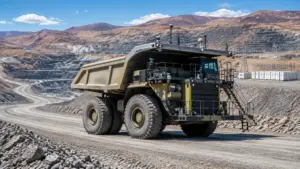
Innovation in mineral extraction is the only way to meet 2026’s structural demand.
The Bottom Line
For 114 years, Skillings has been the voice of record for this industry. We’ve seen the “experts” get it wrong time and again because they fail to account for the lag between digital ambition and physical reality.
The AI race is moving at the speed of light. The mining industry moves at the speed of rock.
That disconnect is what is driving the $13,000 reset. If you are an operator, a policy-maker, or an investor, you need to stop looking at copper as a metal and start looking at it as the ultimate strategic asset.
There simply isn’t enough to go around.
Stay ahead of the curve with more intelligence at https://skillings.net/.
Ready for the full breakdown? Download our March 2026 Digital Magazine for an in-depth analysis of the projects, people, and policies shaping this copper reset: https://Skillings.short.gy/March2026.