The consensus narrative of the last 24 months was simple: lithium is in a death spiral. High-cost projects were mothballed, inventories swelled, and the “white gold” rush looked like a historical footnote. But 2026 is where that narrative hits a wall. We are witnessing a structural pivot: a transition from a messy oversupply to a tightening deficit that establishes a definitive price floor.

This isn’t just a market correction. It’s a Darwinian culling of the cost curve.
While the “Lithium Winter” of 2024 and 2025 forced high-cost spodumene miners in Australia and China to throttle back or shutter entirely, the tier-1 brine producers in the Lithium Triangle are emerging with stronger margins and a dominant market share. For investors, the signal is clear: 2026 belongs to those who can produce at the bottom of the cost curve.
The 2026 Deficit: By the Numbers
The math for 2026 is becoming increasingly uncomfortable for those betting on a continued glut. After a massive structural surplus in 2025, the market is rebalancing faster than most analysts anticipated.
Morgan Stanley is already forecasting an 80,000 metric ton deficit of lithium carbonate equivalent (LCE) for 2026. UBS is more conservative, eyeing a 22,000-ton deficit, but even their numbers represent a massive swing from the 61,000-ton surplus expected in 2025. Fastmarkets is tracking even tighter, projecting a deficit of 1,500 tonnes LCE as early as mid-2026.
More Read

That’s not a rounding error. That’s a crisis in the making.

Global lithium demand is slated to jump by 17% to 30% in 2026 alone. This surge is driven by a massive acceleration in EV production: expected to top 25 million units: and a grid-scale energy storage market that is finally finding its feet. As longer-range vehicles become the standard, the lithium intensity per unit is rising. The “shiny AI revolution” is also playing a role, with data centers increasingly looking at lithium-ion for backup power solutions.
Brine vs. Spodumene: The Margin War
To understand why 2026 favors brine, you have to look at the brutal reality of extraction costs.
More Read

Hard rock mining: predominantly spodumene extraction in Australia: is a high-CAPEX, high-OPEX game. When lithium carbonate prices were soaring at $70,000/t, everyone looked like a genius. At the stabilized prices we expect in 2026, the cracks are showing.

Brine producers in Chile and Argentina (the “Lithium Triangle”) operate in a different reality. Companies like Albemarle and SQM enjoy production costs that are often less than half of their hard-rock counterparts. When the market moves into a deficit, these low-cost producers become “Investor Magnets.” They aren’t just surviving; they are capturing the entire margin as the price floor solidifies above their operating costs.
The strategic calculus here isn’t subtle: as inventory buffers of 350,000 tonnes LCE begin to deplete throughout 2026, the market will desperately need new supply. But you can’t disrupt geology. It takes years to bring a mine online, but brine operations: once established: offer a scalable, lower-cost output that spodumene simply cannot match in a sub-$20,000/t environment.
The DLE Wildcard: Technology Meets Reality
Direct Lithium Extraction (DLE) is no longer a laboratory pipe dream. By 2026, it will be the defining technology for the next generation of tier-1 assets. DLE bypasses the traditional multi-month evaporation process, extracting lithium from brine in hours rather than years.
We are seeing this play out in real-time in the United States. The Smackover formation in Arkansas has become the frontline for this shift. Projects like the one backed by Trafigura are leveraging DLE to tap into domestic reserves that were previously considered uneconomical.

The Trafigura 10-year lithium supply deal with the Smackover project highlights a critical trend: the decoupling of supply chains from Chinese processing dominance. DLE offers a smaller environmental footprint and a faster route to market, making it the preferred choice for North American mineral sovereignty.
But here is the kicker: DLE isn’t a silver bullet for everyone. It requires specific brine chemistry and massive amounts of energy and water. The winners in 2026 will be the companies that have already spent the last three years refining their pilot plants into commercial-scale operations.
Why 2026 is the “Investor Inflection Point”
For the intelligent investor, 2026 represents a unique entry point. We are moving past the speculative hype of 2022 and the panicked sell-off of 2024. What’s left is a stabilized market with a visible floor.
The focus is now on “tier-1” assets: mines and brine salars that possess three specific traits:
- Low Operating Costs: Ability to remain profitable even if prices dip toward the $15,000/t LCE level.
- Geopolitical Safety: Proximity to end-users (like the US or EU) or established mining jurisdictions like Chile.
- Scalable Technology: Proven DLE or advanced evaporation techniques that can meet the 30% demand growth.

Ironically, the same market forces driving the copper price forecast toward $13,000 are at work in lithium. It’s about a structural deficit that cannot be fixed by simply turning on a tap.
The Global Battery Revolution and Geopolitics
The global battery revolution is no longer a choice; it’s a policy mandate. From the Inflation Reduction Act (IRA) in the US to similar green subsidies in Europe, the pressure to secure non-Chinese lithium is reaching a fever pitch.
This is why emerging DLE players in North America and established brine producers in South America are seeing a massive influx of capital. They represent the “safe” supply. Meanwhile, high-cost spodumene operations: many of which are tied to Chinese refineries: are facing a double whammy: low margins and increasing trade barriers.
And here’s what makes this particularly nasty for the laggards: the time to build is now, but the capital to build only flows to the low-cost winners. This reinforces the “moat” around tier-1 producers.
Establishing the New Floor
What does “stabilization” actually look like in 2026?
We expect a price floor to establish itself around the marginal cost of production for mid-tier spodumene producers: likely between $18,000 and $22,000 per tonne LCE. Anything lower, and the deficit widens as supply goes offline. Anything higher, and we see another rush of speculative capital.
For brine producers like Albemarle and SQM, that range is a profit machine. For DLE projects, it’s the green light for full-scale commercialization.
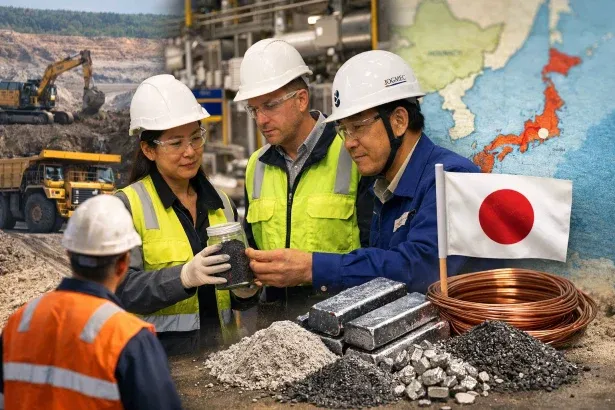
There is not enough lithium to go around. The 350,000 tonnes of global stock might sound like a lot, but in the context of a 25-million-unit EV market, it’s a thin buffer. Once that buffer is tested in early 2026, the market will realize that the “oversupply” was a temporary illusion caused by high interest rates and a slow EV transition in 2024.
Final Assessment
The 2026 supply pivot is a “chickens-coming-home-to-roost” moment for the industry. You cannot run a global energy transition on high-cost, high-carbon hard rock mining indefinitely. The pivot to brine and DLE is a move toward economic and environmental sustainability.
Investors who are waiting for the “perfect” time to enter the market are likely to miss the window. The floor is being poured right now. By the time the 80,000-ton deficit hits the headlines in 2026, the tier-1 brine producers will already be trading at a premium.
The strategy for 2026 is simple: follow the brine, watch the DLE milestones, and ignore the noise from high-cost operations that are struggling to keep the lights on. The market has matured. The supply pivot is here. And for those positioned in the right assets, the floor looks very solid indeed.