By Charles Pitts

SANTIAGO, Chile : The United States and Chile signed a landmark joint declaration on March 12, 2026, establishing a formal strategic partnership to secure supply chains for critical minerals and rare earth elements. The agreement, signed in the Chilean capital, marks a decisive shift in Western efforts to decouple essential energy transition materials from Chinese industrial dominance.
The pact was finalized during high-level meetings between Chilean President José Antonio Kast, Foreign Minister Francisco Pérez, and U.S. Deputy Secretary of State Christopher Landau. While the document functions as a diplomatic framework rather than a series of immediate supply contracts, it launches an intensive consultation process aimed at identifying supply chain vulnerabilities, promoting mineral recycling, and streamlining U.S. investment into Chilean extraction and processing projects.
For the global mining industry, the timing of the signing is an inflection point. As the world grapples with a copper industry that faces a $2.1 trillion investment gap to meet 2050 demand, Washington is moving to anchor its primary supply lines in the Western Hemisphere.
A Strategic Necessity in the “Lithium Triangle”
The strategic calculus behind the deal is not subtle. Chile is the world’s largest copper producer, responsible for approximately 25% of the global supply. Perhaps more critically for the global battery revolution, it holds roughly 40% of the world’s known lithium reserves, making it the second-largest producer of the “white gold” essential for electric vehicle (EV) batteries.
More Read

“This is about more than trade; it’s about national security and the survival of the North American industrial base,” a senior U.S. State Department official said following the signing. “We are moving from a period of passive procurement to a period of active partnership.”

The agreement outlines a 180-day window for both nations to establish a working group focused on:
- Investment Frameworks: Aligning Chilean mining regulations with U.S. private sector capital requirements.
- Supply Chain Gaps: Mapping the journey of ore from Andean mines to North American refineries.
- Project Financing: Utilizing U.S. development finance tools to de-risk high-altitude mining operations.
- Rare Earth Cooperation: Exploring Chile’s untapped potential for rare earth elements to diversify away from Chinese refining bottlenecks.

More Read
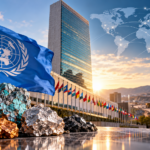
Decoupling from Beijing
The U.S.-Chile pact is part of a broader, more aggressive “mineral diplomacy” strategy being deployed by Washington. Similar frameworks have recently been explored with Argentina, Peru, and Ecuador. The goal is clear: create a “Mineral Security Partnership” that bypasses the traditional processing routes that currently run almost exclusively through China.
While Chile is a mining titan, it has historically sent the vast majority of its raw output to Chinese smelters. By signing this declaration, Santiago is signaling a willingness to pivot toward U.S.-aligned value chains. This shift is particularly notable under the administration of President Kast, whose investor-friendly policies represent a sharp departure from the previous government’s attempts to increase state control over lithium operations.
However, the challenge is significant. China still controls the vast majority of global rare earth separation and refining capacity. Even as the U.S. secures the raw ore, the infrastructure to process those materials at scale in the Americas is still in its infancy. This agreement is designed to be the catalyst for that missing infrastructure.
Financing the Frontier: De-Risking the Junior Sector
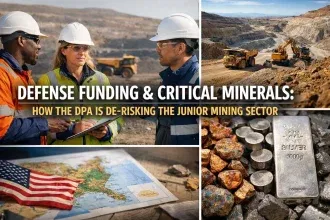
One of the most consequential aspects of the declaration involves the potential for direct U.S. government intervention in project financing. For years, junior mining companies have struggled to move from exploration to production due to the capital-intensive nature of Andean mining.
The joint declaration suggests that the U.S. may leverage the Export-Import Bank and the International Development Finance Corporation (DFC) to provide the “patient capital” required for long-term mining projects. This is a strategy directly aimed at countering the “Belt and Road” model that has allowed Chinese state-owned enterprises to secure offtake agreements by funding the underlying infrastructure: roads, ports, and power grids: that mines require.
“The market has failed to price in the geopolitical risk of the current supply chain,” says a Santiago-based analyst. “Washington is essentially saying they will provide the floor for these projects to ensure they actually get built.”
This approach mirrors recent moves elsewhere in the sector, such as Rio Tinto’s $8.6 billion acquisition of Arcadium Lithium, which highlights the frantic race among majors to secure Tier-1 assets before the window for new supply closes.
The Copper Crunch and the Vicuña District
While lithium often grabs the headlines, the U.S. focus remains heavily on copper. Without a massive influx of new copper supply, the transition to a low-carbon economy is mathematically impossible. The pact specifically mentions the need for technological cooperation in “brownfield” expansions and the development of new districts.
The focus is increasingly turning toward the Vicuña District, a massive copper-gold-silver region straddling the border of Chile and Argentina. Projects like Filo del Sol and Josemaria are the types of large-scale, multi-decade assets that Washington views as vital for long-term supply security.

The strategic pact aims to remove the bureaucratic “red tape” that has historically slowed these cross-border projects. By creating a unified consultation process, the U.S. and Chile hope to shorten the lead time from discovery to first production, which currently averages 15 to 20 years in the mining industry.
Environmental and Social Governance (ESG) Standards
A critical component of the declaration is the commitment to “high-standard” mining. This is a direct jab at the less transparent mining practices often associated with Chinese-led projects in Africa and Central Asia.
The agreement emphasizes:
- Water Management: Chile is facing a historic drought, making water rights a central conflict in mining expansion. The U.S. has pledged to share desalinization and water-recycling technology.
- Decarbonization of Operations: As miners like Thiess prioritize abatement over offsets, the U.S.-Chile pact seeks to integrate green hydrogen and solar power into mine-site energy mixes.
- Community Engagement: Avoiding the social unrest that has stalled major projects in the region is a top priority for the Kast administration.
What Happens Next?
The signing of the declaration is only the beginning of a complex implementation phase. Industry observers are looking toward the end of 2026 for the first “tangible” outcomes of this partnership.
“The declaration is the map; now we need the shovels,” says one veteran mining executive. “The real test will be whether a mid-sized U.S. company can get a lithium processing plant permitted and funded in Chile faster than a Chinese state enterprise can.”
The clock is ticking. With the U.S. aggressively implementing the Inflation Reduction Act (IRA) and its domestic content requirements, the demand for “friendly” minerals is skyrocketing. Chile is now officially at the top of that list.

For investors, this pact provides a level of sovereign de-risking that has been absent from the Chilean market for several years. It signals that despite political shifts, the economic and strategic ties between Santiago and Washington are deepening.
2026 marks the inflection point where mineral policy and foreign policy become indistinguishable. For the U.S., Chile is no longer just a trading partner: it is a critical node in a global survival strategy.