MOAB, Utah : Mariana Minerals, a venture-backed mining startup led by former Tesla executives, will restart operations at the idled Centennial copper mine in April 2026. The move marks a significant pivot in the domestic mineral strategy, aiming to bridge the widening gap between North American copper supply and the surging demand from the energy transition and high-performance computing sectors.

The San Francisco-based firm, which secured backing from Andreessen Horowitz and Breakthrough Energy Ventures, acquired the asset and its associated 10,000-acre land package from Lisbon Valley Mining Co. LLC. The acquisition includes an existing refining facility, providing Mariana Minerals with an integrated path from extraction to high-purity copper cathode production.
For a domestic industry that has largely outsourced its primary extraction for decades, the Centennial restart isn’t just a local story. It is a stress test for the viability of “New Tech” mining.
Rebuilding the American Copper Pipeline
The Centennial mine, located in the Paradox Basin of southeastern Utah, previously operated as a modest contributor to the domestic market, producing roughly 2,500 tons of copper annually. Mariana Minerals plans to obliterate those historical benchmarks.
The company’s roadmap targets a production scale of 50,000 tons of copper cathode per year by 2030. That is a twenty-fold increase. It’s an aggressive timeline that reflects the desperation of a market staring down a structural deficit.
More Read

“There just hasn’t been a lot of mining in the U.S. in the last 50 years,” said Turner Caldwell, CEO of Mariana Minerals and former head of Tesla’s battery minerals unit. “Partly because we don’t have the people to design and operate these assets.”

Caldwell’s assessment is blunt. The domestic industry is facing a talent vacuum that decades of offshoring have only worsened. Mariana Minerals’ solution isn’t just to hire more miners: it is to change what a miner does.

More Read

Automation as an Operational Necessity
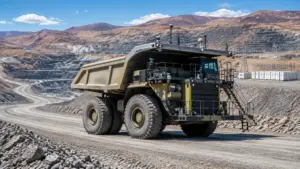
To reach its 2030 targets, Mariana Minerals is leaning heavily into autonomous technology. The company confirmed it will deploy a fleet of autonomous haul trucks and drill rigs upon the April restart.
This isn’t about chasing a tech-bro aesthetic. It is a cold, calculated response to labor shortages and the brutal economics of low-grade North American deposits. By removing human operators from the most repetitive and dangerous roles, the company aims to run 24-hour cycles with a precision that manual operations cannot match.
The strategic calculus here isn’t subtle:
- Lower operational overhead per ton.
- Increased safety in high-wear environments.
- Real-time data integration for grade control.

The deployment of these systems at Centennial represents a broader shift seen in recent global battery revolution reports, where the integration of “smart” mining is no longer optional for junior producers trying to compete with Tier-1 miners.
The Geopolitical Tailwinds of 2026
The timing of the Centennial restart is not accidental. As of March 2026, the Trump administration has intensified its focus on onshoring critical mineral production, streamlining permitting for assets that contribute to national security and domestic energy independence.
Copper, often called “the metal of electrification,” has become a flashpoint in trade policy. With the push for EV infrastructure and the massive power requirements of AI data centers, the U.S. grid requires more copper than current domestic mines can provide.
Mariana Minerals is part of a larger wave of domestic revivals. In Arizona, BHP Group and Faraday Copper Corp. are currently negotiating a deal to restart historic assets, while in Utah, Blue Moon Metals recently acquired defunct germanium and gallium sites to capitalize on the same onshoring trend.
The message from Washington and the markets is clear: domestic supply is the only supply that is guaranteed.
Technical Challenges and Lisbon Valley Legacy
Restarting an idled mine is rarely as simple as flipping a switch. The Lisbon Valley assets come with the baggage of previous operational failures and the inherent challenges of the Paradox Basin’s geology.
Lisbon Valley Mining Co. faced significant financial and environmental hurdles before the acquisition. Mariana Minerals must now navigate a complex regulatory landscape while proving its new refining technology can handle the specific chemical profiles of the Centennial ore.
The company is betting on its modular refining facility. Unlike traditional, massive smelters that require years of environmental impact studies and billions in capital, Mariana’s approach uses smaller, scalable units. This design allows for incremental capacity increases as the mine scales toward its 50,000-ton goal.

“You can’t disrupt geology,” Caldwell noted in a recent industry briefing. “But you can disrupt the way you process it.”
Market Outlook: Copper at a Crossroads
The copper market in early 2026 remains volatile but structurally bullish. Analysts point to the “triple threat” of demand:
- The continued build-out of renewable energy grids.
- The localized “AI boom” requiring massive cooling and power hardware.
- Conventional industrial demand as the U.S. re-industrializes.
As seen in the Skillings Mining Review January 2025 analysis, the lack of new “Greenfield” projects coming online globally has forced the industry to look at “Brownfield” restarts like Centennial. It is faster to permit, the infrastructure is already partially in place, and the community impact is already established.
However, the “Centennial revival” still faces the “not-in-my-backyard” (NIMBY) sentiment that has plagued other Western projects. While Utah is generally pro-mining, the proximity to recreational areas and the Colorado River watershed means Mariana Minerals will be under intense scrutiny from environmental stakeholders.
Strategic Implications for the Mining Industry
The success or failure of Mariana Minerals will likely set the tone for venture capital’s involvement in the mining sector for the rest of the decade. Traditionally, VC firms avoided the “dirt and shovels” of primary extraction, preferring the software side of the industry.
The involvement of Andreessen Horowitz and Khosla Ventures suggests a shift. They are no longer just looking for the next app; they are looking for the physical foundations of the digital economy.

For stakeholders, the Centennial project offers several key takeaways:
- Onshoring is no longer a slogan. It is a capitalized reality.
- Automation is the bridge. To overcome high domestic labor costs, tech is the only lever left to pull.
- Leadership is evolving. The “Tesla-fication” of mining: bringing in leaders from the end-user side of the supply chain: is creating a more vertically integrated mindset.
As the industry prepares for the April 2026 restart, all eyes will be on Moab. If Mariana Minerals can hit its production targets and successfully integrate its autonomous fleet, Centennial won’t just be a reopened mine: it will be a blueprint for the next generation of American resource extraction.
Summary of Key Data Points: Centennial Restart
| Metric | Detail |
|---|---|
| Project Lead | Mariana Minerals (CEO Turner Caldwell) |
| Location | Paradox Basin, Utah |
| Restart Date | April 2026 |
| 2030 Production Target | 50,000 tons of copper cathode |
| Historical Output | ~2,500 tons per year |
| Primary Technology | Autonomous haulage, modular refining |
| Key Backers | Breakthrough Energy Ventures, a16z, Khosla Ventures |
The clock is ticking for Mariana Minerals. With the April deadline approaching, the company is currently finalizing equipment delivery and site preparations. In an era where “critical minerals” are synonymous with “national security,” the Centennial mine represents a high-stakes bet on the future of American self-reliance.
For more on the shifting landscape of North American mining, see our recent coverage on U.S. Steel’s future crossroads and the latest Skillings Mining Review March 2025 edition.