The global copper market is careening toward a structural wall. While mainstream financial media remains obsessed with quarterly earnings and short-term interest rate pivots, the mining industry is staring at a set of brutal numbers that simply don’t add up. By 2026, the gap between the copper we have and the copper we need won’t just be an analyst’s talking point. It will be a crisis.

We are entering the “Era of the Deficit.” It’s not a temporary supply chain glitch or a post-pandemic hangover. It is a fundamental mismatch between the physics of mining and the voracious appetite of a world trying to electrify everything at once.
If you think the current price action is volatile, wait until 2026. The consensus is forming, and it’s pointing toward a sustained $11,000 to $12,000 per metric ton average. Some call it a super-cycle. We call it reality catching up with the spreadsheet.
The Brutal Math of the 2026 Deficit
Most analysts are no longer debating if there will be a deficit, but rather how deep the hole will be. J.P. Morgan is currently projecting a global refined copper deficit of approximately 330,000 metric tons for 2026. To put that in perspective: that’s not just a rounding error. That’s a massive shortfall that could throttle industrial production across multiple sectors.
Meanwhile, even the more conservative voices at Goldman Sachs: who previously forecasted a surplus: are watching that buffer vanish. Their projected 500,000 metric ton surplus for 2025 is expected to shrivel to nearly nothing by 2026. When Goldman starts pulling back on its “oversupply” narrative, it’s time to pay attention.
More Read

The reason is simple: Demand is expected to leap from 25 million metric tons to 33 million metric tons in the blink of an eye. Supply, burdened by aging mines and a decade of underinvestment, cannot possibly pivot that fast.


Why Demand is Decoupling from Traditional Cycles
Historically, copper was a proxy for Chinese construction. If Beijing built apartments, copper went up. If they stopped, copper fell. That world is dead.
More Read

The “New Demand” is driven by three pillars that are immune to standard economic cooling:
- The Shiny AI Revolution: Every data center powering the AI boom is a copper sink. High-performance computing requires massive amounts of power distribution and cooling, both of which are copper-intensive. You can’t code your way out of a shortage of physical atoms.
- The Global Battery Revolution: Electric vehicles (EVs) use roughly four times more copper than internal combustion engines. Even if EV growth “slows” in the headlines, the sheer volume of units hitting the road in 2026 will be staggering compared to five years ago.
- Grid Modernization: The world is trying to plug renewable energy into 1950s-era grids. Transitioning to wind and solar requires massive amounts of cabling.
These are not discretionary purchases. Governments have mandated these transitions. They are baked into the 2026 outlook.
Supply: You Can’t Disrupt Geology
Here is the uncomfortable truth: You can build a software startup in a garage in six months. It takes at least ten years to bring a major copper mine from discovery to first production. Sometimes fifteen.
We are currently living through the consequences of the 2010s, a decade where “capital discipline” became a euphemism for “we aren’t building anything new.” The “elephants”: those massive, high-grade deposits in Chile and Peru: are getting older, deeper, and lower-grade.

Operational challenges are becoming the norm, not the exception. Whether it’s water scarcity in the Atacama or political instability in the Copperbelt, the “easy” copper is gone. We are now forced into frontier environments and complex expansions. Projects like the Vicuña District expansion are vital, but they are technically demanding and capital-intensive.
Copper Price Forecast 2026: Base, Bull, and Bear Cases
The market isn’t a monolith. Depending on who you ask, the 2026 landscape looks either expensive or astronomical.
| Source | 2026 Average Price Forecast (per mt) | The Catalyst |
|---|---|---|
| J.P. Morgan | $12,075 | Structural 330 kmt deficit peak |
| Reuters Poll | $11,975 | General consensus on supply-side lag |
| UBS | $11,000 | Persistent supply shortages |
| Citibank | $12,000 | Rapid tightening of the global balance |
| Goldman Sachs | $10,710 (H1) | Conservative view on Chinese recovery |
The Bull Case ($13,000 – $15,000)
In this scenario, we see a “perfect storm.” Supply disruptions in South America intensify, the U.S. dollar weakens significantly following aggressive interest rate cuts, and the U.S. imposes 25% tariffs on refined copper imports. If the U.S. Steel future and other domestic manufacturing initiatives take off, the scramble for local supply will send premiums through the roof.
The Base Case ($11,000 – $12,000)
The most likely outcome. The deficit remains at roughly 300k metric tons. China’s economy manages a “muddle-through” recovery, and the green energy transition continues at its current, albeit slightly messy, pace. Prices stay elevated enough to keep miners profitable but high enough to cause “demand destruction” in lower-value sectors like consumer electronics.
The Bear Case ($9,000 – $10,000)
For copper to drop below $9,000 in 2026, we would need a global recession that dwarfs 2008 or a total collapse of the Chinese property sector without any corresponding stimulus. Even then, the cost of production for many marginal mines is rising so fast that $9,000 is becoming the new “floor.”
The Role of Strategic Minerals and Geopolitics
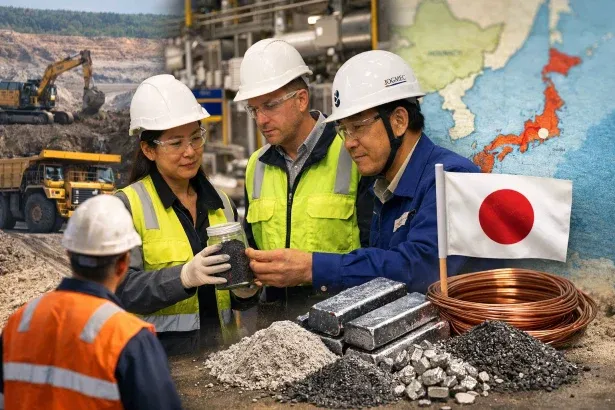
Copper is no longer just a commodity; it is a strategic asset. Japan is increasingly aggressive in securing its own supply chains, as seen in recent strategic mineral partnerships. The U.S. is using defense funding to de-risk junior mining projects, realizing that being beholden to offshore supply for the energy transition is a national security risk.
We are seeing a trend where price is almost secondary to security of supply. Large end-users: think auto manufacturers and tech giants: are no longer just placing orders. They are looking to take equity stakes in miners. They’ve seen what happened with lithium and they don’t want a repeat with the “king of green metals.”

What Happens Next?
If you are an operator, 2026 is about efficiency and brownfield expansions. If you are an investor, it’s about identifying the projects that can actually hit their production timelines. The market has a nasty habit of overestimating how much supply will come online and underestimating how much demand will grow.
As we noted in the Skillings Mining Review May 2025, the “just-in-time” supply chain model is dead for critical minerals. We are moving to a “just-in-case” world.
There’s not enough copper to go around. That is the fundamental truth of 2026. Whether the price hits $12,000 or $15,000 is almost a matter of semantics: the trend is clear, the deficit is structural, and the era of cheap, abundant copper is officially in the rearview mirror.