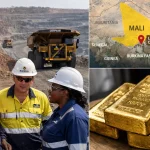
Most gold mining investors spent the last decade obsessed with grade. They looked at the spectacular intercepts, the ounces in the ground, and the “all-in sustaining cost” (AISC) figures printed in glossy quarterly reports. But AISC is a lying metric because it treats energy costs as a static constant. In reality, AISC is a tethered balloon, and that tether is tied directly to the price of a barrel of Brent crude.

2026 has brought the industry to a brutal inflection point. For open-pit producers, the math is now inescapable: every 10% move in oil prices translates to a $10 per ounce penalty on their bottom line. That isn’t a rounding error. It’s a margin-killer.
The era of cheap, predictable energy is over, and the market is finally beginning to price in the “diesel penalty” that distinguishes the resilient underground operations from the fuel-hungry open-pit behemoths. If you’re a CFO or a serious mining investor, you can no longer afford to ignore the energy delta.
The Jefferies Benchmark: Tracking the $10/oz Rule
A recent analysis by Jefferies has crystallized what many in the field have suspected for years. On average, a 10% increase in oil prices raises the AISC by approximately $10 per ounce for gold producers.
Here is why that matters: energy comprises roughly 12% of the average gold miner’s total cost structure. Compare that to the 46% spent on labor and contractors or the 33% on consumables. Labor is sticky and moves slowly. Consumables like cyanide and grinding media are often contract-bound. But fuel? Fuel is volatile, immediate, and, for many companies, unhedged.
More Read



When oil prices spike: as we’ve seen in early 2026 due to the renewed volatility in the Middle East: that 12% energy slice begins to eat the rest of the pie. For an operation producing 500,000 ounces a year, a sustained 20% rise in oil isn’t just a headache; it’s a $10 million hit to free cash flow. Straight off the top.
Open-Pit vs. Underground: The Asymmetric Vulnerability
Not all mines are created equal. The $10/oz figure is an industry average, but the reality is bifurcated. Open-pit mines are significantly more exposed to fuel inflation than their underground peers.
More Read

The logic is simple: mass. An open-pit mine is essentially a massive earth-moving operation. You are moving millions of tonnes of waste rock to get to the ore. This requires a fleet of haul trucks that consume thousands of liters of diesel every single shift. In many remote locations, diesel doesn’t just power the trucks: it powers the entire site through massive generator sets.
Underground mines, by contrast, are more electricity-intensive. While they still use diesel for load-haul-dump (LHD) machines, the total volume of material moved is significantly lower. Furthermore, underground mines are more easily electrified or tied into local grids.
The strategic calculus here isn’t subtle: as oil prices rise, the P/NAV (Price to Net Asset Value) of underground-heavy producers remains relatively stable, while open-pit focused companies see their valuations throttled.

Who is in the Crosshairs? G Mining, Endeavour, and B2Gold
The Jefferies analysis specifically highlighted several producers with high sensitivity to these diesel shocks.
G Mining Ventures is a prime example. As they ramp up their Tocantinzinho project in Brazil, they are operating in an environment where logistics and fuel consumption are paramount. While Brazil has a robust energy sector, the sheer scale of open-pit haulage makes them a “high-beta” play on oil prices.
Endeavour Mining and B2Gold face a different but equally “nasty” set of challenges in West Africa. At flagship sites like Fekola (B2Gold), the reliance on diesel for both haulage and power generation creates a direct transmission mechanism from global oil shocks to local cost inflation. When the Strait of Hormuz experiences the kind of geopolitical friction we are seeing this quarter, the cost of getting a liter of diesel to the middle of the Sahel skyrockets.
For these companies, the “diesel penalty” isn’t just about the price of the commodity; it’s about the cost of the supply chain. We’ve seen a shift recently where industry conferences flag a critical moment for mining’s transformation, and much of that transformation is focused on decoupling production from the oil barrel.
The Geopolitical Trigger: The 2026 Middle East Oil Shock
Why are we talking about this now? Because the geopolitical buffer is gone. Early 2026 has been defined by a series of supply chain threats that have forced miners to rethink their “just-in-time” fuel deliveries.
The threat to the Strait of Hormuz has created a permanent risk premium in the oil market. S&P Global recently projected that fuel costs for the mining sector will rise 6.25% year-over-year in 2026. Goldman Sachs, ever the contrarian, suggested a dip mid-year, but the long-term trend is up.
Miners are currently drawing down pandemic-era supply inventories that had previously buffered them from higher replacement costs. Those inventories are exhausted. Now, companies are buying at the spot price or locking in hedges at historically high levels.

This creates a “chickens-coming-home-to-roost” scenario for miners who neglected to invest in alternative power or fleet electrification during the lean years. The $10/oz penalty is now the baseline. For those with older, less efficient fleets, the penalty is likely closer to $15 or $20.
The Valuation Reset: P/NAV and the “Fuel Premium”
Investors are starting to do the math. When calculating the Net Asset Value (NAV) of a project, the discount rate is usually fixed at 5%. But if your operating costs are tethered to a volatile energy market, that 5% doesn’t account for the risk.
We are seeing a trend where analysts are applying a “fuel premium” to the discount rates of open-pit producers in high-cost jurisdictions. If you’re looking at a company like SSR Mining, which recently completed the CCV gold mine acquisition, the focus isn’t just on the gold in the ground: it’s on the cost of the diesel required to get it out.
The market is bifurcating. Companies that can demonstrate a clear path to energy independence: whether through solar microgrids, wind, or trolley-assist haulage systems: are trading at a premium. Those stuck on the “diesel treadmill” are being discounted.

Can Technology Save the Margins?
Is there a way out? Sure. But it’s not cheap, and it’s not fast.
We are seeing a massive push toward electrification. Maclean’s new surface mining vehicle division and similar initiatives are targeting the very heart of the diesel dilemma. By replacing diesel engines with electric drivetrains, miners can shift their energy source from volatile oil to more stable (and often cheaper) electricity.
But here is where it gets really uncomfortable: the capital expenditure required to transition a fleet is enormous. In a high-interest-rate environment, many mid-tier producers simply don’t have the balance sheet to go “all-in” on green tech. They are forced to pay the $10/oz penalty because they can’t afford the $100 million upfront cost to avoid it.
Ironically, the very minerals needed for this transition: lithium, copper, and rare earths: are facing their own supply crunches. Whether it’s Rio Tinto’s massive acquisition of Arcadium Lithium or the investment gap in copper, the cost of the “solution” is rising just as fast as the cost of the “problem.”
The CFO’s New Mandate
The role of the mining CFO in 2026 has shifted from bean-counter to energy trader. To survive the diesel dilemma, companies are adopting three main strategies:
- Aggressive Hedging: No longer a “nice-to-have,” hedging 30-50% of fuel exposure is becoming standard for open-pit operators.
- Asset Mix Rebalancing: We are seeing a strategic shift toward underground acquisitions. If the “diesel penalty” is $10/oz for open-pit, an underground mine with a grid-tie looks like a much safer bet for long-term P/NAV stability.
- Data-Driven Efficiency: Using data and sensing technology to optimize haul routes and reduce “idle time” can shave 2-3% off fuel consumption. In this environment, every percent counts.
Conclusion: There is No Hiding from the Barrel
The $10/oz inflation penalty is a stark reminder that mining is, at its core, a business of moving mass. And moving mass costs energy.
For years, the gold sector treated fuel as a background noise. But with geopolitical tensions simmering and the structural costs of diesel rising, energy is now the loudest thing in the room. The gap between the “energy-efficient” and the “energy-exposed” will only widen as 2026 progresses.
Investors need to look beyond the grade. Look at the haulage distances. Look at the power source. Look at the truck fleet. Because in a world of $100+ oil, the most important number in a gold mine’s feasibility study isn’t the price of gold: it’s the price of diesel.
The “Diesel Penalty” isn’t a temporary spike. It’s a valuation reset. There’s not enough cheap oil to go around, and the mining industry is finally feeling the squeeze.