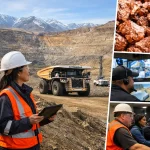
The consensus in copper mining is that the easy “low-hanging fruit” was picked decades ago. For the industry to meet the projected demand of the green transition, analysts have long pointed to a move toward deeper, lower-grade, or more politically volatile jurisdictions. But there is a more uncomfortable truth that major producers are finally acknowledging: scale now requires conquering the high-altitude frontier of the Andes, regardless of the price tag or the oxygen levels.

Lundin Mining isn’t just acknowledging this reality; they are aggressively underwriting it.
By increasing its stake in the Caserones mine and deepening its footprint in the Los Helados deposit, Lundin is effectively consolidating its dominance over the Vicuña District. This isn’t a speculative play on a localized discovery. It is a calculated, multi-billion-dollar bet on what is arguably the most significant emerging copper-gold-silver cluster on the planet.
The Strategic Calculus: Cash Flow Meets Growth Optionality
The strategic logic here isn’t subtle: use current cash flow to fund future dominance.
By increasing its ownership in Caserones, Lundin secures immediate, high-margin production. This is the financial engine. Caserones provides the “now” that allows Lundin and its partner, BHP, to build the “forever” assets nearby. The Vicuña District, spanning the border of Chile and Argentina, is no longer a collection of isolated projects. It is an integrated industrial complex in the making.
More Read

The numbers are staggering. We are talking about a district hosting 38 million tonnes of copper, 81 million ounces of gold, and 1.4 billion ounces of silver across all resource categories. To put that in perspective: it’s enough metal to rank the district among the top five largest copper-gold-silver operations globally.


Decoding the Three-Stage Expansion
Lundin and BHP are not planning to build this all at once. The capital intensity is too high, and the logistics of 4,000-plus meters of altitude are too punishing. Instead, the project follows a staged development approach that prioritizes de-risking over sheer speed.
More Read

- Stage 1: The Josemaría Anchor. This is the fully permitted foundation. With an initial capital expenditure of approximately $7.1 billion, it focuses on a conventional open-pit design.
- Stage 2: The Oxide Overlay. By incorporating the Filo del Sol oxide resources, the partners can remove the material overlaying the massive sulfide deposits, utilizing heap leach recovery to generate early returns.
- Stage 3: The Massive Scale. This is where the district becomes a global titan. The expansion of the concentrator to process roughly 293,000 tonnes per day from Filo del Sol sulfide deposits marks the transition to a world-class Tier 1 operation.
The infrastructure requirements for this scale are immense. We are looking at outsourced strategic infrastructure, including a dedicated desalination plant and a concentrate transport system that leverages Chilean ports. This cross-border strategy: mining the rock in Argentina and shipping it through Chile: is the only way to make the economics work in such a remote environment.
Bridging the $2.1 Trillion Gap
The timing of Lundin’s move is not a coincidence. The copper industry faces a $2.1 trillion investment gap to meet global demand by 2050. While many miners are hesitant to commit to projects with decade-long lead times, Lundin is positioning itself to be one of the few producers with significant new supply hitting the market when the supply-demand deficit is expected to reach a breaking point.
Over the first 25 years of operation, the combined Vicuña project is projected to deliver an average annual production of approximately 400,000 tonnes of copper. That’s not a rounding error. That’s a fundamental shift in the global supply curve. During the first decade alone, the district is expected to yield 2.5 million tonnes of copper and 5.5 million ounces of gold.

The Partnership with BHP: Shared Risk, Shared Reward
Building an $11 billion project in a high-altitude binational region is a task too large for almost any single company. The joint venture with BHP is the ultimate de-risking mechanism. By partnering with the world’s largest miner, Lundin gains access to BHP’s balance sheet and technical expertise in massive open-pit operations.
The strategic importance of the Vicuña District is also reflected in the interest from other global players. We’ve seen similar movements elsewhere as Rio Tinto expands its lithium production, and the race for critical minerals intensifies. In the Andes, however, the prize is copper, and the Vicuña District is the crown jewel.
Operational Challenges: Oxygen and Logistics
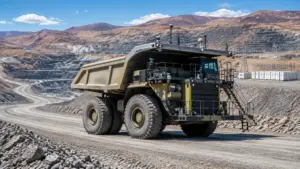
But you can’t disrupt geology. The Vicuña District is a “frontier” for a reason. The logistics are brutal. Operating at these altitudes requires specialized equipment, rigorous safety protocols, and a highly skilled workforce that can handle the physiological strain of the Andean environment.
The “Los Helados” deposit adds another layer of complexity: and opportunity. As part of the expansion, Lundin’s increased stake in Los Helados provides long-term growth optionality. It is a large-scale copper-gold porphyry system that fits perfectly into the broader district strategy. The goal is clear: create a hub-and-spoke model where multiple deposits feed into a centralized, highly efficient infrastructure network.

The 2026 Inflection Point
The clock is already ticking. Vicuña Corp. CEO Ron Hochstein has indicated that the company is advancing toward a final investment decision (FID) by the end of 2026. The immediate priorities are advancing engineering to Class 2 capital estimates and finalizing provincial agreements in San Juan Province, Argentina.
For investors and analysts, 2026 marks the inflection point. This is when the “optionality” of the Vicuña District turns into a “commitment.” If built, the project would represent the largest private investment in Argentina’s history. It would also cement Chile’s role as the indispensable gateway for Andean mineral exports.
The Bottom Line for Analysts
The strategic calculus here isn’t just about copper tonnes; it’s about district-scale dominance. Lundin is moving beyond the “single-asset” risk profile and toward a “super-district” model that mirrors the operations of the world’s largest majors.
The risks are obvious: high CAPEX, geopolitical complexities of cross-border operations, and the technical challenges of high-altitude mining. But the alternative: doing nothing: is a slow-motion car crash for any company hoping to remain relevant in the global battery revolution.
Lundin has seen this coming for years. They are no longer just exploring; they are executing. The Vicuña District isn’t just a win for Lundin: it’s a warning to the rest of the industry: if you aren’t prepared to go big in the high frontier, you are already falling behind.