The Western mining narrative has spent the last three years promising a “Green Nickel” premium that would eventually sideline “dirty” Indonesian production. It was a comfortable story. It suggested that ESG-conscious automakers in Detroit and Wolfsburg would willingly pay 20% more for metal sourced from low-carbon, Tier-1 jurisdictions like Australia or Canada.

As of March 2026, that narrative hasn’t just stalled: it has collapsed.
Despite escalating pressure from environmental groups and the rollout of strict EU battery passports, Indonesia’s dominance in the nickel market has only intensified. The country now controls more than 60% of global nickel mining supply. That’s not a rounding error. That’s a stranglehold.
While Western majors are divesting: look no further than Anglo American’s move to sell its nickel business to MMG: Jakarta is busy rewriting the rules of the global energy transition. Indonesia isn’t winning despite its ESG challenges; it’s winning because it has successfully decoupled economic scale from Western environmental ideals.
The HPAL Factor: Economic Win vs. Environmental Cost
The centerpiece of Indonesia’s strategy is High-Pressure Acid Leach (HPAL) technology. For decades, HPAL was the “problem child” of the mining world: notorious for cost overruns and technical failures. But through massive Chinese capital and engineering, Indonesia has cracked the code on scaling it.
More Read

HPAL allows Indonesia to process low-grade limonite ores into Mixed Hydroxide Precipitate (MHP), the essential precursor for EV batteries. It’s a technological masterstroke that has turned “worthless” dirt into battery-grade gold.

But it comes with a grim reality: the environmental footprint is massive.

(Suggested Prompt: A high-tech industrial HPAL processing facility in a tropical setting, showing massive pressure vessels and intricate piping systems against a backdrop of cleared rainforest.)
More Read
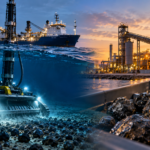
The process produces millions of tonnes of slurry waste. With traditional tailing dams difficult to maintain in Indonesia’s seismically active, high-rainfall climate, the industry has pushed for Deep Sea Tailings Placement (DSTP). While Western regulators shudder at the thought of piping mineral waste into the ocean, Indonesian operators have prioritized throughput.
To the market, the results are all that matter. By mid-2026, Indonesian HPAL projects have brought online enough capacity to keep global prices capped, effectively starving Western projects that require $20,000/t nickel just to break even.
The Morowali Moat: Chinese Capital at Scale
The epicenter of this shift is the Indonesia Morowali Industrial Park (IMIP). This isn’t just a mine; it’s a fully integrated, sovereign-level industrial ecosystem.
Funded largely by Chinese giants like Tsingshan and Huayou Cobalt, IMIP integrates coal-fired power plants, deep-water ports, smelting facilities, and worker housing into a single, seamless machine. This integration allows for a level of cost optimization that no Western miner can match.
When a Western company builds a mine, they face a ten-year permitting slog followed by billion-dollar infrastructure requirements. In Morowali, the infrastructure is a given. The synergy between Chinese technical expertise and Indonesian resource nationalism has created a “moat” that is currently impenetrable.
Even as the global battery revolution demands more transparency, the sheer volume coming out of Morowali makes it the “default” supply. If you want to build 10 million EVs a year, you cannot do it without Indonesia.
Forced Integration: The Downstream Ultimatum
President Joko Widodo’s administration: and its successors: haven’t been subtle about their goals. The ban on raw ore exports was just the opening salvo. By 2026, Indonesia has moved into “force-integrating” the domestic supply chain.
They are no longer content being the world’s quarry. They want to be the world’s factory.
Indonesia is now leveraging its nickel to force automakers to build battery plants on Indonesian soil. They are using their 60% market share as a lever: if you want the nickel, you must build the cathodes here. If you want the cathodes, you must build the cells here.
This strategy is working. We are seeing a shift where the “Critical Minerals Corridor” is moving toward Southeast Asia, as highlighted in recent Skillings Mining Intelligence reports.
The 2026 Price Lever: Strategic Quotas
Perhaps the most sophisticated move in 2026 has been Indonesia’s use of production quotas to manage global prices.
Earlier this year, the Ministry of Energy and Mineral Resources deliberately capped nickel ore production quotas (RKAB) at approximately 260–270 million tonnes. This was a 30% reduction from the 379 million tonnes produced in 2025.
The goal? Price stability.
Indonesia has realized it is now the “swing producer” for nickel, much like Saudi Arabia is for oil. By tightening the taps, they forced a price rally in early 2026, with LME three-month nickel hitting $18,700/t in January. This wasn’t because of a shortage of ore in the ground: it was a calculated move to ensure their domestic smelters remained profitable.

And here is the kicker: to keep their massive smelting capacity running while domestic quotas are tight, Indonesia has started importing massive amounts of ore from the Philippines. Imports are expected to hit 50 million tonnes in 2026.
Think about that. The world’s largest nickel producer is importing ore to maintain its dominance as the world’s largest nickel processor. This isn’t a sign of weakness; it’s a sign of a country that has successfully moved up the value chain.
Why the ‘Clean Nickel’ Narrative Failed
The failure of the Western “Clean Nickel” premium comes down to a simple, brutal reality: capital allocation.
In a high-interest-rate environment with fluctuating EV demand, carmakers have discovered they can’t afford to be picky. They need to survive. And survival means low-cost inputs.
While projects like the Smackover lithium project in Arkansas show that domestic U.S. supply chains are forming, they are years away from the scale Indonesia has already achieved.
The “Nickel Paradox” is that the more the West demands ESG compliance, the more expensive Western nickel becomes, and the more the market gravitates toward the only producer capable of delivering volume at price: Indonesia.
The Geopolitical Tightrope
Indonesia is walking a dangerous line. By being so heavily reliant on Chinese capital, they risk becoming a satellite for Beijing’s industrial policy. Simultaneously, they are trying to maintain access to U.S. markets under the Inflation Reduction Act (IRA) by pushing for a limited Free Trade Agreement on minerals.
But the U.S. is in a bind. If they exclude Indonesian nickel, they cripple their own EV transition. If they include it, they subsidize Chinese-linked firms.

(Suggested Prompt: A map of Southeast Asia highlighting the trade routes between Indonesia, China, and the Philippines, with icons representing nickel ore and processed battery chemicals.)
What Happens Next
The “Green Nickel” dream isn’t dead, but it has been relegated to a niche luxury product. The backbone of the global energy transition in 2026 is, and will remain, Indonesian.
For investors and operators, the lesson is clear. You cannot wait for the market to “correct” Indonesia’s ESG issues. The market has already spoken, and it has chosen volume and vertical integration over environmental purity.
As we look toward the second half of 2026, expect Indonesia to further tighten its grip on the downstream sector. They have the ore, they have the processing power, and now, they have the market leverage to dictate terms to the world’s largest companies.
The paradox is complete: the world’s “green” future is being built on a foundation of Indonesian nickel that is anything but.