By Charles Pitts

The narrative that copper is just another cyclical commodity is officially dead. If you’re waiting for a massive correction to bring prices back to 2019 levels, you aren’t paying attention to the physics of the energy transition. You can’t disrupt geology with an app.
The market is waking up to a grim reality: we are entering 2026 with a global refined copper deficit projected to hit roughly 330,000 metric tons. Major financial institutions have already adjusted their sights. J.P. Morgan is calling for an average of $12,075 per tonne for the year, with peaks near $12,500 in the second quarter. Citigroup is even more aggressive, warning that severe supply constraints could push prices toward $15,000.
This isn’t a temporary spike. It’s a structural trap.
While the “electrification of everything” is a convenient slogan, the math behind the copper supply chain is uncomfortable. We are trying to build a 21st-century economy on 20th-century infrastructure that is literally running out of steam. Here are the five reasons why the structural deficit is the new baseline for 2026.
More Read

1. The Death of the “Easy” Pound: Grade Decline at Escondida and Beyond
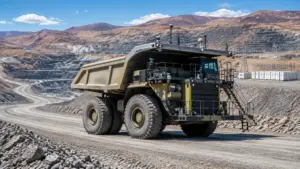
The world’s largest copper mines are tired. At BHP’s Escondida in Chile: the undisputed king of global copper production: the reality of grade decline is no longer a future problem; it’s a daily operational hurdle. For decades, these Tier-1 assets have been the bedrock of global supply, but the metal content in every ton of rock pulled from the ground is shrinking.

When ore grades drop from 1.0% to 0.5%, a miner has to move twice the amount of earth just to stay flat on production. That means more diesel, more water, more electricity, and higher Capex just to maintain the status quo. This isn’t just an Escondida problem. It’s a systemic rot across the Chilean and Peruvian copper belts.
Mining companies are throwing billions at the problem just to prevent production from falling off a cliff. We recently saw Freeport-McMoRan launch a $7.5B expansion bid at Chile’s El Abra, a necessary move, but one that highlights the massive capital requirements just to keep the lights on.
More Read


2. The Greenfield Ghost Town
We haven’t had a major, world-class greenfield copper discovery in over a decade. The industry has spent billions on exploration, but the results have been underwhelming. Instead of finding new “super-pits,” the industry is stuck trying to squeeze more out of brownfield expansions.
The lead time from discovery to first production is now averaging 15 to 20 years. That means even if we found a massive new deposit tomorrow, it wouldn’t hit the market until 2041. The pipeline for 2026 is essentially baked in, and it’s looking dangerously thin.
Investors have pivoted toward safer, shorter-term plays, leaving the “frontier” exploration to junior miners who are struggling to find the capital to drill. This has created a “lost generation” of projects. There is no cavalry coming to save the supply side before the end of the decade.
3. The Silicon-Copper Paradox: AI and the Grid
Everyone talks about EVs, but the real copper hog of 2026 is the digital infrastructure boom. The “shiny AI revolution” is built on a foundation of massive data centers, and those data centers are copper-intensive. From the high-voltage transformers to the intricate wiring within the racks, AI requires an order of magnitude more power: and therefore more copper: than traditional computing.
When you layer the AI demand on top of a global power grid that is already desperately overdue for an upgrade, the demand curve turns vertical. Most of the western world is operating on a grid designed in the 1960s. To integrate renewables and handle the load of a digitized economy, we need millions of miles of new copper cabling.
Industry conferences are flagging this as a critical moment, but the takeaway is always the same: we are trying to buy more than is being produced.

4. Permitting Purgatory and Geopolitical Friction
Even if the geology is there, the bureaucracy often isn’t. In the United States and Canada, getting a new mine through the permitting phase is a decade-long battle with shifting regulatory goalposts. Environmental, Social, and Governance (ESG) standards, while necessary, have slowed the pace of development to a crawl.
Meanwhile, in traditional copper strongholds like Chile and Peru, political volatility is creating a “wait and see” approach among the majors. Higher royalties and changing mining laws have de-risked other regions but at the cost of the world’s most prolific copper districts. The copper industry faces a $2.1 trillion investment gap to meet global demand by 2050. We aren’t even close to closing that gap by 2026.
We are seeing some movement in smaller jurisdictions: Ecuador is attempting to fast-track its mining sector: but these are drops in the bucket compared to the massive volumes required by China and the West.
5. The Inventory Crisis: No Safety Net
Global copper inventories are at historically low levels. In the past, supply shocks could be absorbed by stockpiles held in LME or Comex warehouses. That cushion is gone. We are now operating in a “just-in-time” commodity market.
Any minor disruption: a strike in Peru, a power outage in Zambia, or a weather event in Chile: now has an immediate and outsized impact on the copper price forecast for 2026. The market is so tightly wound that volatility is no longer a risk; it’s a feature.
Deutsche Bank notes that with peaks expected at $13,000/mt in Q2 2026, the market is essentially pricing in the fact that there is no margin for error. We are running the global economy on a copper tank that is permanently on “E.”

The 2026 Outlook: Base, Bull, and Bear
When we look at the copper price forecast 2026, we have to weigh these structural failures against the macro-economic backdrop.
- Base Case ($11,800 – $12,200/mt): Steady demand from the energy transition, coupled with continued production misses from Chile. Inventories remain low, keeping a high floor under the price.
- Bull Case ($13,500 – $15,000/mt): A major supply disruption at a Tier-1 asset (like a prolonged strike or technical failure) coincides with a Chinese stimulus package. This leads to a scramble for physical delivery.
- Bear Case ($9,500 – $10,500/mt): A global recession slows the pace of the energy transition and EV adoption, coupled with a surprising resolution to permitting bottlenecks in key regions. Note: Even the “bear” case is high by historical standards.
The Uncomfortable Truth
The mining industry isn’t like the tech industry. You can’t just write more code to create more copper. It takes massive capital, decades of patience, and a favorable political climate. As we head into 2026, we have none of those in sufficient quantities.
The structural deficit isn’t just a headline; it’s a bottleneck for the entire global economy. Whether it’s the future of U.S. Steel or the rollout of the global battery revolution, every road leads back to the red metal. And right now, that road is looking very expensive.
For more in-depth commodity analysis and the latest from the pits, visit Skillings Mining Review.