![[HERO] Copper's Hidden Bottleneck: Why 2026 Sm0elting Capacity is the New Mining Permit](https://cdn.marblism.com/amUFg5ZlcUW.webp)

For decades, the primary anxiety in the copper market was the “permitting cliff”: the agonizingly slow process of moving a discovery through environmental hurdles and into production. However, as we move through the second quarter of 2026, a different, more immediate crisis has overtaken the industry. The critical constraint on the global energy transition is no longer just getting the ore out of the ground; it is the physical ability to turn that ore into usable metal.
Global smelting activity hit a decade low in early 2026, with idle capacity reaching 14.3% in January. This “midstream meltdown” is creating a paradoxical market where miners struggle to find homes for their concentrate while end-users in the AI and EV sectors face a tightening squeeze on refined copper cathode. In the current landscape, smelting capacity has effectively become the “new mining permit”: the ultimate gatekeeper of supply.
The TC/RC Collapse: A Mathematical Impossibility
The most visible signal of this bottleneck is the unprecedented collapse of Treatment and Refining Charges (TC/RCs). These are the fees miners pay smelters to process concentrate into metal. Historically, high TC/RCs signaled a surplus of concentrate, while low charges signaled a shortage.
In 2026, the market has entered uncharted territory. Antofagasta’s benchmark settlement with Chinese smelters for the year landed at $0: a figure that would have been laughed at by analysts just three years ago. On the spot market, the situation is even more dire, with rates touching -$45/ton.
More Read

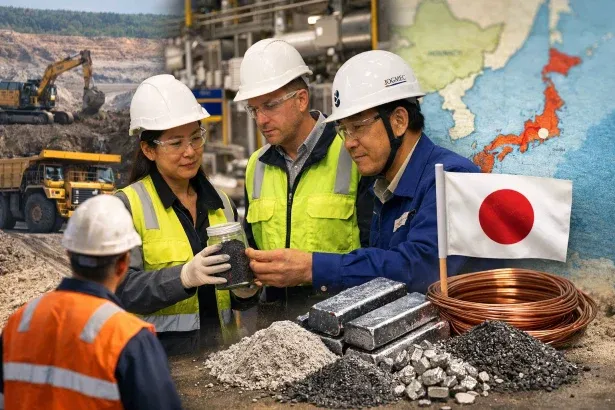
For a smelter, these numbers represent a mathematical impossibility. Without a positive TC/RC, a facility cannot cover its power, labor, or maintenance costs. Consequently, major operators are choosing to go dark rather than bleed cash. Japanese industrial giants, including Pan Pacific Copper and Mitsubishi Materials, have confirmed plans to curtail capacity, while Chinese smelters: which control over 50% of global output: are facing 10% production cuts to prevent a total margin wipeout.


Supply Shocks: Nature versus the Grid
The current smelting crisis is being exacerbated by a series of high-impact supply shocks at the mine level. While demand surges, the raw material required to feed what little smelting capacity remains active is being throttled by environmental and operational disasters.
More Read

The 2026 outlook has been further clouded by massive mudslides at the Grasberg facility in Indonesia and significant flooding at the Kamoa-Kakula complex in the Democratic Republic of Congo. These are not merely temporary setbacks; they have removed hundreds of thousands of tons of concentrate from the 2026 balance sheet. When combined with the ongoing fallout from the Cobre Panama closure, the “concentrate gap” has become a chasm.
This lack of feed is what drove TC/RCs to zero. Smelters are now fighting over a dwindling pool of available ore, even as the world demands more refined copper for the global battery revolution.
2026 Market Snapshot: Copper Smelting and Refined Balance
| Metric | 2025 Actual | 2026 Forecast | Change (%) |
|---|---|---|---|
| Global Idle Smelting Capacity | 8.2% | 14.3% | +74.4% |
| Benchmark TC/RC ($/tonne) | $35.00 | $0.00 | -100% |
| Refined Copper Deficit (mt) | 185,000 | 490,000 | +164.8% |
| Spot TC/RC (Low) | $12.00 | -$45.00 | N/A |
| AI/Data Center Demand Growth | 12% | 21% | +75% |
Data compiled by Skillings Mining Intelligence as of April 8, 2026.
The “Invisible Wall” of AI Demand
While the midstream is failing, the downstream is accelerating. The expansion of AI infrastructure has become the single largest driver of new copper demand. In early 2026, data center expansion plans among “Big Tech” players exceeded $600 billion. These facilities require massive amounts of copper for power distribution, cooling systems, and high-density cabling.
Unlike traditional construction demand, AI-driven demand is price-inelastic. If a $10 billion data center needs copper to go live, the project lead will pay a premium to secure supply. This is creating a “demand wall” that is colliding head-on with the smelting bottleneck. For more on how these factors are driving the long-term price, see our copper deficit forecast 2026.
Geopolitical Weaponization of the Midstream
The geographic concentration of smelting capacity has become a major strategic vulnerability for Western economies. China commands roughly 40% to 51% of global smelting capacity and nearly 66% of mined concentrate imports. This gives Beijing unprecedented leverage.
“Mining the copper isn’t enough if you can’t refine it,” says Salini Krishnan, senior analyst at Skillings. “The U.S. can technically meet a large portion of its raw copper needs, but we lack the domestic midstream infrastructure to turn that rock into the high-purity cathode required for high-tech applications. We have outsourced our strategic autonomy to the very entities we are competing with.”
Efforts to repatriate smelting capacity are underway, but they face a major hurdle: the current negative margin environment makes it nearly impossible to attract private capital for new smelter builds. This is where strategic mineral analysis suggests that government intervention or defense funding may be the only path forward to de-risk these essential facilities.
“https://cdn.marblism.com/6QOOiP2_mKT.webp“: mining-engineers-japan-strategic-minerals.webp
The New Investment Paradigm: Refinement Over Extraction
For investors and operators, the 2026 landscape requires a shift in focus. The “value” in the copper chain has migrated from the pit to the furnace. Companies that have integrated smelting capabilities or have secured long-term, fixed-rate processing agreements are the only ones insulated from the TC/RC volatility.
We are seeing a trend where major miners are looking to acquire or build captive smelting capacity to ensure their ore isn’t stranded. This is a reversal of the trend from ten years ago when miners divested midstream assets to focus on “pure-play” extraction. Today, a “pure-play” miner without a guaranteed home for its concentrate is a high-risk asset.
For a deeper look at the firms currently deploying capital into this space, our review of Orion Resource Partners’ $9B war chest provides a roadmap for where the institutional money is flowing.
2026 Outlook: A Bifurcated Market
As we look toward the second half of 2026, the copper market will likely remain bifurcated. We will see a “concentrate surplus” (due to smelter shutdowns) existing simultaneously with a “refined metal shortage.”
This will lead to:
- Refined Premiums: Prices for copper cathode will decouple from the LME base price as physical availability becomes the primary driver.
- Smelter Consolidation: Smaller, inefficient smelters will likely shutter permanently, leading to a more consolidated and potentially more powerful midstream sector.
- Policy Shifts: Expect to see the U.S. and EU designate smelting and refining as “critical infrastructure” to unlock subsidies that bypass the currently broken market economics.
The copper crisis of 2026 is a reminder that the energy transition is a physical endeavor. You cannot build a green future on spreadsheets alone; you need the industrial capacity to process the earth’s raw materials. Until the smelting bottleneck is addressed, the world’s electrification goals will remain stalled behind an invisible wall of idle capacity.

Stay Informed: For more deep-dive analysis into the commodities driving 2026, view our October 2024 archive and follow our daily updates.