The global race for critical minerals reached a new milestone this week as details emerged from the integrated technical study for the Vicuña District, a massive copper-gold-silver cluster spanning the border of Chile and Argentina. Managed by a 50-50 joint venture between BHP and Lundin Mining, the project represents an $18.1 billion commitment to unlocking one of the few remaining “tier-one” copper districts in the world.

With a projected mine life exceeding 70 years and an after-tax net present value (NPV) of $9.5 billion, the Vicuña development is not merely a mine; it is a multi-generational industrial corridor. As the industry grapples with a widening copper deficit forecast for 2026, the phased build-out of the Josemaria and Filo del Sol deposits offers a blueprint for how majors intend to secure long-term supply in complex geopolitical environments.
The $18 Billion Roadmap: A Three-Stage Strategy
The sheer scale of the Vicuña District requires a disciplined, multi-stage approach to manage capital risk and technical complexity. The joint venture has outlined a 25-year initial production profile that eventually ramps up to become one of the top five copper producers globally.
Stage 1: The Josemaria Foundation
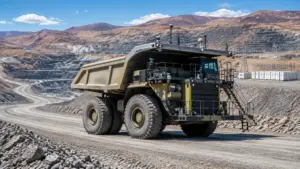
The first stage centers on the Josemaria deposit in San Juan, Argentina. With a targeted capital investment of $7.1 billion, this phase focuses on establishing the core infrastructure. Development is slated to begin in earnest in 2027, with first concentrate production expected by 2030. Stage 1 will utilize conventional open-pit methods: truck-and-shovel operations: feeding a large-scale crushing, grinding, and flotation circuit. This stage is critical for establishing the logistics corridor that will eventually service the entire district.
Stage 2: Filo del Sol Integration
Following the establishment of Josemaria, the focus shifts to Filo del Sol, located just across the border in Chile. Stage 2 introduces heap leach facilities specifically designed for oxide material. By utilizing solvent extraction and electrowinning (SX-EW) technology, the project will produce copper cathode and gold-silver dore on-site. This adds a high-margin component to the project’s output and maximizes the recovery of the diverse mineral suite present in the Andean porphyry system.
More Read

Stage 3: The 500kt Copper Expansion
The final stage of the current development plan involves a massive expansion of the concentrator capacity. At its peak, Stage 3 is designed to push average annual copper production beyond 508,000 tonnes. For context, this would place the Vicuña operation in the same league as world-class assets like Escondida or Grasberg.


Production Profile and Resource Depth
The resource base supporting this $18 billion investment is staggering. Combined measured and indicated resources across the district stand at 14.3 million tonnes of copper, 36.1 million ounces of gold, and 729 million ounces of silver. Inferred resources suggest significant upside remains as drilling continues at depth and along strike.
More Read

| Metric | Project Target (Life of Mine) | First 25-Year Average |
|---|---|---|
| Annual Copper Production | ~350,000 tonnes | 395,000 tonnes |
| Peak Copper Production | 508,000 tonnes | : |
| Annual Gold Production | ~600,000 ounces | 711,000 ounces |
| Annual Silver Production | ~18 million ounces | 22.2 million ounces |
| Mine Life | 70+ Years | : |
The production of gold and silver acts as a powerful “by-product credit,” significantly lowering the C1 cash costs of copper production. This financial insulation is vital for maintaining profitability through various commodity cycles over the next seven decades. For a deeper look at how such massive streams impact market valuations, see our analysis of the Vicuña consolidation.

Geopolitical Synergy: The Argentina-Chile Border
One of the most unique aspects of the Vicuña project is its cross-border nature. The deposits straddle the frontier between San Juan Province, Argentina, and the Atacama Region, Chile. Historically, such locations were seen as a liability due to regulatory friction. However, the 1997 Mining Treaty between Chile and Argentina provides a legal framework for “bi-national” projects, allowing for the movement of personnel, equipment, and ore across the border without traditional customs hurdles.
In Argentina, the project is benefiting from the RIGI (Régimen de Incentivo para Grandes Inversiones) framework, which provides tax, customs, and currency stability for mega-projects. If the final investment decision (FID) is reached by the end of 2026 as expected, Vicuña would represent the largest private investment in Argentina’s history.
The strategic importance of this district cannot be overstated. As explored in our Strategic Mineral Analysis 2026, the securement of long-life assets in mining-friendly jurisdictions is becoming the primary goal for diversified majors like BHP.
Technical Challenges and Infrastructure
Operating at high altitudes in the Andes presents significant engineering hurdles. The project requires the construction of high-voltage power lines, dedicated water pipelines, and heavy-haul road networks.
Advanced mineral processing is at the heart of the Stage 2 and 3 expansions. The use of modular processing units and automated haulage systems is expected to be a core feature of the operational design to mitigate the risks associated with the extreme environment.

The logistics of transporting concentrate from the high Andes to deep-water ports in Chile is another critical component. The JV is currently evaluating pipeline vs. rail options for concentrate transport, a decision that will impact the Class 2 capital estimates due later this year. This “bottleneck” management is a recurring theme in 2026, similar to the smelting capacity issues affecting other global copper hubs.
Financial Viability and Market Impact
At an 8% discount rate, the project’s $9.5 billion NPV is calculated based on conservative commodity price assumptions: $4.60/lb copper, $3,300/oz gold, and $40/oz silver. While the $18.1 billion initial and staged capital is high, the internal rate of return (IRR) of 14.8% is robust for a project of this duration and scale.
For investors and industry observers, the Vicuña build-out serves as a litmus test for the “super-cycle” thesis. The commitment of $18 billion by BHP and Lundin suggests a long-term belief in sustained demand for electrification metals.

Timeline to Production: What’s Next?
The road to 2030 is paved with several critical milestones:
- Late 2026: Final Investment Decision (FID) following the completion of feasibility studies and provincial agreements in San Juan.
- 2027: Commencement of early works and major capital deployment for Stage 1.
- 2028-2029: Construction of the Josemaria processing plant and regional infrastructure.
- 2030: Target for first copper concentrate production.
The project is also a significant player in the M&A landscape. The recent consolidation of the district has drawn comparisons to the massive war chests managed by firms like Orion Resource Partners, highlighting a broader trend of institutional capital flowing toward large-scale, de-risked mining jurisdictions.

Conclusion: The Anchor of the Andes
The Vicuña District is set to become the center of gravity for South American mining over the next decade. By integrating Filo del Sol and Josemaria into a single, phased development plan, BHP and Lundin Mining are solving the scale problem that often plagues massive porphyry deposits.
As the world looks toward 2030, the success of the Vicuña build-out will likely determine the stability of the global copper supply chain. For operators and policymakers alike, the project is a masterclass in cross-border cooperation, phased financial risk management, and the relentless pursuit of scale in an era of scarcity.
For more in-depth analysis on critical minerals and the 2026 market outlook, explore our 2026 Lithium Power Map or our latest reports on global silver production.