2026 Lithium Power Map : Early Access Open ($59) | Get the latest sector data and secure your copy here: https://skillings.short.gy/LithiumPreSale

The modern mining landscape is no longer defined solely by the volume of earth moved, but by the velocity and accuracy of the data extracted alongside it. As tier-one deposits in easily accessible jurisdictions dwindle, the industry has pushed into “frontier regions”: high-altitude Andean plateaus, remote Arctic circles, and deep Australian deserts. In these environments, the traditional operational model of housing thousands of workers in luxury camps is increasingly challenged by escalating costs and safety risks.
The solution has arrived in the form of a sophisticated, integrated mining tech stack. By combining Low Earth Orbit (LEO) satellite connectivity, fully autonomous drilling fleets, and AI-driven predictive maintenance, operators are decoupling physical presence from operational control. This shift is not merely a technological upgrade; it is a fundamental restructuring of mining capital expenditure (Capex) aimed at achieving maximum efficiency in the face of a tightening global mineral supply.
Connectivity: The Backbone of the Remote Mine
For decades, the primary bottleneck for remote mining was latency. Traditional geostationary satellites provided enough bandwidth for basic emails but were insufficient for the real-time teleoperation of a 400-ton haul truck or a high-precision drill rig. The emergence of LEO satellite constellations, such as Starlink and its competitors, has fundamentally altered this dynamic.
These systems offer high-speed, low-latency connectivity that allows for a “Remote Operating Center” (ROC) to be located thousands of kilometers away from the pit. In these centers, controllers can manage site operations with the same responsiveness as if they were sitting in a cabin on-site.
More Read

However, satellite connectivity is only one piece of the puzzle. Leading operators are now deploying ruggedized fiber networks with built-in redundancy as the primary site backbone. This infrastructure includes automated switching and ruggedized edge cabinets that can survive the vibrations and dust of an active mining environment. For remote sites, patch automation allows the network to shift traffic between satellite gateways and fiber links automatically, reducing the mean time to recovery from network outages from hours to minutes. This “always-on” connectivity is what enables the deployment of the rest of the tech stack.


Autonomous Drilling and Fleet Management
While autonomous haulage has become a standard at major sites like Rio Tinto’s West Angelas or Fortescue’s Chichester Hub, the focus has shifted toward autonomous drilling fleets. Drilling is a repetitive, high-stakes task where precision directly impacts the efficiency of the entire downstream process: from blasting and fragmentation to crushing and recovery.
More Read
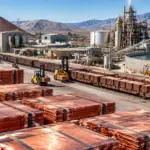
Autonomous drill rigs utilize high-precision GPS and AI-driven sensors to execute drill patterns with sub-centimeter accuracy. This precision ensures optimal explosive distribution, which in turn leads to better fragmentation and lower energy consumption in the mill. Furthermore, removing operators from the drill cab eliminates the risks associated with dust, noise, and vibration, while allowing the machines to operate through shift changes and blasting windows.
Integrating these fleets into a broader ecosystem requires a digital twin: a real-time virtual representation of the physical mine. By syncing the autonomous fleet with a digital twin, management can simulate different operational scenarios, optimizing haul routes in real-time to account for weather conditions or pit wall stability issues. This level of integration is a key component for companies featured in the Mining Innovator List: Top 10 Powering the AI Grid, where the intersection of energy and automation is paramount.
Predictive Maintenance: Moving from Reactive to Proactive
One of the most significant drains on mining profitability is unplanned downtime. In a remote setting, a broken-down excavator can stay idle for days while waiting for parts and specialized technicians to arrive. Predictive maintenance leverages the Internet of Things (IoT) to solve this problem.
Modern mining equipment is now outfitted with thousands of sensors monitoring everything from hydraulic pressure and oil temperature to vibration and acoustic signatures. AI algorithms analyze this data in real-time to identify “breaking points”: patterns that indicate a component is likely to fail in the near future.
- Vibration Sensors: Detect early signs of bearing failure in conveyors or crushers.
- Spectrometers: Analyze oil samples automatically to find microscopic metal shards, indicating internal engine wear.
- Airflow Monitors: Ensure ventilation systems in underground mines are performing optimally, preventing hazardous gas buildup.
By moving from a “fix-on-break” or a strictly schedule-based maintenance model to a condition-based model, operators can schedule repairs during planned downtime. This maximizes the lifespan of expensive assets and significantly reduces the need for large on-site maintenance crews. This shift is particularly relevant when considering The Brownfield Advantage, where revamping older assets with modern sensors can extend the life of a mine without the massive Capex required for a new discovery.

Digital Twins and the Visualization of Data
The “Data Lake” is a concept that has finally found its footing in the mining industry. It involves aggregating all the data points from connectivity hubs, autonomous fleets, and IoT sensors into a single, searchable repository. However, raw data is useless without visualization.
Digital twins provide this visualization, allowing engineers at an ROC to see a 3D model of the mine that updates in real-time. If a sensor on a pit wall detects a minute movement, that movement is highlighted on the digital twin, allowing for immediate evacuation or stabilization efforts. If a haul truck is burning more fuel than expected, the digital twin can help identify if it’s due to a poorly maintained haul road or a mechanical issue.
This level of oversight is essential for maintaining margins in a volatile market. As seen in the analysis of Copper’s 30% Deficit, the pressure to produce more with less is mounting. Digital twins allow for the “marginal gains” that, when aggregated across a multi-billion dollar operation, result in millions of dollars in saved Capex.
Capex Efficiency and the Bottom Line
The ultimate goal of the remote tech stack is Capex efficiency. Every person removed from a remote site represents a massive saving in logistical costs, insurance, and housing infrastructure. By centralizing expertise in urban Remote Operating Centers, mining companies can attract top-tier technical talent who might otherwise be unwilling to work on a 14-days-on, 7-days-off FIFO (Fly-In-Fly-Out) schedule.
Moreover, autonomous systems are more predictable than human operators. They don’t get tired, they don’t take shortcuts, and they operate machines within their designed tolerances every time. This consistency leads to a longer mean time between failures (MTBF) for equipment, reducing the overall capital required for fleet replacement over the life of the mine.

For investors and operators, the adoption of this tech stack is also becoming a requirement for capital access. As highlighted in our report on Why Mining ESG Reporting will change the way you access capital, the safety and environmental benefits of automation and predictive maintenance are now being factored into risk assessments by major lenders.
The Future of Remote Operations
The transition to fully autonomous, data-driven mining is not without its challenges. Cybersecurity becomes a paramount concern when a mine’s entire operation is controlled via a satellite link. Furthermore, the initial capital outlay for these systems is significant, requiring a long-term view that can sometimes be at odds with quarterly earnings pressure.
However, the trend is clear. The “Frontier Mine” of the future will be a quiet place, populated more by sensors and robots than by people. The heavy lifting will be done by autonomous machines, guided by engineers in climate-controlled offices thousands of miles away. This evolution is the only way the industry can meet the surging demand for critical minerals while maintaining the safety and efficiency standards required in the 21st century.
As the industry continues to evolve, the integration of these technologies will distinguish the leaders from the laggards. The ability to operate remotely is no longer a luxury: it is a strategic necessity for any company looking to navigate the complexities of the global mining landscape through 2030 and beyond.
2026 Lithium Power Map : Early Access Open ($59) | Get the latest sector data and secure your copy here: https://skillings.short.gy/LithiumPreSale