2026 Lithium Power Map : Early Access Open ($59) | Get the latest sector data and secure your copy here: https://skillings.short.gy/LithiumPreSale

By Mo Shine

The silicon valley of the 2020s is finding its hardest ceiling not in code or chips, but in the power grid. As we move deeper into 2026, the promise of Large Language Models (LLMs) and generative AI is colliding with the physical reality of electricity demand. It turns out that training a trillion-parameter model is an incredibly thirsty endeavor, and traditional renewables: while great for decarbonization: simply can’t provide the 99.999% uptime that a Tier 4 data center requires.
This is where the Small Modular Reactor (SMR) comes in. In a massive strategic pivot, Great British Energy Nuclear has recently signaled a £2.6 billion commitment toward the Rolls-Royce SMR program. This isn’t just a win for British engineering; it’s a blueprint for how the global AI infrastructure will likely be powered for the next thirty years.
More Read

The Problem: Why AI is an Energy Vampire
Before we look at the SMR solution, we have to understand the scale of the problem. A single ChatGPT query uses roughly ten times the electricity of a standard Google search. Multiply that by billions of users and the massive training clusters required for the next generation of “Reasoning” models, and you have a demand curve that looks like a vertical line.

Data center operators have spent the last decade buying RECs (Renewable Energy Credits) and building solar farms to offset their carbon footprints. However, wind and solar are intermittent. If the wind doesn’t blow and the sun doesn’t shine, the AI stops thinking. For a company like Microsoft or Google, that’s not an option. They need baseload power: steady, reliable, and high-capacity.
Nuclear energy has always been the obvious choice for baseload, but traditional “Big Nuclear” has been plagued by multi-decade timelines and multi-billion-dollar cost overruns. SMRs solve this by moving the construction from a messy field to a controlled factory floor.
More Read


The £2.6B Commitment: Great British Energy Nuclear
The UK government’s £2.6 billion push into the Rolls-Royce SMR program is a game-changer. This funding is designed to take the technology from the “proof of concept” stage into full-scale deployment. Rolls-Royce’s design is unique because it isn’t just a “small” reactor; it’s a modular one. About 90% of the components are built in a factory and shipped to the site.
For data center developers, this changes the “SMR Deployment Strategy” from a theoretical conversation into a procurement timeline. Instead of waiting 15 years for a plant like Hinkley Point C, operators are looking at a 5-to-7-year window for SMR installation. The UK’s commitment provides the financial de-risking necessary for these tech giants to sign long-term Power Purchase Agreements (PPAs).
Big Tech’s Nuclear Pivot
The UK isn’t alone in this. Across the pond, we are seeing a massive “Silicon-Nuclear Nexus” forming. We’ve already seen Amazon buy a data center directly adjacent to a nuclear plant, and Microsoft’s deal to restart Three Mile Island made headlines globally.
But the real “Investor Magnet” is the realization that tech giants might actually fund the next generation of nuclear mines. As we noted in our analysis of whether Big Tech will fund the next uranium bull market, the capital depth of a trillion-dollar tech company is far greater than that of a traditional utility. If Google needs 5GW of power to keep its AI lead, it will simply buy the mine, the enrichment services, and the reactor itself.
| Company | Nuclear Partnership | Estimated Capacity | Status (as of April 2026) |
|---|---|---|---|
| Microsoft | Constellation Energy | 835 MW | Restarting Unit 1 (Three Mile Island) |
| Amazon | Talen Energy | 960 MW | Operational / Expansion planning |
| Kairos Power | 500 MW | Agreement for 6-7 SMR units | |
| UK Government | Rolls-Royce SMR | 470 MW (per unit) | £2.6B Funding Commitment |
| Oracle | Undisclosed | 3 SMRs | Site design phase |
Why SMRs are the “Goldilocks” Solution for Data Centers
Small Modular Reactors typically generate between 50MW and 470MW of electricity. To put that in perspective, a large-scale AI data center campus can easily require 500MW to 1GW.
- Scalability: If a data center campus expands, you don’t need a new grid connection; you just add another SMR module.
- Uptime: Nuclear plants run at a capacity factor of over 90%. They don’t care if it’s nighttime or if there’s a heatwave.
- Footprint: An SMR occupies a fraction of the land required for a solar farm of equivalent output. In land-constrained regions like the UK or Northern Virginia, this is the only way to scale.
- Carbon-Free: For companies with “Net Zero 2030” goals, nuclear is the only way to get reliable baseload without firing up natural gas peaker plants.
The Mining Connection: Fueling the AI Revolution
You can’t have SMR deployment without uranium. The shift toward SMRs is putting unprecedented pressure on the uranium supply chain. We are seeing a shift from “just-in-time” delivery to “just-in-case” stockpiling by utilities and tech-adjacent energy providers.
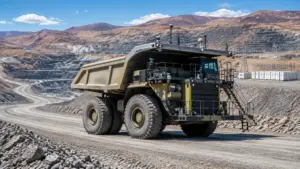
Significant projects like the Burke Hollow ISR mine are becoming critical infrastructure for this new energy reality. While the reactors get the headlines, the mining sector is the foundation. Without a steady stream of U3O8, those £2.6 billion SMRs are just very expensive paperweights.
The market is also watching NexGen’s Rook I project closely. As data centers begin to sign direct-from-mine contracts, the traditional dynamics of the uranium market are being rewritten. We are moving away from a world where miners sell to utilities, who then sell to consumers. We are moving toward a world where a tech company owns the entire value chain: from the pit to the GPU.
Challenges: Regulation and Public Perception
While the momentum is high, the path isn’t entirely clear. Regulatory bodies like the NRC in the US and the ONR in the UK are working to streamline the licensing process for SMRs, but nuclear safety is never a “fast” process. There is also the question of spent fuel management: a topic that tech companies are hoping to solve through investment in advanced recycling technologies, though that remains a long-term play.
Furthermore, the public perception of nuclear energy is shifting. In the face of an AI-driven energy crisis and the urgent need for carbon-free power, nuclear is no longer the “boogeyman” it was in the 1990s. It is increasingly seen as a high-tech, clean energy solution.
2026 Outlook: The Race to “First Criticality”
As we head into the second half of 2026, the race is on. The £2.6 billion commitment from Great British Energy Nuclear has put the UK in a pole position, but the US and China are not far behind. We expect to see more “behind-the-meter” deals where SMRs are built directly on data center campuses, bypassing the aging and congested public grids entirely.
For investors, the opportunity lies in the intersection of three sectors: AI infrastructure, nuclear engineering, and uranium mining. The SMR deployment strategy isn’t just about power; it’s about the survival of the AI industry. If you can’t power the chips, the chips don’t matter.
We will continue to track the Rolls-Royce SMR rollout and the corresponding movements in the uranium spot price as these multi-billion pound commitments move from the boardroom to the construction site.