A modern mineral processing facility at sunrise, representing the next phase of Guyana’s gold production expansion.

By Charles Pitts
Why Omai’s resource update matters
Investor interest in the Guiana Shield is shifting. Resource growth and M&A activity have pushed Guyana higher on the list of global gold jurisdictions. Omai Gold Mines (TSX.V: OMG) is at the center of that move because it recently reported a 22% increase in total gold resources, lifting inventory to 8 million ounces.
That milestone matters beyond one company. It helps validate the district-scale potential of Guyana. As miners look for high-margin assets in stable jurisdictions, Omai’s growth offers a clearer path from exploration to development. However, the market is not only watching the resource size. It is also watching what the update may signal for the next round of consolidation after the merger between G Mining Ventures and Reunion Gold.
Omai shifts from historic producer to large-scale development story
Omai Gold’s April 2026 resource update changed how the project is viewed. The company reported a total resource of 8 million ounces, including 38.1 million indicated tonnes at 2.04 g/t for 2.5 million ounces and 106.6 million inferred tonnes at 1.59 g/t for 5.5 million ounces.
More Read

The increase came largely from drilling success at Wenot and Gilt Creek. Just as important, the company upgraded a meaningful share of inferred material into the indicated category. That matters because it reduces some of the uncertainty ahead of the Preliminary Economic Assessment (PEA).

Exploration drilling continues across the Guiana Shield as companies race to expand existing resource footprints in 2026.
Exploration drilling continues across the Guiana Shield as companies race to expand existing resource footprints.

The Gilt Creek underground deposit has expanded to 2.5 million ounces at 3.26 g/t. That suggests Omai is no longer only an open-pit project. By combining a large open pit with a higher-grade underground mine, the company is targeting annual production of 250,000 to 300,000 ounces over an 18- to 20-year mine life. That is a sharp increase from 2024 projections. As a result, the project is drawing more attention from mid-tier and major producers.
More Read

The M&A context in Guyana
Omai’s 8-million-ounce milestone stands out because of what happened in Guyana in 2024. G Mining Ventures’ acquisition of Reunion Gold, centered on the Oko West project, showed that the market will pay up for Guyana assets with a visible path to production.
The G Mining-Reunion deal created a larger intermediate producer by combining Tocantinzinho in Brazil with Oko West. It also reinforced a key valuation point. First-quartile gold assets in the Guiana Shield have historically commanded takeover premiums of up to 1.7x net asset value (NAV).
Omai’s resource now exceeds the initial size of Oko West at the time of that acquisition. Because of that, comparisons are growing harder to dismiss. Investors increasingly see Guyana not only as an oil and gas frontier, but also as a proven gold province that can support multiple multi-million-ounce mines.
Regional momentum and district effects
The “Guyana Gold Rush” is not limited to Omai. While Omai leads on scale, G2 Goldfields is also advancing the Oko Gold project with strong economics. A recent PEA outlined a $2.6 billion NPV and a 39% internal rate of return (IRR). That adds to the region’s reputation for high-margin gold projects.
This group of projects is creating a district effect. Infrastructure was once a major constraint. However, government-backed energy investment and a more supportive regulatory setting are starting to reduce that barrier. The Guyanese government has also shortened permitting timelines. Some projects have secured environmental approvals in as little as 14 months, compared with multi-year delays often seen in North America or Australia.

Mining professionals review site plans in Guyana, where streamlined permitting and government support are accelerating project timelines.
Mining professionals review site plans in Guyana, where streamlined permitting and government support are accelerating project timelines.
2026 outlook: infrastructure and power
A key part of the 2026 outlook is the use of modern mining technologies and the broader energy nexus. Guyana’s oil-driven revenue is indirectly helping mining because it is funding upgrades to the national grid and transport networks.
Omai may benefit more than some peers. The project sits near infrastructure left from its earlier production history. Because of that, it may hold a first-mover advantage on capital intensity. Existing tailings facilities, roads, and a local workforce with mining experience could lower barriers for the 250,000- to 300,000-ounce-per-year operation outlined for the coming PEA.
What it means for the junior sector
For the wider Guyana junior sector, Omai’s resource growth could help establish a valuation floor. When a company with a $1.14 billion market cap defines 8 million ounces, nearby explorers often face new comparisons, especially if they are still valued mainly on exploration upside.
Many analysts also describe the sector as being in an M&A supercycle. Major producers are looking for ways to replace declining reserves. Because 5-million-ounce deposits are scarce and 8-million-ounce deposits are even less common, Omai has moved closer to the shortlist of assets that larger producers may watch for Guiana Shield exposure.

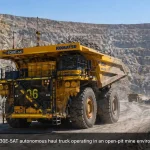
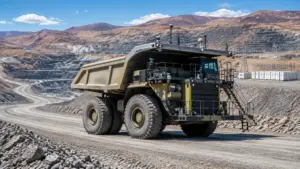
Large-scale hauling operations are expected to ramp up across Guyana as projects like Omai and Oko West move toward construction phases.
Large-scale hauling operations are expected to ramp up across Guyana as projects like Omai and Oko West move toward construction phases.
Summary of key data points
| Metric | Omai Gold (2026 Update) | G2 Goldfields (Oko Gold) |
|---|---|---|
| Total Gold Resource | 8.0 Million Ounces | ~4.5 Million Ounces |
| Indicated Grade | 2.04 g/t Au | ~2.10 g/t Au |
| Target Production | 250k – 300k oz/year | 200k – 240k oz/year |
| Anticipated Mine Life | 18 – 20 Years | 12 – 15 Years |
| Project Status | PEA Update Pending | PEA Completed |
Conclusion: a new benchmark for Guyana
Omai Gold’s resource expansion is one of the clearest signs yet that Guyana’s gold sector is maturing. The shift from speculative exploration to multi-million-ounce resource definition is drawing more institutional attention to the region.
Attention will now turn to execution in the second half of 2026. Omai’s PEA is expected within the next 90 days. That study should offer a clearer view of the full economics behind an 8-million-ounce project. If those numbers support the geology, Guyana’s gold story could deepen further, with Omai remaining one of the sector’s main reference points.