By Charles Pitts

South32 (ASX, LSE, JSE: S32) stunned investors on Thursday with a massive US$1.1 billion capital cost increase for its flagship Hermosa project in southern Arizona. The diversified miner now expects the Taylor zinc-lead-silver deposit to cost US$3.3 billion to develop, a 50% jump from the US$2.2 billion estimate provided at final investment approval just over two years ago.
The announcement sent South32 shares tumbling 5.4% in early trading as the market digested the combination of escalating costs and a revised production timeline. First production is now slated for the second half of fiscal year 2028, reflecting significant headwinds in construction and underground development.
The $1.1 Billion Breakdown: Why Costs Soared
The cost blowout is the result of a “perfect storm” of macroeconomic pressures and site-specific technical challenges. According to South32’s updated feasibility data, the increase is driven by four primary factors:
- Elevated Inflationary Pressures: Persistent inflation in the United States has driven up the cost of raw materials and labor. South32 noted that industry-wide rises in the price of steel, piping, concrete, and electrical components significantly exceeded initial contingency buffers.
- Impact of US Tariffs: Trade policies have added a layer of complexity and cost. Increased tariffs on imported steel and specialized components have directly impacted the project’s procurement budget. This trend aligns with broader market shifts, such as those discussed in our analysis of Indonesia’s trade shifts following US tariff rulings.
- Scope Changes and Technical Challenges: The company has revised the project scope to include additional decline access. Higher-than-expected costs for sinking the primary ventilation and production shafts also contributed to the blowout. Slower productivity in shaft-sinking: a notoriously difficult phase of underground development: proved more expensive than forecasted.
- Contractor Underperformance: South32 explicitly cited challenges with contractor performance and productivity. Slower-than-anticipated construction progress has stretched the development window, leading to higher “burn rates” for overhead and site management.

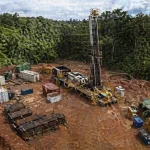
The Taylor deposit requires advanced processing infrastructure to handle its high-grade zinc and lead ore.
More Read

Operational Delays and New Milestones
The revised timeline pushes the ramp-up of the Taylor deposit further into the decade. The underground mine and its 4.3 million tonne per annum (mtpa) processing plant are now expected to reach nameplate capacity in fiscal 2031.

CEO Graham Kerr emphasized that while the cost increase is disappointing, the long-term value of the project remains intact. “We are building a multi-generational mine in a Tier-1 jurisdiction,” Kerr stated. “Despite the current inflationary environment and technical hurdles, Hermosa is a cornerstone of our strategy to pivot toward commodities essential for the global energy transition.”
The delay in first production to H2 FY2028 means that South32 will miss the earlier-anticipated supply window for zinc, a metal currently seeing tightening supply as several major global mines approach the end of their lives.
More Read

Silver Linings: Resource and Reserve Growth
Despite the financial shocks, the technical update provided some positive news regarding the project’s scale. South32 announced a 52% increase in Ore Reserves for the Taylor deposit, which now stands at 99 million tonnes.
This upgrade extends the initial operating life of the mine by approximately five years, bringing the total expected life of mine (LOM) to 33 years. The increase in reserves suggests that while the upfront cost is higher, the total amount of metal recovered over the mine’s life will also be significantly greater.
Furthermore, drilling at the adjacent Peake deposit has yielded promising results. The Mineral Resource at Peake has grown by 32%, highlighting the potential for significant copper production. This positions Hermosa not just as a zinc play, but as a critical integrated hub for copper, lead, silver, and manganese.
Hermosa’s Critical Role in US Mineral Security
The Hermosa project remains the only advanced mining project in the United States capable of producing two minerals on the federal critical minerals list: manganese and zinc.
The Clark deposit, part of the broader Hermosa complex, is being developed to produce battery-grade manganese. As the US moves to decouple its critical mineral supply chains from China, Hermosa has become a focal point of domestic industrial policy. The project has previously received support from the US Department of Energy, underlining its strategic importance.
For a deeper dive into how these geopolitical tensions are affecting the industry, see our report on China’s critical minerals export controls and the impact on global supply chains.

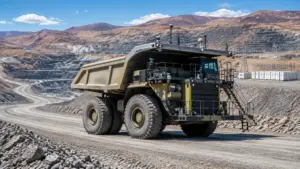
Strategic planning and local procurement are becoming increasingly complex as US mining projects navigate tariff and labor hurdles.
Market Reaction and Analyst Outlook
The 5.4% drop in South32’s share price reflects investor weariness with “capital creep”: a recurring theme in the mining sector as projects transition from feasibility to construction.
Investment analysts have highlighted several key risks and potential upsides following the blowout:
| Factor | Detail | Impact |
|---|---|---|
| Capital Intensity | Capex per tonne of capacity has risen sharply. | Negative |
| Jurisdiction | Arizona is a stable mining region with clear permitting. | Positive |
| Commodity Outlook | Zinc and copper prices are expected to remain strong through 2030. | Positive |
| Funding | South32’s balance sheet remains robust, but dividend capacity may be squeezed. | Neutral/Negative |
“The $1.1 billion increase is a bitter pill for shareholders,” noted one Sydney-based resources analyst. “However, the extension of the mine life to 33 years helps soften the blow to the project’s Net Present Value (NPV). The focus now must be on execution and ensuring no further delays in the shaft-sinking process.”
Future Outlook: Base, Bull, and Bear Case
As South32 navigates this challenging construction phase, the market will be watching for quarterly updates on shaft-sinking progress and procurement milestones.
- Base Case: Production begins in late 2028 with steady ramp-up to FY31 nameplate capacity. Costs stabilize around the $3.3 billion mark.
- Bull Case: Metal prices (particularly zinc and copper) surge due to global deficits, offsetting the higher capital costs. Successful integration of the Peake copper deposit further enhances project economics.
- Bear Case: Continued contractor issues or technical difficulties in the ventilation shafts lead to another production delay beyond 2028, further eroding investor confidence.
The Hermosa project is a test case for the feasibility of large-scale, underground “greenfield” projects in the US. With the transition to green energy accelerating, the demand for the minerals South32 is targeting is undeniable. The challenge remains whether the company can deliver these minerals at a cost that justifies the massive investment.
For more daily insights and expert analysis on the global mining industry, visit Skillings Mining Intelligence.