By Charles Pitts
Silver Mountain Resources Inc. (TSX-V: AGMR) has confirmed that its Reliquias silver mine in central Peru remains on track for a production restart in the third quarter of 2026. Backed by a treasury exceeding US$30 million, the Toronto-based company is now fully funded to complete the final stages of underground development and plant refurbishment at the brownfield site.
The update marks a critical transition for Silver Mountain as it moves from explorer to producer. To date, the company has completed over 3,000 meters of underground development, including the commencement of raise boring operations designed to optimize ventilation and secondary egress. Management indicates that project expenditures are tracking according to budget, providing a clear runway toward commercial production.
Operational Momentum and Development Milestones
The Reliquias mine, situated within the 100%-owned Castrovirreyna Project in the Huancavelica region, is a high-grade silver-polymetallic deposit. The current development phase is focused on preparing the underground workings for high-tonnage extraction. Of the 3,000 meters of development completed, a significant portion has focused on accessing the Matacaballo and Sacasipuedes veins, which form the core of the initial mine plan.
More Read

In addition to horizontal development, the introduction of raise boring is a key technical milestone. Raise boring allows for the efficient creation of vertical shafts without the need for explosives, reducing geotechnical risks and accelerating the timeline for underground infrastructure. This progress is matched by the accumulation of a surface stockpile, which currently stands at approximately 5,000 tonnes of mineralized material. This stockpile will serve as initial feed for the processing plant during the commissioning phase, ensuring a smoother ramp-up.

“The consistency of our development rate is the primary driver behind the Q3 2026 target,” a company representative noted in recent technical filings. “With the primary infrastructure largely in place, the focus shifts to the final refurbishment of the processing facilities and the installation of modern automation systems.”

More Read

Financial Security: The US$30 Million War Chest
In an environment where junior miners often struggle with capital constraints, Silver Mountain’s financial position remains a standout. The company’s treasury of over US$30 million is earmarked specifically for the Reliquias restart. This capital covers the remaining CAPEX for plant upgrades, underground equipment procurement, and the working capital required to reach cash-flow-positive status.
The funding certainty allows the company to avoid the “dilution trap” common in the late stages of mine construction. By securing the necessary capital early, Silver Mountain has been able to lock in long-lead items and service contracts, mitigating the impact of inflationary pressures that have affected the broader mining sector over the past 24 months.
This financial stability is particularly relevant given the volatility in the silver market. As silver prices fluctuate based on industrial demand and macroeconomic shifts, having a fully funded project protects the company from being forced to raise capital under unfavorable market conditions.
Plant Capacity and Technical Infrastructure
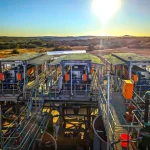
At the heart of the operation is the 2,000 tonnes-per-day (tpd) processing plant. The facility is currently undergoing a comprehensive refurbishment program, which began in earnest in late March 2026. The scope of work includes the overhaul of the crushing and grinding circuits, as well as the optimization of the flotation cells to maximize recoveries of silver, lead, zinc, and gold.
The plant’s capacity of 2,000 tpd provides significant scale for a high-grade underground operation. While initial production may start at a lower throughput, the existing infrastructure allows for rapid expansion as more stopes are brought online. Furthermore, the site includes an operating tailings storage facility with permitted capacity for at least two years of operations at maximum throughput, with expansion permits already in the pipeline.
The technical integration of the mine and plant is supported by modern software solutions for grade control and mine sequencing. These tools are expected to help management navigate the complexities of the vein systems at Reliquias, ensuring that the highest-margin ore is prioritized during the early years of the mine life.

Regional Context: The Legacy of Huancavelica
The Castrovirreyna district has a mining history that spans centuries, but the Reliquias mine represents the modern face of the region’s mineral potential. Located in the Huancavelica department of central Peru, the project benefits from established infrastructure, including road access and connection to the national power grid.
The region is known for its prolific silver-base metal systems, and Silver Mountain’s success is closely watched by both local stakeholders and international investors. The company has maintained an active social responsibility program, focusing on local hiring and sustainable water management: two critical components for maintaining a social license to operate in the Peruvian Andes.
For the mining industry, the restart of Reliquias is a positive signal regarding Peru’s investment climate. Despite periodic geopolitical shifts in Lima, the mining sector continues to be the backbone of the Peruvian economy. Success stories like Silver Mountain’s Reliquias restart demonstrate that well-capitalized projects with strong local support can navigate the regulatory landscape effectively.
Silver’s Role in the Global Energy Nexus
The timing of the Reliquias restart coincides with a projected increase in silver demand driven by the energy transition. Silver is a critical component in photovoltaic cells for solar panels and is increasingly used in the electronic components of electric vehicles (EVs).
According to data often highlighted in Skillings Mining Intelligence reports, the “silver deficit” in the global market is expected to persist as industrial demand outpaces mine supply. For a company like Silver Mountain, entering production in late 2026 positions it to capture the upside of these market dynamics. The polymetallic nature of the Reliquias deposit also provides exposure to lead and zinc, which are essential for traditional industrial applications and new battery technologies alike.
By focusing on a brownfield restart rather than a greenfield build, Silver Mountain has significantly reduced the time-to-market. This strategy allows the company to leverage existing tunnels, shafts, and permits that would take years to develop from scratch.

Risk Factors and Geopolitical Outlook
While the project is fully funded and technically advanced, it is not without risks. The primary challenges for any mining operation in Peru involve regulatory compliance and the potential for social unrest. Silver Mountain has addressed these by maintaining high ESG standards and engaging in transparent dialogue with the Castrovirreyna community.
Geotechnically, the Reliquias mine must manage the complexities of narrow-vein mining. While the grades are high, the extraction process requires precision to minimize dilution. The 3,000 meters of development already completed have provided the geological team with valuable data to refine the mine’s block model, but the real test will come during the initial stope extraction in Q3 2026.
Investors are also monitoring the broader economic indicators in Peru. While the Sol (PEN) has remained relatively stable compared to other regional currencies, fluctuations in labor and energy costs could impact the long-term AISC (All-In Sustaining Costs) of the operation.
Conclusion: A Transformational Year Ahead
Silver Mountain Resources is entering its most significant year since its public debut. The transition from development to production is often the most value-accretive period for a junior mining company, provided the execution is flawless. With a US$30 million treasury, a clear technical roadmap, and a strategic location in a proven mining district, the Reliquias mine is well-positioned to become a key contributor to the global silver supply.
As the plant refurbishment nears completion and the underground crews reach the first production stopes, the industry will be watching closely to see if Silver Mountain can meet its Q3 2026 target. If successful, it will join the ranks of Peru’s mid-tier silver producers at a time when the world needs the “white metal” more than ever.
Data Snapshot: Reliquias Project Overview
| Key Metric | Status/Value |
|---|---|
| Target Production Restart | Q3 2026 |
| Current Treasury | > US$30 Million |
| Underground Development Done | ~3,000 Meters |
| Processing Plant Capacity | 2,000 tpd |
| Primary Commodities | Silver, Lead, Zinc, Gold |
| Location | Huancavelica, Peru |
| Current Stockpile | ~5,000 Tonnes |
For more deep-dives into South American mining developments, visit the Skillings Mining Magazine archive.