By Penny Langford
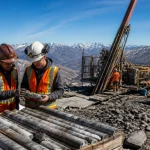
URANIUM CITY, SASKATCHEWAN : Triton Uranium (TSX: TRU) has officially commenced its 2026 summer drilling campaign at the flagship Atlas Project, signaling a major move to revive production in the historic Uranium City district. The 10,000-meter diamond drill program is designed to test four high-priority target zones, with a primary focus on near-surface mineralization that could support a low-cost, open-pit mining model.
The mobilization comes as North American uranium supply security has reached a critical inflection point. Following the U.S. Section 232 proclamation in early 2026, which identified uranium as a strategic asset vulnerable to foreign supply chain disruptions, junior miners with assets in stable jurisdictions like Saskatchewan have seen increased attention from both investors and policy-makers.
Accelerating the Atlas Project
The Atlas Project covers approximately 46,742 acres of mineral dispositions in the Beaverlodge Uranium District of northern Saskatchewan. Unlike the deep, technically challenging unconformity-style deposits found in the central Athabasca Basin: where shafts often exceed 800 meters: Triton’s targets at Atlas are located within 200 meters of the surface.
More Read

“The objective of this 10,000-meter program is two-fold,” a technical lead for the project noted during the site mobilization. “First, we are validating the historical data from the Dubyna Mine area, which saw active production in the late 1970s. Second, we are testing geophysical anomalies that suggest the mineralized structures extend significantly further than previously understood.”

The program is expected to run through the end of the third quarter, with initial assays anticipated by late July. The data gathered will form the basis for a refreshed resource estimation and a Preliminary Economic Assessment (PEA) scheduled for late 2026.

More Read

Strategic Importance for North American Energy
The timing of Triton’s development coincides with a tightening global market. North America currently produces only a fraction of the uranium required to fuel its nuclear fleet, a gap that has become more glaring as utilities move to decouple from Russian supply.
In January 2026, the U.S. Department of Energy awarded $2.7 billion in contracts to expand domestic enrichment capacity, emphasizing the need for a “mine-to-reactor” domestic supply chain. While major players like Uranium Energy Corp are expanding production at sites like Burke Hollow, the industry consensus suggests that a pipeline of new, diverse projects is necessary to meet the projected 2026–2030 demand surge.
Market analysts at Skillings Mining Intelligence recently highlighted that the “AI-Energy Nexus”: the massive power demand from data centers: is driving a resurgence in nuclear power interest. This shift has pushed uranium price forecasts toward the $150/lb mark for late 2026, creating a favorable tailwind for developers like Triton.

The Dubyna Mine Heritage
A central component of the Atlas Project is the historic Dubyna Mine. Operated between 1979 and 1982, the site was closed due to a collapsing uranium price rather than a lack of mineral resources. Historical records indicate that the mine yielded high-grade ore from both open-pit and underground workings.
Triton is applying modern geophysical techniques, including gravity and electromagnetic surveys, to map the structural controls that previous operators missed. By focusing on the structural “plumbing” of the Beaverlodge district, the company aims to prove that the Uranium City area remains a world-class jurisdiction for high-grade uranium.
“Uranium City was once the heart of Canadian uranium production,” said a project engineer on-site. “We aren’t just looking for what was left behind; we are using 2026 technology to find what the original miners couldn’t see.”
Operational Infrastructure and Logistics
Saskatchewan remains one of the world’s premier mining jurisdictions, ranked highly for its regulatory stability and geological prospectivity. However, the remote nature of Uranium City poses logistical hurdles. Triton has invested in upgrading local trail networks and establishing a modular exploration camp capable of housing 40 personnel.
The 2026 program utilizes two high-efficiency diamond drill rigs capable of deep penetration, though the current focus remains on the “sweet spot” between 50 and 250 meters. The use of specialized machinery adapted for the rugged Canadian Shield terrain is essential for maintaining the aggressive 10,000-meter schedule.

Market Snapshot: Uranium and Nuclear Fuels (May 2026)
| Commodity | Spot Price (USD/lb) | Weekly Change | 2026 Outlook |
|---|---|---|---|
| U3O8 Uranium | $104.50 | +2.1% | Bullish (Supply Deficit) |
| Enriched Uranium (LEU) | $1,650/SWU | +0.5% | Stable |
| Conversion (North America) | $42.00 | +1.2% | High Demand |
Data Source: Skillings Market Intelligence
Geopolitical Drivers and the 2026 Outlook
The broader geopolitical landscape continues to favor domestic development. With African uranium production increasingly being diverted to Chinese markets through long-term off-take agreements, Western utilities are facing a shrinking pool of available spot market supply.
The Section 232 proclamation issued earlier this year has also signaled to the market that the U.S. and Canadian governments may provide further incentives for projects that can reach production by the end of the decade. For Triton Uranium, the Atlas Project represents a potential “fast-track” candidate due to its existing historical infrastructure and near-surface geology.

Conclusion of Phase 1
As drilling progresses, the industry will be watching for assay results that confirm the continuity of high-grade zones. If Triton can replicate the historical grades associated with the Dubyna Mine while expanding the footprint of the Atlas Project, it could redefine the economic potential of the Uranium City district.
The 10,000-meter program is a bold statement of intent in a market that is increasingly prioritizing speed-to-market and jurisdictional safety. For now, the rigs are turning, and the first core samples are heading to the lab; a significant step forward for North America’s nuclear fuel future.