By Charles Pitts
In the global race to secure critical minerals for the energy transition, the most valuable deposits are no longer found on the surface. They are “blind”: hidden beneath hundreds of meters of sediment, volcanic rock, or complex geological overburden. Nowhere is this challenge more evident than in the Zambian Copperbelt, where KoBold Metals is deploying an artificial intelligence-driven “Frontier Blueprint” to unlock one of the world’s most significant deep copper discoveries.
The Mingomba project, located near the border of Zambia and the Democratic Republic of Congo (DRC), represents a shift in how the mining industry approaches exploration. By integrating decades of legacy data with real-time geophysical modeling, KoBold has identified a high-grade copper resource that is projected to produce over 300,000 metric tons of copper annually. This discovery, achieved in just three years: a fraction of the traditional decade-long exploration cycle: serves as a primary case study for the role of AI in solving the looming 2026 copper deficit.
The Mingomba Discovery: A $2.5 Billion AI Bet
KoBold Metals, backed by high-profile investors including Breakthrough Energy Ventures (Bill Gates, Jeff Bezos, and Sam Altman), has committed between $2.3 billion and $2.5 billion to develop the Mingomba mine. The site was previously explored by major miners over the last century, but its primary ore body remained elusive due to its extreme depth and complex structural positioning.
More Read

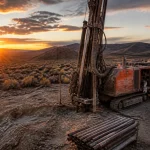
The breakthrough came through the application of KoBold’s proprietary tech stack, which allowed geologists to “see” through 1,700 meters of rock with unprecedented clarity. By the time the discovery was announced, the company had drilled more than 120,000 meters of core, including some of the deepest exploration holes ever recorded in the Zambian Copperbelt.

The Tech Stack: TerraShed and Machine Prospector
The core of KoBold’s “Frontier Blueprint” relies on two interconnected AI platforms: TerraShed and Machine Prospector. Together, they function as a digital nervous system for the exploration team, processing vast quantities of data to reduce the statistical uncertainty inherent in deep drilling.
TerraShed: The Data Integration Engine
Deep-seated deposits are often overlooked because the data required to find them is siloed across different eras and formats. TerraShed acts as a massive ingestion engine, standardizing historical geological maps, modern satellite imagery, geochemical assays, and electromagnetic surveys into a unified subsurface model.
More Read

In Zambia, this meant digitizing and georeferencing paper records from as far back as the early 20th century and layering them with high-resolution gravity and magnetic data. This comprehensive mining tech stack allows for a holistic view of the region’s structural evolution.
Machine Prospector: Pattern Recognition at Scale
While TerraShed organizes the data, Machine Prospector analyzes it. The AI is trained on thousands of known mineral deposits globally, learning the subtle geochemical and geophysical signatures that precede a major discovery.
In the case of Mingomba, the AI identified multidimensional correlations between rock chemistry and structural faulting that human geologists had previously missed. This enabled KoBold to target “blind” ore bodies that do not outcrop on the surface, significantly reducing the “dry hole” rate and accelerating the path to a bankable feasibility study.

Mingomba Project Overview: Key Performance Indicators
The following data summarizes the current scope and projected impact of the Mingomba project based on 2026 operational updates.
| Feature | Specification / Data Point |
|---|---|
| Location | Chililabombwe District, Zambia |
| Estimated Capital Cost | $2.3 billion – $2.5 billion |
| Target Depth | 1,700 meters (approx. 1.05 miles) |
| Projected Annual Output | 300,000+ metric tons Copper |
| Drilling Completion | 120,000+ meters (as of Q2 2026) |
| Shaft Sinking Start | Early 2027 |
| Estimated Production Start | Early 2030s |
| Major Backers | Breakthrough Energy Ventures, T. Rowe Price, CPP Investments |
The Mile-Deep Challenge: Engineering at Depth
Mining at a depth of over one mile (1,700 meters) presents engineering hurdles that extend far beyond the initial discovery. The Zambian Copperbelt is notorious for being one of the “wettest” mining environments in the world. As shafts descend, the intersection of high-pressure aquifers requires massive, constant pumping infrastructure to prevent flooding.
Operational costs at these depths are significantly higher due to the need for advanced ventilation systems, rock mechanics monitoring, and automated haulage. For KoBold, the AI does not stop at discovery; it is being integrated into the mine design to optimize the placement of shafts and galleries. By modeling the structural integrity of the rock mass at depth, engineers can design a mine that maximizes ore recovery while minimizing the risks associated with seismicity and groundwater inflow.

Frontier Strategy: Zambia’s 3-Million-Ton Ambition
The Mingomba discovery is a cornerstone of Zambia’s national strategy to triple its copper output to 3 million metric tons per year by 2031. For President Hakainde Hichilema’s administration, KoBold’s success is a validation of the country’s “New Dawn” mining policy, which aims to attract high-tech investment through regulatory stability and improved transparency.
Unlike traditional “low-hanging fruit” projects, frontier mining in regions like Zambia requires a long-term capital commitment. The presence of AI-led firms like KoBold is shifting the perception of frontier risk. When exploration is guided by data rather than guesswork, the financial risk of deep-shaft mining becomes more palatable for institutional investors. This trend is also seen in the success of other regional players like Capstone Copper, which continues to leverage tech to drive production growth in challenging jurisdictions.
Geopolitical Implications: The Silicon-to-Copper Pipeline
The involvement of Silicon Valley’s elite in a Zambian copper mine highlights the convergence of the technology and resource sectors. Copper is the “metal of electrification,” essential for everything from AI data centers to EV battery arrays. By funding KoBold, tech leaders are effectively vertically integrating their supply chains, ensuring that the raw materials needed for the next generation of computing and energy are secured at the source.
The success of the “Machine Prospector” model in Zambia is likely to trigger a wave of similar AI-led exploration programs across other frontier regions, including the DRC, Saudi Arabia, and parts of the South American Andes.

2026 Outlook: Scaling the Blueprint
As of May 2026, KoBold Metals is transitioning from pure exploration to the pre-feasibility and engineering phase. Shaft sinking is slated to begin in early 2027, marking the transition from a digital model to physical infrastructure.
The Mingomba blueprint proves that AI can do more than just process data: it can discover the “impossible” deposits that will define the next decade of mining. For operators and investors, the lesson is clear: the future of resource security lies in the ability to integrate deep tech with deep earth.