By Charles Pitts
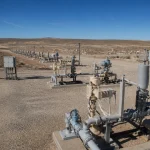
In the high-desert landscape of San Juan County, Utah, a long-dormant asset is being transformed into a blueprint for the future of extraction. Mariana Minerals, which acquired the former Lisbon Valley Mine in late 2025, officially restarted operations in April 2026 under a new name: Copper One. While the site has a 15-year history of production, its relaunch represents a radical departure from traditional mining.
Copper One is the first site globally to be operated by MarianaOS, a unified software platform designed to manage every aspect of the mining value chain without a human on the machine. As the industry faces a structural shortage of skilled operators and rising costs, the Utah project serves as a live demonstration of how “autonomy-first” architecture can redefine the economics of copper production.
The Labor Crisis and the Shift to Autonomy
The mining industry is currently navigating a perfect storm. Even as copper demand surges to meet energy transition targets: a trend explored in our analysis of the 2026 copper deficit: the talent pool is shrinking. Remote sites in regions like southeastern Utah struggle to attract and retain the heavy equipment operators and engineers required for conventional high-volume extraction.
More Read

Mariana Minerals’ response was to design MarianaOS, a system that doesn’t just automate existing trucks, but replaces the traditional organizational structure with a digital core. By removing the need for onsite operators for every vehicle and plant component, the company is targeting a 50% reduction in mining costs and a 30% reduction in refining costs. This is not merely an incremental gain; it is a fundamental shift in the mining tech stack for remote operations.

MarianaOS: The Three-Layer Architecture
The MarianaOS platform is not a single piece of software but a tripartite ecosystem designed to eliminate data silos. In traditional mines, the pit, the plant, and the capital projects team often work in separate digital environments, leading to delays and misaligned objectives. MarianaOS bridges these gaps through three integrated platforms.
MineOS: Orchestrating the Pit
MineOS serves as the brain for all activity within the open pit. It handles geologic modeling, mine planning, and fleet orchestration in a single real-time environment. Unlike traditional fleet management systems that require dispatchers to assign tasks to human drivers, MineOS uses reinforcement learning to optimize truck-and-shovel movements based on current conditions, such as ore grade variations or weather events.
More Read


At Copper One, this orchestration layer integrates directly with Sandvik AutoMine technology. The fleet consists of autonomous haulage and loading units that operate around the clock without shift changes or breaks. This continuous operation maximizes the utilization of the hardware, ensuring that the primary bottleneck in the system is the physical capacity of the machinery, not human endurance.
To handle the “last mile” of inspection and safety, Mariana has deployed Boston Dynamics’ Spot. These agile, quadrupedal robots are equipped with LIDAR and thermal sensors, allowing them to traverse uneven terrain and inspect high-risk areas: such as highwalls or conveyor belts: without putting human personnel in harm’s way. Spot communicates directly with MineOS, feeding live data back to the central control room for automated safety validation.

PlantOS: The Autonomous Refinery
The second pillar, PlantOS, manages the copper heap bioleaching operation and the hydrometallurgical refining circuit. In a conventional setup, plant operators must manually adjust chemical dosages and flow rates based on periodic lab samples. At Copper One, PlantOS uses a network of sensors and automated data pipelines to adjust the leaching process in real-time.

By optimizing the distribution of leach solutions across the mounds, PlantOS ensures maximum recovery rates while minimizing chemical waste. The system also monitors the health of the refining circuit, predicting maintenance needs before they lead to unplanned downtime. This predictive capability is essential for maintaining the site’s projected output of 50,000 tons of refined copper annually by 2030.
CapitalProjectOS: Solving Infrastructure Lag
The final layer, CapitalProjectOS, addresses the often-overlooked area of project execution. Mining companies frequently struggle with the “construction lag” that occurs when expanding operations or upgrading infrastructure. CapitalProjectOS coordinates engineering, procurement, and construction (EPC) timelines by linking them directly to the operational data from MineOS and PlantOS.
If the mine plan requires a new heap leach pad by Q3, CapitalProjectOS automatically updates the procurement schedules for liners and piping, ensuring that materials arrive exactly when the autonomous fleet has finished preparing the site. This level of coordination is intended to compress commissioning timelines and reduce the capital overruns that have plagued the sector in recent years.
Financial Impact: The 50% Margin Shift
The implications for investors and operators are significant. By integrating these three layers, Mariana Minerals is positioning itself to compete with the industry’s lowest-cost producers. While majors like Capstone Copper report strong growth, they still face the rising costs of labor and energy.
Mariana’s “autonomy-first” model seeks to decouple production volume from headcount. At full scale, Copper One will require a fraction of the onsite personnel of a traditional mine of similar size. The staff who remain are focused on high-level validation, system monitoring, and specialized maintenance: roles that can often be performed from a centralized operations center rather than the remote Utah desert.

2026 Outlook: The Roadmap to 50,000 Tons
As of May 2026, Copper One is in its ramp-up phase. The initial focus is on stabilizing the MineOS and PlantOS integration to ensure the autonomous fleet can maintain consistent throughput. Mariana Minerals expects to hit an interim production target of 20,000 tons by the end of the year, with the full 50,000-ton capacity coming online as CapitalProjectOS manages the site’s expansion.
The success of MarianaOS in Utah will likely be watched closely by the global mining community. If the site can consistently deliver its promised 50% reduction in mining costs, the “autonomy-first” philosophy will shift from a high-tech experiment to a competitive necessity. For now, the red rocks of San Juan County are the testing ground for a version of mining where the software is just as important as the ore.