By Charles Pitts

BAMAKO, Mali : Barrick Gold Corporation (NYSE: GOLD)(TSX: ABX) announced today that its Loulo-Gounkoto complex has reached a critical mid-year production milestone, confirming the site is on track to meet its 2026 production guidance. The announcement marks a significant operational recovery for the Tier 1 asset following a turbulent 2025 defined by regulatory disputes and a temporary suspension of exports.
The complex, located in western Mali near the border with Senegal, reported that gold production for the first half of 2026 has exceeded internal targets. This performance follows a first-quarter ramp-up that saw the operation deliver a substantial portion of Barrick’s regional output. The company reaffirmed its 2026 attributable production guidance of 260,000 to 290,000 ounces of gold for Loulo-Gounkoto.
“The resilience of the Loulo-Gounkoto team has been demonstrated by this rapid return to full-scale production,” said Barrick President and CEO Mark Bristow in a statement. “Despite the challenges of the past year, the complex continues to prove its status as a cornerstone of our global portfolio and a vital contributor to the Malian economy.”
Resolving Regional Challenges
The milestone follows a comprehensive settlement reached between Barrick and the Malian transitional government in November 2025. The dispute, which centered on tax claims and the implementation of Mali’s 2023 Mining Code, had previously led to the detention of several employees and the provisional seizure of approximately three tonnes of gold bullion.
More Read

As part of the resolution, Barrick agreed to a payment of approximately $430 million to settle outstanding claims. In exchange, the Malian state returned the seized gold and restored full operational control to Barrick. This agreement paved the way for the mine’s re-entry into the company’s 2026 guidance, after it was briefly removed from the 2025 projections.

Industry analysts suggest that the 2026 performance is a bellwether for mining news in West Africa, where several jurisdictions are currently renegotiating fiscal terms with multi-national operators. The ability of Barrick to maintain production while navigating these shifts is seen as a key indicator of the project’s long-term viability.
Operational Performance and Data
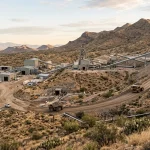
The Loulo-Gounkoto complex comprises the Yalea and Gara underground mines and the Gounkoto open pit. Operational efficiency has been bolstered by the “faster than expected” ramp-up at Yalea, which remains one of the highest-grade underground gold mines in Africa.
More Read

According to internal reports, the processing plant has maintained a throughput rate of five million tonnes per annum (Mtpa), with plans already underway to expand this capacity to 6.2 Mtpa by 2029.
Loulo-Gounkoto: 2026 Operational Snapshot
| Metric | H1 2026 Actual (Est.) | 2026 Full-Year Guidance | 2025 Actual (Disrupted) |
|---|---|---|---|
| Attributable Production (oz) | 142,000 | 260,000 – 290,000 | ~110,000* |
| All-In Sustaining Cost (AISC) | $1,150/oz | $1,100 – $1,200/oz | $1,380/oz |
| Throughput (Mtpa) | 2.5 | 5.0 | 3.1 |
| Solar Power Contribution | 60 MW | 60 MW | 40 MW |
*Estimated due to 2025 reporting suspension during the dispute.

Regulatory Landscape and Permit Status
A significant focus for 2026 remains the formal transition of the Loulo mining permit. The original permit was scheduled for renewal in February 2026, coinciding with the government’s push to align all existing operations with the 2023 Mining Code.
While specific details regarding the final signed convention have not been disclosed, the continued unhindered operation of the mine indicates a working arrangement between Barrick and the Ministry of Mines. The 2023 Code introduces provisions for increased state and local private interest in mining projects, potentially reaching up to 35% in some cases.
For gold mining investors, the stability at Loulo-Gounkoto is essential. The complex has historically contributed approximately 10% of Mali’s GDP. Barrick’s strategy in 2026 has focused on demonstrating that a “win-win” partnership remains possible under the new regulatory framework.
Infrastructure and Sustainable Energy
Part of the cost-efficiency gains in 2026 can be attributed to the expansion of the complex’s solar power capacity. Barrick has increased its solar farm at Loulo-Gounkoto from 40MW to 60MW, significantly reducing the site’s reliance on thermal power and lowering the overall carbon footprint.
“Energy remains our single largest cost driver in West Africa,” noted a senior operations manager at the site. “By integrating 60MW of solar power with our existing battery energy storage systems, we are not only meeting ESG targets but also shielding the operation from the volatility of global fuel prices.”
The solar expansion is paired with the ongoing development of the Gounkoto “Super Pit,” an ambitious expansion project that is expected to extend the life of the open-pit operations well into the next decade.

Community and Economic Impact
Despite the high-level legal challenges, the complex has maintained its commitment to local development. In the first half of 2026, Barrick reported that 95% of the mine’s workforce are Malian nationals, with nearly 70% of management positions held by local professionals.
The company’s local procurement policy has also remained a priority. In 2026, over $150 million has been spent with Malian suppliers and contractors, supporting a secondary economy in the Kenieba region. This local integration was cited by government officials as a primary reason for the resolution of the 2025 standoff, as the economic impact of a prolonged shutdown was deemed too severe for the regional population.
Future Outlook and Strategic Integration
As part of Barrick’s broader Africa and Middle East (AME) region, Loulo-Gounkoto is being managed alongside other major assets like Kibali in the DRC and North Mara in Tanzania. The company’s focus for the remainder of 2026 will be on exploration. Recent drilling at the Faraba and Gounkoto South targets has shown promising results, suggesting the potential for further resource replacement that could extend the mine life beyond 2037.
“Loulo-Gounkoto is not just about current production; it’s about the next 15 years,” Bristow said. “We are investing in the ground today to ensure that this complex remains a Tier 1 producer for the long term.”
The 2026 milestone serves as a testament to the operational robustness of modern mining by regions where geopolitical risk is a constant factor. For now, Barrick appears to have successfully navigated the “Mali pivot,” securing a future for its most productive African gold asset.