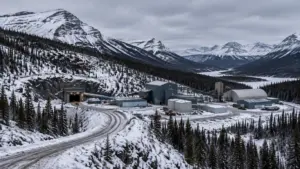
The release of the PwC BC Mine 2025 report has formalized what many in the industry have long suspected: British Columbia’s mining sector is no longer just a regional player, but a critical node in the global energy transition. According to the report, critical minerals generated C$5.0 billion in revenue in 2025, accounting for 32% of the province’s total mining revenue. This shift marks a strategic pivot from traditional metallurgical coal toward the copper, nickel, and rare earth elements that underpin the 2026 technological landscape.

However, the report also issues a stark warning. While BC sits on some of the world's most significant mineral deposits, the province is entering a high-stakes "test." Global rivals: primarily the United States and Australia: are aggressively streamlining their regulatory frameworks. For BC, the question for 2026 is no longer about the quality of the geology, but the efficiency of the bureaucracy and the reliability of the grid.
The Permitting Pivot: April 1, 2026 reforms
The centerpiece of BC’s strategy to remain competitive is the new mining permits reform 2026. Set to take effect on April 1, 2026, the Ministry of Mining and Critical Minerals is introducing a fixed-timeline mineral exploration permitting system. This is a direct response to industry criticism that Canadian permitting cycles often exceed a decade, compared to significantly faster turnarounds in competing jurisdictions.
Under the new framework, applications will be processed within 40 to 140 days, depending on the project’s complexity and First Nations consultation requirements. The system is structured around three processing streams and four "gating stages":
- Intake Completeness: Ensuring all data is present from day one.
- Technical Sufficiency: A rigorous review of engineering and environmental plans.
- Consultation Adequacy: Verifying that Indigenous engagement meets provincial standards.
- Decision Readiness: The final move toward the chief permitting officer’s desk.
If the government fails to meet these service standards, a new escalation process triggers, requiring a decision from the chief permitting officer within 14 days. This "clock" is designed to provide the predictability that institutional investors demand before committing capital to greenfield projects.


The Global Rivalry: Australia and the U.S. Factor
While BC moves toward a 140-day window, its primary competitors are not standing still. The US–Australia Framework for Securing Supply of Critical Minerals, established in late 2025, has already begun to bear fruit.
In the United States, the expansion of the FAST-41 list has allowed ten major domestic mines to receive expedited federal permitting. By centralizing the review process under the Federal Permitting Improvement Steering Council, the U.S. is targeting a reduction in total development timelines from the current 7–12 year average down to a more competitive five-year window.
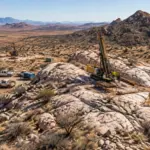
Australia, meanwhile, has long been viewed as the gold standard for regulatory predictability. With its sophisticated federal-state frameworks, Australia remains a formidable rival for the same investment dollars that BC is courting. The "BC Test" in 2026 will be whether its new gated system can offer the same level of legal certainty as Australia while managing the unique complexities of Canadian environmental standards.
Copper Demand: The AI and Data Center Surge
The urgency for these reforms is driven by a massive shift in copper demand ai data centers 2026. While electric vehicles (EVs) were the primary narrative of the early 2020s, the explosion of high-density AI training and inference facilities has created a new, copper-intensive demand vertical.
Data centers require massive amounts of copper for:
- On-site power distribution (busbars and cabling).
- High-efficiency transformers and switchgear.
- The broader grid upgrades needed to power AI clusters that can consume hundreds of megawatts each.
Industry forecasts for 2026 suggest that AI-driven infrastructure could add hundreds of thousands of tonnes to global copper demand annually. For BC, which hosts massive porphyry copper deposits, this is a generational opportunity. However, as noted in our analysis of the 2026 copper supply gap, the market is already facing a deficit. BC’s ability to bring "fast-tracked" projects like the Galore Creek or KSM copper-gold deposits online will be the deciding factor in whether Canada captures this premium.
Aerial view of industrial transmission infrastructure being constructed through a remote, forested mountain pass in British Columbia.

Infrastructure: The $6 Billion NCTL Backbone
Even with perfect permitting, a mine cannot operate without power. The North Coast Transmission Line (NCTL) is the infrastructure pillar upon which BC’s critical minerals future rests.
As of early 2026, the budget for the first two phases (Prince George to Terrace) has been estimated at C$6 billion. Construction is scheduled to break ground in the summer of 2026, with the Canada Infrastructure Bank providing a C$139.5 million loan for early-works financing.
However, a critical bottleneck remains. While the Prince George-to-Terrace backbone is moving forward, the "Phase 3" extension north from Terrace to the Golden Triangle: where the province's highest-grade critical mineral deposits are located: is still in the planning stages. Without a committed in-service date for this extension, many projects in the northwest will remain reliant on diesel generation, significantly hindering their ESG profiles and economic viability.
Indigenous Partnerships: The Competitive Edge
Perhaps the most significant differentiator for BC is its approach to Indigenous partnerships. Unlike some jurisdictions that treat consultation as a hurdle to be cleared, the 2026 BC framework embeds it into the "Consultation Adequacy" gate.
The province has allocated an additional $2 million to the Mineral Claims Consultation Framework (MCCF) to resource First Nations’ technical and administrative capacity. In regions like the Golden Triangle, the Tahltan Nation has already demonstrated that Indigenous-led development is not only possible but preferable for long-term stability. By aligning with the Declaration on the Rights of Indigenous Peoples Act (DRIPA), BC is betting that "economic reconciliation" will lead to fewer legal challenges and more resilient project lifecycles than the more adversarial models often seen in the U.S.
2026 Outlook: Base, Bull, and Bear Case
As we move through the 2026 fiscal year, BC’s mining sector faces three potential pathways:
| Scenario | Permitting Outcome | Infrastructure Progress | Economic Impact |
|---|---|---|---|
| Bull Case | 140-day timelines met consistently; 3 fast-track projects break ground. | NCTL Phase 3 receives federal funding; Phase 1 construction ahead of schedule. | BC becomes the premier global destination for copper and REE investment. |
| Base Case | Permitting timelines average 180-200 days; some administrative friction. | NCTL Phase 1 & 2 progress; Phase 3 remains in planning. | Steady growth, but BC continues to track behind Australia in total investment. |
| Bear Case | 2026 reforms stall; legal challenges to the "gating" process emerge. | NCTL costs continue to spiral; Golden Triangle projects delayed by 5+ years. | Capital flight to U.S. and African copper projects; BC misses the AI-demand window. |
The PwC report makes it clear: the geology is there, and the market demand: driven by AI and electrification: is insatiable. BC’s "Test" in 2026 is an operational one. The province must prove it can build the infrastructure and process the paperwork as efficiently as it can dig the ground.
For more on how these trends are shaping the broader resource sector, read our latest nickel market outlook and our analysis of the 2026 M&A frenzy.