By Penny Langford

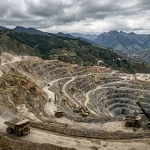
In the rugged mountains of central Idaho, the Stibnite Gold Project is undergoing a radical transformation in identity. For decades, the site was viewed through the lens of its high-grade gold reserves. However, as of early 2026, the financial and geopolitical math has shifted. The U.S. Export-Import Bank (EXIM) recently approved a landmark $2.9 billion loan for Perpetua Resources, the project’s developer. While the name of the project still carries the "gold" moniker, the capital infusion is aimed squarely at a different element: antimony.
This $2.9 billion bet represents the largest loan ever issued under the "Make More in America" initiative. It signals a departure from traditional mining finance, where precious metals dictate the terms. In 2026, the U.S. government is prioritizing mineral security over bullion, treating the Stibnite project as a strategic defense asset rather than a simple commercial venture. With China tightening its grip on global supply chains, the race to secure domestic antimony has become a matter of national security.
The $2.9B Strategic Pivot
The EXIM Bank’s $2.9 billion senior secured loan is a cornerstone of the White House’s broader "Project Vault," a $12 billion public-private stockpiling and development initiative. The financing is designed to fully fund the construction of the Stibnite facility, ensuring that the U.S. can establish a domestic "ground-to-round" supply chain.
For Perpetua Resources, the funding is a validation of a decade-long permitting battle. The loan covers the approximately $1.3 billion in direct capital costs, with the remainder structured to support operational scaling and strategic stockpiling. By backing a project that produces both gold and antimony, the U.S. government is leveraging the high-margin revenue of gold to subsidize the production of a mineral that is currently 0% mined within U.S. borders.

Historically, the U.S. has been 100% dependent on imports for its antimony needs, with more than half of that supply originating from China. The Stibnite project is expected to meet roughly 35% of total U.S. demand during its first six years of operation, effectively breaking the monopoly currently held by overseas adversaries.

Why Antimony Matters More Than Gold
While gold remains a primary revenue driver for Stibnite: providing the project with the economic "engine" required for long-term viability: it is not classified as a critical mineral by the U.S. Geological Survey (USGS). Gold is a liquid, globally traded asset with a highly diversified supply base. Antimony, by contrast, is a bottleneck mineral with critical applications in two high-stakes sectors: defense and clean energy.
Defense and National Security
Antimony is essential for the production of munitions. Antimony trisulfide is a key component in primers and explosive formulations. It is also used to harden lead for bullets and shrapnel. Beyond traditional munitions, the mineral is vital for military electronics, infrared sensors, and precision-guided weaponry.


The U.S. Department of Defense has been increasingly vocal about the vulnerability of the current supply chain. In an era of heightened geopolitical tension, relying on China for the primary material used in the ammunition meant to deter that same nation is a strategic paradox the Biden-Harris and subsequent administrations have moved aggressively to resolve.
Clean Energy and High-Tech Manufacturing
The energy transition is also fueling demand. Antimony trioxide is a critical clarifier in the manufacturing of high-efficiency photovoltaic (PV) glass. As solar capacity continues to expand globally, the demand for "solar-grade" antimony has surged.

Additionally, the rise of liquid metal batteries: designed for long-duration grid storage: has placed antimony at the center of the renewable energy storage conversation. These batteries, which use an antimony-calcium alloy, offer a low-cost, long-life alternative to lithium-ion for stabilizing power grids.
Breaking the Chinese Monopoly
China’s dominance in the antimony market is not just a matter of geology; it is a result of decades of industrial policy. In late 2024 and throughout 2025, China implemented several rounds of export restrictions on antimony and its compounds, citing "national security interests." These moves sent global prices to historic highs, peaking near $60,000 per tonne.
While China suspended some of these restrictions in late 2025: a reprieve currently set to last through November 2026: the message to Western policymakers was clear: the supply chain is a weapon. The "Make More in America" initiative is the direct response to this vulnerability. By funding Perpetua’s Idaho operations, the U.S. is creating a buffer against future export bans.
Antimony Price Trend 2026: Market Outlook
The antimony price trend 2026 has seen a stabilization following the volatile spikes of the previous year. While prices have retreated roughly 30% from the $60,000/t peak seen in mid-2025, they remain structurally higher than the pre-2021 average.
Analysts at CRU and Wood Mackenzie suggest that the market has entered a "new normal." The surplus of smelting capacity in Southeast Asia has eased the acute metal shortage, but the underlying mine-supply deficit persists. With Chinese ore grades declining and environmental regulations shuttering older mines, the global market remains in a state of fragile balance.
| Year | Average Price (USD/tonne) | Global Supply Status | US Import Reliance |
|---|---|---|---|
| 2023 | $12,500 | Balanced | 82% |
| 2024 | $25,000 | Deficit | 84% |
| 2025 | $48,000 | Acute Deficit | 85% |
| 2026 (Est.) | $34,000 | Near-Balance | 80%* |
*Projected decrease as domestic stockpiling and recycling initiatives ramp up ahead of Stibnite production.
For investors looking at critical minerals stocks to buy 2026, the focus has shifted toward companies with low-risk jurisdictions and government-backed financing. Perpetua Resources (NASDAQ: PPTA) has naturally led the pack, but the ripple effects are being felt across the rare earth and minor metal sectors as the "EXIM-effect" becomes a recognized de-risking mechanism.
Operational Excellence and Modern Mining
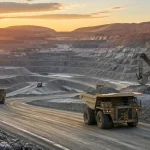
The scale of the Stibnite project requires more than just capital; it requires sophisticated operational technology. The facility is expected to utilize advanced fleet management and real-time monitoring to navigate the complex topography of the Idaho backcountry.

Centralized control rooms will integrate data from autonomous drill rigs and high-capacity haul trucks, optimizing ore blending to ensure consistent antimony grades. This level of technological integration is essential for meeting the strict purity requirements of the U.S. defense and PV glass industries.
The Future of Stibnite
The development of Stibnite is also an environmental restoration project. The site was previously mined during World War II and the Korean War, leaving behind legacy tailings and a blocked salmon migration route. Perpetua’s plan includes the reprocessing of these historical tailings to extract remaining antimony, using the proceeds to fund the restoration of the East Fork South Fork Salmon River.

As the project moves toward its targeted 2029 commercial start date, it serves as a blueprint for how the U.S. may handle other critical mineral dependencies. Whether it is lithium in Nevada or rare earths in California, the combination of high-margin secondary products (like gold) and massive government loan guarantees is the new standard for domestic resource development.
The U.S. isn't just betting on a mine; it's betting on the idea that industrial independence is worth more than the gold in the ground. For more on the evolving landscape of critical minerals and precious metals, read our analysis on gold price forecasts for 2026 and the latest in North American lithium expansion.
Shareable Social Snippet:
The U.S. EXIM Bank just placed a $2.9B bet on antimony, prioritizing a "boring" industrial mineral over gold at the Stibnite project. Why? Because you can’t build munitions or PV glass with bullion. Is this the end of China’s antimony monopoly? #MiningNews #Antimony #Stibnite #CriticalMinerals #EnergyTransition