By Charles Pitts

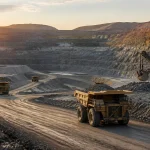
In early 2026, the global mining industry reached a defining crossroads in the Pilbara. For years, the narrative from the “Big Three”: BHP, Rio Tinto, and Fortescue: focused on a rapid, tech-driven sprint toward net-zero operations. However, BHP’s recent decision to defer major decarbonization investments while launching only limited battery-electric trials at its Jimblebar mine serves as a stark reality check.
The gap between ambitious environmental, social, and governance (ESG) press releases and the cold, hard physics of moving 300-tonne loads up 10% gradients has never been more apparent. While the benefits of mine electrification in 2026 remain clear from a long-term total cost of ownership (TCO) perspective, the path to implementation is being paved with operational delays and capital discipline.
The Physics of Heavy Haulage: Why Batteries Aren’t Diesel
The fundamental challenge facing BHP and its peers isn’t a lack of will; it is a lack of energy density. Diesel fuel is an extraordinary energy carrier. To replace the energy contained in a standard diesel tank for an ultra-class haul truck operating 20 hours a day, current lithium-ion battery technology requires a pack weighing tens of tonnes.
This mass creates a “vicious cycle” of engineering:
More Read

- Payload Penalty: Every tonne of battery added is a tonne of ore that cannot be carried.
- Structural Stress: The extra weight requires reinforced chassis and tires, further increasing the vehicle’s unladen mass.
- Infrastructure Demand: Charging a multi-megawatt-hour battery in the 20-30 minutes required to maintain current duty cycles demands grid-scale power at the pit edge.
BHP’s public stance that battery-electric trucks are “not yet viable at scale” is rooted in these physical constraints. Unlike passenger vehicles, mining trucks in the Pilbara operate in one of the world’s harshest environments under near-continuous load. A trial of two Caterpillar-sourced battery trucks at Jimblebar, announced in May 2026, is a necessary “learning phase,” but it is a far cry from the full-fleet replacement many expected by the mid-2020s.


The “Cash Prioritization” Dilemma
While physics provides the technical hurdle, internal documents recently surfaced by industry watchdogs suggest that financial strategy is play a secondary, yet equally decisive, role. Reports indicate that BHP paused an AU$400 million solar-and-battery project at Jimblebar, citing “cash prioritization requirements.”
More Read
Simultaneously, the company purchased 62 new diesel haul trucks for the same site. Because these assets have an operational life extending into the late 2030s or early 2040s, BHP has effectively locked in a significant diesel emissions baseline for the next 15 years. This highlights the “front-loading” problem: the industry wants the green credentials of 2050 targets but is struggling to justify the massive, front-loaded capital expenditure (CAPEX) required for the renewable energy backbones that make electric trucks viable.
Mine Electrification Benefits 2026: The Economic Case
Despite the delays, the long-term economics of electrification remain compelling. Data from the Autonomous haul trucks cost savings 2026 report suggests that for a typical 150-tonne truck, switching to electric can save over US$5.5 million in energy costs over the vehicle’s life.
Beyond fuel savings, the maintenance profile of electric drivetrains: which have fewer moving parts than internal combustion engines: is expected to drive significant OPEX reductions. This transition is also heavily linked to the 2026 standards for condition-based maintenance (CBM), where AI-driven telemetry tracks motor health in real-time.
| Technology | Maturity (2026) | Primary Benefit | Key Constraint |
|---|---|---|---|
| Battery-Electric | Pilot/Trial | Zero tailpipe emissions | Energy density & charging time |
| Trolley-Assist | Proven/Commercial | 90% diesel reduction on ramps | Fixed infrastructure cost |
| Hydrogen Fuel Cell | Prototype | Fast refueling | High cost & low efficiency |
Is Trolley-Assist the Real Winner?
If pure battery-electric trucks face a physics wall, trolley-assist technology is emerging as the pragmatic bridge. By using overhead catenary lines to power trucks on steep uphill climbs, operators can bypass the most energy-intensive part of the haul cycle.
Current implementations show that trolley-assist can reduce diesel consumption by up to 91% on the trolley segments while doubling uphill speeds. This is not just a decarbonization play; it is a productivity play. The increased speed allows mines to move more ore with fewer trucks, directly improving the bottom line. For long-life pits with stable ramp geometries, trolley-assist offers a more immediate ROI than waiting for a breakthrough in solid-state batteries.

The Role of Autonomous Haulage
The integration of electrification and autonomy is where the most significant autonomous haul trucks cost savings are found. Autonomous systems provide the consistent, optimized driving profiles necessary to maximize battery life and regenerative braking.
In an autonomous fleet, charging windows can be managed with surgical precision. Rather than trucks queuing for a charger, the fleet management system (FMS) staggers arrivals based on state-of-charge (SoC) and production targets. This synergy reduces the need for massive “over-provisioning” of charging infrastructure, which has been one of the primary capital barriers for BHP and Rio Tinto.
Looking Ahead: The 2026-2030 Outlook
BHP’s Pilbara delay shouldn’t be seen as an abandonment of green goals, but rather a strategic recalibration. The industry is moving from the “PR phase” of decarbonization: characterized by lofty targets and flashy concept art: into the “Execution phase,” where every kilowatt-hour must be justified by a spreadsheet.
The Base Case: Large miners will continue to operate mixed fleets. High-production ramps will see trolley-assist infrastructure installed, while flatter, shorter hauls will transition to battery-electric pilots. Diesel will remain the primary energy source for the majority of the global haulage fleet through 2030.
The Bull Case: A rapid decline in battery prices combined with a breakthrough in megawatt-scale charging standards allows for a faster rollout. If carbon pricing mechanisms in Australia and Europe become more punitive, the “cash prioritization” logic flips in favor of early CAPEX for renewables.
The Bear Case: Technical failures in the current 2026 battery trials lead to a broader industry retreat. Miners double down on “bridging fuels” like LNG or biofuels, pushing the transition to full electrification into the mid-2040s and risking their 2050 net-zero commitments.
As we move toward 2027, the focus will shift from the trucks themselves to the power grids that support them. The 2026 Lithium Power Map already highlights how the supply chain for battery minerals is tightening, suggesting that even if the physics are solved, the raw material availability for a global fleet of 1.5MWh batteries remains a significant risk.
For now, the message from the Pilbara is clear: The energy transition in mining will be won not by the most ambitious press release, but by the most efficient engineering.