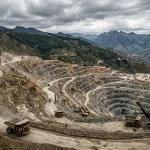
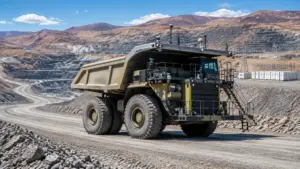
PHOENIX : Freeport-McMoRan Inc. (NYSE: FCX) announced its copper production and sales targets for the second quarter of 2026, signaling a pivotal transition as the company ramps up underground operations in Indonesia and accelerates its “shadow mine” leaching initiatives in North America.

The Phoenix-based mining giant projects copper sales of approximately 750 million pounds for the quarter ending June 30, 2026. This target aligns with the company’s broader full-year 2026 guidance of 3.1 billion pounds of copper and 650,000 ounces of gold. The Q2 figures represent a sequential increase in volume, driven largely by the scheduled restart of Production Blocks 2 and 3 at the Grasberg minerals district in Papua, Indonesia.
The announcement comes at a critical juncture for the global copper market, as industrial demand for the red metal is increasingly tied to the rapid expansion of artificial intelligence (AI) infrastructure. Industry analysts note that Q2 2026 is expected to be a recovery milestone for Freeport, setting the stage for a significantly stronger second half of the year as major assets approach higher capacity utilization.
Grasberg Recovery and Expansion
A primary driver for the Q2 production target is the stabilization of the Grasberg underground operations. Following earlier operational disruptions, Freeport management indicated that the district is on track to reach between 60% and 65% of its total capacity by the second half of 2026.

More Read

The restart of Production Blocks 2 and 3 this quarter is viewed as the most significant near-term catalyst for Freeport’s global portfolio. By mid-2027, the company anticipates Grasberg will reach 80% capacity, with a return to near-full capacity expected by the end of 2027. This timeline is crucial for meeting the long-term commitments Freeport has made to international smelters and domestic Indonesian industrial partners.

North American “Shadow Mine” Gains Traction
While Grasberg remains the company’s crown jewel, Freeport’s North American operations are contributing a growing share of low-cost production through advanced leaching technologies. The company’s U.S. leach portfolio: often referred to by management as a “shadow mine”: is currently operating at an annual run-rate of approximately 300 million pounds.
Production from these initiatives is characterized by exceptionally low cash costs, often cited at under $1.00 per pound, compared to the company’s average unit net cash costs of approximately $1.55 per pound. Freeport aims to scale this leach production to 800 million pounds annually by 2030 by applying proprietary additives and data-driven recovery methods to existing stockpiles.
More Read


In Arizona and New Mexico, project reviews are also underway for the next phase of the Lone Star project, which could add up to 300 million pounds of annual capacity. Furthermore, a final investment decision (FID) for the Bagdad concentrator expansion is anticipated later this year, potentially further boosting U.S. throughput by 2028.
The “AI Squeeze” and Structural Demand
The Q2 production update arrives as the mining sector grapples with an unprecedented surge in demand from the technology sector. According to recent market intelligence, the proliferation of copper demand AI data centers 2026 is creating a structural deficit that has pushed copper prices near the $6.00 per pound mark.
Modern AI-specific data centers are significantly more copper-intensive than traditional cloud facilities. Data suggests that these specialized centers require between 27 and 33 tonnes of copper per megawatt: nearly double the requirement of conventional data infrastructure. This demand is primarily driven by the massive power distribution networks, cooling systems, and specialized cabling required to support high-density GPU clusters.
“U.S. customers are increasingly reporting that data center demand is the single most significant growth driver for power cable and building wire,” stated a recent Skillings Mining Intelligence analysis. This trend is effectively offsetting a cooling in residential construction and traditional automotive manufacturing.
| Copper Demand Driver (2026 Forecast) | Est. Annual Growth (%) | Copper Intensity Per Unit |
|---|---|---|
| AI Data Centers | 30% | 27–33 tonnes/MW |
| Electric Vehicles (EVs) | 18% | 80 kg/vehicle |
| Renewable Energy Grid | 12% | 5 tonnes/MW (Wind/Solar) |
| Traditional Construction | -2% | 200 kg/average home |
Financial Implications and Market Sentiment
Wall Street sentiment regarding Freeport-McMoRan remains strongly bullish as the company enters the second half of its 2026 fiscal year. With copper prices sustaining levels well above historical averages, Freeport is positioned as a primary beneficiary of the “copper supercycle.”
Analysts suggest that Freeport’s high leverage to copper prices, combined with its successful execution of low-cost leaching projects, will result in significant free cash flow generation in Q2 and Q3. Median price targets for FCX stock have shifted toward the $70.00 range, with upside scenarios reaching $85.00 if the “AI squeeze” continues to tighten global supplies.

However, the company faces ongoing pressure from inflationary costs in labor and specialized equipment. While unit net cash costs have stabilized, any further escalation in energy prices or regulatory changes in Indonesia could impact the realized margins for the remainder of the year.
Strategic Outlook: Beyond Q2
Looking ahead, Freeport’s long-term strategy focuses on a project pipeline designed to add 2.5 billion pounds of annual copper production. This growth is essential as the global energy transition and the “AI-energy nexus” demand consistent, high-volume supply from tier-one jurisdictions.
As of early June 2026, Freeport-McMoRan remains one of the few global miners capable of delivering significant volume growth without the 10-to-15-year lead time required for greenfield projects. By optimizing existing assets and pioneering new extraction technologies, the company is effectively bridging the gap between legacy mining and the requirements of the modern digital economy.
The full Q2 financial and operational results are expected to be released in late July, providing further clarity on the realized copper prices and the progress of the Bagdad expansion study.