By Charles Pitts

CONAKRY, Guinea : Rio Tinto (ASX: RIO) has confirmed that its multi-billion dollar Simandou iron ore project is entering its final development phase, with the critical 600-kilometer Trans-Guinean railway link now approximately 85% complete. The milestone keeps the project on track for its first commercial ore shipments by late 2026, a timeline that is set to reshape global iron ore trade and provide a significant influx of high-grade supply for the decarbonizing steel industry.
The Simandou deposit, located in the remote southeastern corner of Guinea, represents the world’s largest untapped high-grade iron ore reserve. For decades, the project remained dormant due to complex logistical hurdles, legal disputes, and the sheer scale of the infrastructure required to transport ore to the coast. However, the latest progress report indicates that the “Simandou Sprint” is nearing the finish line, as construction crews finalize bridge spans and tunnel linings across the rugged Guinean interior.
The 600km Logistics Backbone: Progress Update
The centerpiece of the Simandou project is the Trans-Guinean railway, a massive infrastructure undertaking involving the construction of over 600 kilometers of heavy-haul rail and a deep-water port at Morebaya. According to internal project data, the rail corridor is now in the “final assembly” stage.
The rail link must navigate a challenging topography, requiring the construction of 12 tunnels and more than 200 bridges. As of June 2026, track-laying teams are operating at peak capacity, moving from the coastal port inland toward the mine sites.
More Read

“The integration of the rail and port infrastructure is the most significant de-risking event in the project’s history,” noted a Rio Tinto infrastructure lead during a site briefing. “Reaching the 85% completion mark on the rail link effectively bridges the gap between the world’s highest-quality ore and the global markets.”

The project is divided into two main parts: SimFer (managed by Rio Tinto in partnership with Chalco Iron Ore Holdings and the Government of Guinea) and the Winning Consortium Simandou (WSC). Both entities are collaborating on the “Compagnie du Transguinéen” (CTG), a joint venture formed to build and operate the shared rail and port infrastructure.

More Read

Mine Development and 2026 Targets
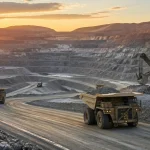
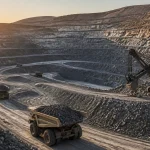
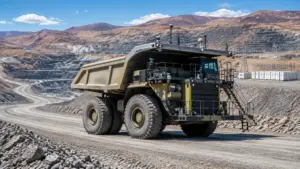
While the rail progress dominates the headlines, development at the Simandou mine site itself is accelerating. Rio Tinto’s SimFer mine (Blocks 3 and 4) is currently undergoing bulk earthworks and the installation of primary crushing facilities.
The 2026 first-ore-on-ship target is more than just a symbolic milestone. At full capacity, the combined Simandou concessions are expected to produce up to 120 million tonnes of iron ore per year. For Rio Tinto, this represents a major strategic shift, complementing its existing Pilbara operations in Australia with a high-grade African hub.
The iron ore at Simandou is particularly sought after because of its exceptionally high iron content: averaging over 65%. This grade is essential for “green steel” production, as it allows for the use of Direct Reduced Iron (DRI) technology, which emits significantly less carbon than traditional blast furnaces. As the steel industry faces increasing regulatory pressure to decarbonize, Simandou’s entry into the market is expected to create a premium for its “green-ready” ore.
Mining professionals and analysts are closely monitoring these developments as part of the broader weekly power list of titans defining the mining market. The success of the Guinea operation is seen as a bellwether for large-scale infrastructure projects in emerging markets.
Technical Challenges and Port Infrastructure
Beyond the rail, the completion of the Morebaya Port is equally critical. The facility is being designed to handle Capesize vessels, requiring extensive dredging and the construction of a 20-kilometer jetty system.
The technical complexity of the port is driven by the need for high-velocity loading systems to match the 120 Mtpa output of the combined mines. Engineers are currently installing the ship-loader armatures and conveyor belts that will transport the ore from the railhead to the vessel holds.

“The synchronization of the rail schedule with the port loading cycles is where the operational efficiency will be won or lost,” said an operations manager on-site. “We are moving from a construction mindset to an operational readiness mindset.”
Simandou Project Specifications
| Specification | Details |
|---|---|
| Total Rail Length | ~600 km (Trans-Guinean Corridor) |
| Projected Annual Capacity | 120 million tonnes (Combined WSC & SimFer) |
| Iron Ore Grade | >65% Fe |
| Partners | Rio Tinto, WSC, Baowu, Government of Guinea |
| Target First Ore | Late 2026 |
| Est. Total Capital Expenditure | $20+ Billion |
Market Implications: Mining Stocks to Watch 2026
For investors, the nearing completion of Simandou signals a potential shift in the competitive landscape of the iron ore sector. As the project moves toward its 2026 launch, Rio Tinto is positioning itself to capture a larger share of the high-grade market, which currently commands a significant price premium over the standard 62% Fe fines.
While Simandou will bring substantial supply to the market, analysts suggest that the high-grade nature of the ore may protect it from potential price volatility in lower-grade segments. Furthermore, the project’s impact on the Guinean economy cannot be overstated; it is expected to double the country’s GDP and catalyze further mining development in the region.
As we look toward the 2026 energy nexus, where copper demand for data centers and iron ore for green infrastructure are converging, Simandou stands as the largest single industrial project on the continent. It remains a primary focus for those tracking mining news and identifying which mining stocks to watch 2026.
ESG and Community Engagement
Rio Tinto has emphasized that Simandou is being developed with stringent ESG (Environmental, Social, and Governance) standards. The project’s impact on biodiversity and local communities has been a point of contention in the past, but the current joint venture has implemented extensive mitigation strategies, including wildlife corridors and community investment programs.
The “Simandou Sprint” is not just about the speed of construction but also about the sustainability of the operation. By utilizing the latest in mining technology and autonomous rail systems, Rio Tinto aims to set a new standard for tier-1 mining operations in Africa.

Conclusion: The 2026 Horizon
With the rail link nearing 85% completion, the path to first ore in 2026 is clearer than ever. The integration of high-grade ore, massive infrastructure, and strategic partnerships has turned what was once a “mythical” deposit into a near-term reality. As the final tracks are laid in the coming months, the global mining industry will be watching to see how the first shipments from Morebaya Port change the dynamics of the 21st-century steel market.
For continued updates on the progress at Simandou and broader mining industry news, stay tuned to Skillings Mining Intelligence.