By Charles Pitts

The restart of the Copper One project in southeastern Utah this April marks a definitive pivot in how the industry approaches resource extraction. While the mining sector has historically viewed automation as a “bolted-on” upgrade for mature operations, Mariana Minerals has launched Copper One as the world’s first “born autonomous” mine and refinery. By integrating a centralized artificial intelligence operating system from day one, the project is demonstrating the tangible mine electrification benefits 2026 expects as companies move toward decarbonized, high-margin production.
Located in San Juan County, the Copper One project occupies the former Lisbon Valley site. After acquiring the asset in late 2025, Mariana Minerals opted against a traditional restart. Instead, the company spent six months implementing an end-to-end digital architecture known as MarianaOS. This system unifies three distinct domains: the open pit (MineOS), the SX-EW refinery (PlantOS), and infrastructure expansion (CapitalProjectOS): under a single AI-driven command structure.
The MineOS Framework: Rethinking the Pit
The most visible aspect of the “born autonomous” philosophy at Copper One is the deployment of MineOS. Unlike traditional operations that struggle to integrate disparate software from different manufacturers, MineOS acts as a vendor-neutral orchestrator for the entire mobile fleet.
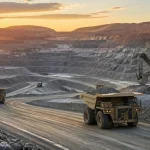
The site currently utilizes Pronto’s Autonomous Haulage System (AHS), which relies on camera-based machine learning and GNSS to operate driverless trucks. By opting for a camera-heavy sensor suite rather than expensive, high-maintenance LiDAR-only systems, Mariana has lowered the barrier to entry for full autonomy. Furthermore, the drilling operations are managed through Sandvik AutoMine®, allowing a single remote supervisor to manage multiple rigs simultaneously from an off-site control center.
More Read



The operational shift has immediate implications for safety and consistency. Because the AI doesn’t experience “operator fatigue” or deviate from optimized haul routes, the mine achieves a level of predictability that is nearly impossible for manual operations. This predictability is the fundamental precursor to the mine electrification benefits 2026 is starting to deliver; an autonomous truck is easier to electrify because its power demand and regenerative braking cycles can be perfectly modeled and managed by the software.
PlantOS: Autonomy in the Refinery
While autonomous trucks often grab the headlines, the integration of PlantOS in the solvent extraction and electrowinning (SX-EW) facility is perhaps the more radical innovation. Copper One is the first facility of its kind to extend the digital twin model directly into the refinery’s chemical processes.
More Read

PlantOS ingests real-time data from hundreds of sensors measuring solution chemistry, flow rates, and temperatures. It uses machine learning to predict process drift before it results in off-spec copper cathode. This “self-tuning” refinery model reduces reagent waste and optimizes energy consumption: a critical factor given that the SX-EW process is the most electricity-intensive part of copper production.

To support this, Mariana has deployed Boston Dynamics’ “Spot” robots. These autonomous units perform scheduled inspections of the heap leach pads and the refinery tank house, using thermal imaging and high-resolution cameras to detect leaks or electrical hotspots that human inspectors might miss.
Mine Electrification Benefits 2026: The Economic Case
The transition to autonomous and electrified operations is no longer just an ESG goal; it is an economic necessity for 2026. As critical mineral demand spikes, the cost of labor, fuel, and regulatory compliance is squeezing traditional margins.
At Copper One, the “mine electrification benefits 2026” narrative is centered on energy efficiency. Because the MineOS and PlantOS platforms optimize every movement and chemical reaction, the site’s total energy intensity per pound of copper is projected to be 18% lower than its predecessor. For a facility currently producing 25 million pounds annually: with plans to scale to 50,000 metric tons by 2030: these efficiencies translate into millions of dollars in saved opex.
| Operational Metric | Traditional (2024 Base) | Copper One (2026 Model) | Variance |
|---|---|---|---|
| Haulage Consistency | +/- 12% deviation | < 2% deviation | +83% Improvement |
| Energy Intensity | 1.0x | 0.82x | -18% Reduction |
| Direct Labor (On-site) | ~180 employees | ~80 employees* | -55% Reduction |
| Refinery Recovery | 89% | 94% | +5% Gain |
*Copper One currently employs 80 staff for the restart phase, with specialized roles shifting toward data analysis and remote maintenance.
De-risking Expansion with CapitalProjectOS
One of the greatest risks in the mining industry is the “capex blowout” during expansion phases. Mariana Minerals is addressing this through CapitalProjectOS, a third pillar of their software stack that manages the parallel expansion of the heap leach pads and refinery upgrades.
By integrating engineering, procurement, and construction data into the same AI environment used for daily operations, the company can model how a new leach pad will interact with the existing autonomous haulage routes before a single yard of dirt is moved. This predictive risk modeling has allowed Copper One to maintain its aggressive ramp-up schedule toward its 2030 targets while navigating the volatile supply chain environment typical of the post-2025 economy.

The Utah Outlook and Global Implications
The success of Copper One is being watched closely by mid-tier producers and major miners alike. If Mariana can prove that a “software-first” approach can turn a previously marginal asset like Lisbon Valley into a high-margin, autonomous powerhouse, the playbook for M&A in the copper sector will change overnight.
Investors are already recalibrating valuations based on “autonomous readiness.” As seen in recent lithium price forecasts, market recovery is increasingly tied to the ability to produce low-cost, low-carbon materials. Copper One sits at the intersection of these trends, providing a domestic U.S. source of high-purity cathode that meets the stringent ESG requirements of the modern energy transition.
The 2026 mining landscape is one defined by the integration of hardware and code. Mariana’s Utah operations suggest that the future of the industry isn’t just about finding the ore: it’s about the digital intelligence used to extract it.