By Penny Langford

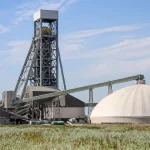
**SWARNAGIRI, ANDHRA PRADESH : ** India reached a historic milestone in its domestic mining sector this week as commercial operations officially commenced at the Swarnagiri gold mine. The project, located in the Kurnool district of Andhra Pradesh, represents the first primary gold mine to be operated by a private entity in India since the country’s independence.
Operated by Geomysore Services India Pvt Ltd (GMSI), the mine was formally inaugurated on June 24, 2026, by Andhra Pradesh Chief Minister N. Chandrababu Naidu. The opening of Swarnagiri (formerly known as Jonnagiri) signals a shift in India’s mineral policy, aiming to reduce the nation's overwhelming dependence on gold imports through the liberalization of the primary mining sector.
The Swarnagiri Project: A Private Sector First
The Swarnagiri gold project is situated within the Tuggali mandal and spans approximately 598 hectares of land. The mine’s transition from exploration to active commercial production has been decades in the making, following the acquisition of the mining lease by GMSI, a company that has been active in Indian mineral exploration since 1994.
The project is backed by Deccan Gold Mines Ltd, a key partner in GMSI. The mine’s development has required an initial investment of approximately ₹405 crore (US$48.5 million), covering the construction of processing facilities, open-pit infrastructure, and a significant water pipeline. To support operations, a 18-kilometer pipeline was constructed to draw 0.021 TMC of water from the Handri Neeva Sujala Sravanthi scheme, ensuring a stable supply for the ore-processing units.



Phase 1 Production and Scaling
The Swarnagiri mine has entered Phase 1 of its operational life, with a production target of 400 kilograms of gold for the 2026–27 fiscal year. While this represents a modest start compared to global standards, the ramp-up schedule is aggressive.
- Phase 1 (Current): 400 kg/year targeting initial high-grade zones.
- Phase 2: Planned increase to 900 kg – 1 tonne per year as processing capacity expands.
- Phase 3: Ultimate target of 2 tonnes per year following the installation of a second processing unit.
The mine holds certified reserves of approximately 13.1 tonnes of gold, though exploration teams are continuing to assess the broader tenement for additional mineralization. The geology of the region, part of the Dharwar Craton, has long been identified as having significant potential for lode-gold deposits, similar to the historic Kolar Gold Fields.

Addressing the Import Dependence
India remains the world’s second-largest consumer of gold, with demand consistently outstripping domestic supply. In recent months, the trade deficit has been pressured by fluctuating gold import volumes. In January 2026, imports surged to $12.07 billion, though they settled to approximately $3.42 billion by May.
Historically, India has relied on imports for over 98% of its gold requirements. The commencement of operations at Swarnagiri is a strategic move to establish a "Make in India" footprint in the precious metals sector. Analysts suggest that if more private players enter the market, domestic mining could eventually meet 10–20% of the country’s demand within the next decade.
The timing of the Swarnagiri launch is particularly relevant given the current market climate. With the Gold Price Forecast 2026 indicating a structural reset in valuations, the economic viability of domestic primary mines has significantly improved.

Economic and Local Impact in Andhra Pradesh
The commissioning of Swarnagiri is expected to provide a substantial boost to the regional economy in Andhra Pradesh. The project has already created approximately 700 direct jobs, with the operator committing to reserve 80% of these positions for local residents.
For the state government, the mine represents a consistent new revenue stream. Under the current agreement, the Andhra Pradesh government receives a 4% royalty on the value of all gold produced. At the initial 400 kg production rate, this translates to roughly ₹57 crore in annual revenue, which could rise to over ₹140 crore as production scales toward the 1-tonne mark.
Beyond direct royalties, the project contributes to the District Mineral Foundation (DMF), a fund dedicated to local development projects, infrastructure, and community welfare in the mining-affected areas.
India Gold Market Snapshot (June 2026)
| Metric | Value/Status |
|---|---|
| Annual Domestic Consumption | ~750 – 800 Tonnes |
| Current Domestic Production | ~1.5 – 2.5 Tonnes |
| Swarnagiri Phase 1 Target | 400 kg (0.4 Tonnes) |
| Swarnagiri Long-term Target | 2.0 Tonnes |
| Import Duty (Gold) | 15% |
| Certified Reserves (Swarnagiri) | 13.1 Tonnes |
The Regulatory Shift: Enabling Private Participation
The successful launch of Swarnagiri is the result of years of regulatory evolution. The 2015 and 2021 amendments to the Mines and Minerals (Development and Regulation) Act (MMDR) were designed to encourage private participation in exploration and mining of deep-seated and critical minerals, including gold.
Previously, gold mining in India was largely dominated by state-owned enterprises, most notably Hutti Gold Mines in Karnataka. The closure of the Kolar Gold Fields in 2001 left a void that the private sector is now beginning to fill. Swarnagiri serves as a proof-of-concept for the industry, demonstrating that the technical and regulatory hurdles for private primary gold mining can be navigated successfully.
For investors, the project highlights the potential of mid-tier miners in the region. As noted in our recent report on the Top 50 Mining Companies 2026, the diversification of the Indian mining landscape is attracting global attention to projects that were previously considered too complex or small for major players.

Operational Technology and Sustainability
GMSI has emphasized the use of modern, sustainable mining practices at Swarnagiri. The mine utilizes a combination of open-pit extraction and an on-site carbon-in-leach (CIL) processing plant. This allows for the efficient recovery of gold from low-to-medium grade ores that were historically difficult to process profitably.
The project also incorporates water recycling systems and dust suppression technology to minimize its environmental footprint in the semi-arid Kurnool region. By utilizing the Handri Neeva water scheme, the project avoids competing with local agricultural water needs, a critical factor for maintaining social license to operate.
2026 Outlook: A New Mining Hub
The renaming of the village from Jonnagiri to Swarnagiri (meaning "Golden Hill") by the state cabinet underscores the symbolic and economic weight the government is placing on this project. Andhra Pradesh is positioning itself as an emerging hub for gold mining, with several other exploration blocks in the pipeline.
As Swarnagiri ramps up its operations over the coming 18 months, the industry will be watching closely. The success of this first private venture will likely determine the pace of future auctions for gold blocks across India’s mineral-rich states, including Karnataka, Rajasthan, and Madhya Pradesh.
For the global mining community, Swarnagiri is more than just a new source of gold; it is a signal that one of the world's largest mineral markets is finally opening its doors to private operational excellence.
Shareable Social Media Snippet (LinkedIn/X)
India Makes Gold Mining History! ??
The Swarnagiri gold mine in Andhra Pradesh has officially commenced commercial operations, marking the first time a private company has operated a primary gold mine in India since independence. Operated by Geomysore Services (GMSI), the mine targets 400kg in Phase 1, with plans to scale to 2 tonnes/year.
With India's gold imports still hitting billions monthly, this "Make in India" milestone is a massive step toward domestic resource security and regional job creation.
#MiningNews #GoldMining #IndiaEconomy #Swarnagiri #MiningInvestment #CriticalMinerals #SkillingsMining