By Charles Pitts

The lithium market has entered a transformative period of consolidation. As of July 2026, the volatility that defined the 2023–2025 period has begun to give way to a “structural floor.” In major trading hubs like Guangzhou, spot prices for battery-grade lithium carbonate have reclaimed the $19,000 per tonne mark, signaling a significant shift in market fundamentals.
This recovery is not merely a technical bounce from the sub-$10,000 lows of the previous year. Instead, it represents the realization of “margin gravity”: the point where the cost of production for marginal producers (primarily Chinese lepidolite and high-cost African hard-rock mines) forces a supply-side response that prevents further price erosion. Simultaneously, a new demand pillar has emerged: the massive surge in Battery Energy Storage System (BESS) deployments, which is now rivaling the electric vehicle (EV) sector as a primary driver of lithium consumption.
The $19,000 Threshold: Analyzing Margin Gravity
The reclamation of $19,000 per tonne in the Guangzhou spot market is a critical psychological and economic milestone for the industry. During the glut of 2024, prices dipped well below the all-in sustaining costs (AISC) for a significant portion of the global supply chain. This led to widespread project deferrals and the idling of higher-cost lepidolite operations in China.
However, as we move into the second half of 2026, the market has reached an equilibrium. At $19,000, approximately 85% of the current global cost curve is profitable, but the remaining 15%: largely composed of inefficient artisanal mining and high-sulfuric-acid-consumption lepidolite processing: remains underwater. This dynamic effectively creates a floor; any dip below this level triggers immediate production cuts, which in turn tightens the market and pushes prices back up.
More Read

For investors, this “margin gravity” provides a level of predictability that was absent during the post-2022 collapse. While we are unlikely to see a return to the irrational highs of $80,000 per tonne, the stabilization at $19,000–$22,000 provides a healthy environment for Tier 1 producers to advance their 2026–2030 development pipelines.


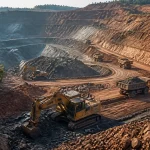
The scale of modern open-pit lithium extraction requires sustained pricing above the marginal cost to justify long-term infrastructure investment.
The BESS Surge: A New Structural Demand Pillar
The most significant shift in the 2026 lithium landscape is the decoupling of demand from a pure EV-centric narrative. While EV sales remain a massive base for the industry, BESS deployment has surged 55% year-over-year in 2026, following a 71% jump in 2025.
More Read

Several factors are driving this BESS explosion:
- Grid Decarbonization: National power grids in China, the EU, and the United States are increasingly reliant on intermittent renewable energy (solar and wind), requiring massive utility-scale battery installations to manage frequency and provide firming capacity.
- The AI Infrastructure Nexus: Data centers, particularly those supporting generative AI, require 24/7 “five-nines” reliability. As explored in our analysis of the AI-Uranium nexus, Big Tech is increasingly turning to on-site BESS paired with SMRs or dedicated renewables to ensure power security.
- Industrial Peak Shaving: Manufacturing hubs, especially in Guangdong province, are adopting BESS at an industrial scale to mitigate high peak electricity tariffs and avoid grid-mandated curtailments during peak summer demand.
This shift to stationary storage is particularly supportive of lithium carbonate prices. Unlike high-performance EVs that often require lithium hydroxide and high-nickel chemistries, the BESS sector predominantly utilizes Lithium Iron Phosphate (LFP) batteries, which favor lithium carbonate. The surge in BESS demand is effectively absorbing the “excess” carbonate supply that previously weighed on the Guangzhou spot market.

Utility-scale BESS installations are now a primary driver of lithium carbonate consumption, providing a counter-cyclical hedge to EV market volatility.
The Guangzhou Nexus and Regional Pricing Signals
Guangzhou has emerged as a bellwether for the global lithium market due to its proximity to both the battery manufacturing clusters of the Pearl River Delta and the major LFP producers. The city’s spot prices often lead international benchmarks like the London Metal Exchange (LME) or Fastmarkets because they reflect the immediate, real-world appetite of the world’s largest battery supply chain.
In the first half of 2026, we observed a tightening of inventory in South China warehouses. Manufacturers who had spent 2025 destocking have been forced back into the spot market as BESS project backlogs reached record levels. This “just-in-time” procurement strategy met a supply side that had been disciplined by the previous year’s low prices, leading to the rapid reclamation of the $19,000 floor.
Furthermore, the integration of digital twins and real-time operational data in mining and processing has allowed producers to respond more quickly to these regional pricing signals, adjusting output to match demand more precisely than in previous cycles.

Real-time data integration allows modern lithium producers to react to regional pricing signals in hubs like Guangzhou with unprecedented agility.
2026 Outlook: Moving Toward a Structural Deficit
As we look toward the remainder of 2026, the risk profile for lithium is shifting from oversupply to a growing structural deficit. While new projects in Canada, Australia, and Brazil are ramping up, they are frequently facing geotechnical or regulatory delays. For instance, the recent pit wall slips at major gold operations serve as a reminder that large-scale open-pit mining is always subject to operational risks that can disrupt supply overnight.
The market consensus for 2026 is now leaning toward a deficit of approximately 15,000 to 22,000 tonnes of Lithium Carbonate Equivalent (LCE). In this environment, the $19,000 floor is likely to become a springboard rather than a ceiling.
Base, Bull, and Bear Cases for H2 2026
- Base Case (70% probability): Prices hold between $19,000 and $24,000. BESS demand remains steady, and EV sales growth continues at 20-25% globally. Supply from new brine projects in Argentina and hard-rock mines in Western Australia meets the incremental demand.
- Bull Case (20% probability): Prices exceed $28,000. This scenario is driven by significant supply disruptions (e.g., severe weather in the Lithium Triangle or stricter environmental regulations in China) paired with a faster-than-expected deployment of AI-dedicated BESS infrastructure.
- Bear Case (10% probability): Prices test the $15,000 level. This would likely be triggered by a global macroeconomic slowdown that severely stunts both consumer EV adoption and utility-scale energy transition spending.
Conclusion: A Mature Market Emerges
The reclamation of $19,000 in Guangzhou marks the end of the lithium market’s “adolescence.” The wild swings of the early 2020s are being replaced by a more mature commodity cycle anchored by concrete industrial costs and diversified demand. For the mining industry, this stability is a prerequisite for the billions of dollars in capital expenditure required to fuel the energy transition. As BESS deployment continues to scale, the structural floor for lithium appears increasingly solid.

The stabilization of lithium prices provides the financial certainty needed for the next generation of large-scale extraction projects.