By Charles Pitts

The global AI power race has entered a decisive phase where computing capacity is no longer limited by chip availability, but by the raw electricity required to run them. As hyperscale data center operators like Microsoft, Amazon, and Google scale their generative AI clusters, the search for 24/7, carbon-free baseload power has led them back to a decades-old solution: nuclear energy.
In early 2026, the intersection of artificial intelligence and the nuclear sector has shifted from speculative discussion to massive capital deployment. This “AI-Energy Nexus” is driving a resurgence in the uranium market and accelerating the development of Small Modular Reactors (SMRs). For tech giants, the goal is simple: secure a dedicated, stable power source that bypasses the intermittency of renewables and the carbon footprint of fossil fuels.
The 24/7 Imperative: Why AI Demands Nuclear
Generative AI workloads differ fundamentally from traditional cloud computing. A single ChatGPT query requires nearly ten times the electricity of a standard Google search. At the scale of modern “AI factories”: gigawatt-scale data center campuses: the demand is constant. Unlike standard consumer internet traffic, which fluctuates, AI training runs operate at 100% load, 24 hours a day, for months at a time.
While solar and wind have been the primary tools for tech firms to reach their net-zero goals, they remain intermittent. To power a 1-gigawatt (GW) data center with solar, an operator would need roughly 5,000 to 10,000 acres of land and massive battery storage systems to cover the night shifts. Nuclear energy provides the highest capacity factor of any energy source, often exceeding 90%, making it the ideal “baseload” partner for AI.
More Read



Big Tech’s Nuclear Playbook: From PPAs to Asset Ownership
In the first half of 2026, the strategy for hyperscalers has evolved from simple Power Purchase Agreements (PPAs) to direct infrastructure investment and facility acquisition.
Amazon’s $650 Million “Nuclear Campus”
Amazon Web Services (AWS) set the industry benchmark with its acquisition of the Cumulus Data assets adjacent to the Susquehanna Steam Electric Station in Pennsylvania. This deal gave AWS a 960 MW data center complex directly connected to a nuclear plant. By “co-locating” behind the meter, AWS can draw power directly from the source, avoiding the transmission fees and congestion of the regional grid. As of spring 2026, the Susquehanna site is operational, providing a blueprint for other tech firms to buy up existing nuclear capacity.
More Read

Microsoft and the Three Mile Island Revival
Microsoft made headlines by underwriting the restart of Unit 1 at the Three Mile Island facility through a 20-year PPA with Constellation Energy. The deal provides roughly 837 MW of clean energy to support Microsoft’s East Coast data centers. This move highlights a growing trend: “re-powering” decommissioned reactors to meet the urgent needs of the AI sector. Microsoft’s partnership with next-generation SMR developers like TerraPower and Oklo further signals a commitment to future-proofing their energy supply through the late 2020s.
Google’s SMR First-Mover Advantage
While Amazon and Microsoft have focused on existing reactors, Google has taken the lead in the SMR market. In late 2025 and moving into 2026, Google signed a landmark agreement with Kairos Power to deploy a fleet of advanced reactors using molten salt cooling technology. The first of these reactors, the Hermes 2 project in Tennessee, is expected to supply power by 2030, eventually scaling to 500 MW. Google is also securing baseload from the restarted Duane Arnold nuclear plant in Iowa, ensuring its Midwest AI hubs remain carbon-free.

SMRs: The Data Center’s New Power Module
Small Modular Reactors (SMRs) represent the next evolution of nuclear technology, designed to be built in factories and shipped to the site of use. For the data center industry, SMRs offer several unique advantages:
- Scalability: Units can be added incrementally (e.g., in 50 MW or 300 MW increments) as a data center campus expands.
- Proximity: Their compact footprint allows them to be placed closer to industrial loads, reducing the need for massive new transmission lines: a major bottleneck in the 2026 grid.
- Security: Advanced designs, such as those from X-energy and TerraPower, use passive safety features and “meltdown-proof” fuel like TRISO, making them more palatable for local regulators and communities.
According to recent analysis, uranium and SMRs are becoming inseparable from the AI roadmap, as hyperscalers look to “contract decades of strategic supply” to ensure they are not left behind in the energy crunch.

The Mining Connection: Uranium Demand in 2026
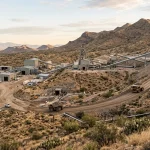
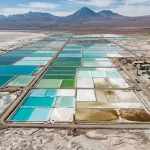
The rush for nuclear power has sent shockwaves through the mining industry. Uranium spot prices have reflected this long-term demand shift, as utilities and tech firms compete for the same limited pool of yellowcake.
Mining companies are responding with brownfield restarts and exploration surges in Tier-1 jurisdictions. In the United States, the focus has shifted toward ISR (In-Situ Recovery) mining in Wyoming and Texas, while in Canada, the Athabasca Basin remains the global center of high-grade production. The surge in nuclear interest has essentially “floor-priced” the uranium market for the remainder of the decade, as the tech sector’s balance sheets provide a creditworthy backstop that the industry hasn’t seen in fifty years.
2026 Outlook and Key Risks
As we move through the second half of 2026, the market is watching three key variables:
- Licensing Speed: The U.S. Nuclear Regulatory Commission (NRC) remains under pressure to accelerate the licensing of SMR designs. Any delay in the “first-of-a-kind” (FOAK) deployments could stall the tech industry’s expansion plans.
- Fuel Supply: With Russian uranium imports banned in several Western markets, the pressure on Western enrichers and miners to fill the gap is immense.
- Grid Modernization: Even with co-located reactors, data centers still require grid connections for redundancy. The backlog in interconnection queues across PJM and other regional markets remains a significant hurdle.
Market Snapshot: AI-Nuclear Power Agreements (2026 Estimates)
| Tech Company | Primary Nuclear Partner | Deal Type | Estimated Capacity (MW) | Primary Location |
|---|---|---|---|---|
| Amazon (AWS) | Talen Energy | Asset Purchase / PPA | 960+ | Pennsylvania, USA |
| Microsoft | Constellation Energy | 20-Year PPA (Restart) | 837 | Pennsylvania, USA |
| Kairos Power | SMR Fleet PPA | 500 (Projected) | Tennessee, USA | |
| Microsoft | Helion Energy | Fusion PPA | 50 (Pilot) | Washington, USA |
| Amazon | X-energy | SMR Partnership | 320+ | Washington, USA |

The 24/7 AI power race has fundamentally redefined the relationship between the digital economy and heavy industry. As hyperscalers continue to pour billions into nuclear infrastructure, the mining, engineering, and utility sectors are being pulled into an unprecedented era of growth. For the first time in history, the leading edge of software development is being underwritten by the stability of the nuclear baseline.