By Penny Langford

Utah’s high desert is no longer just a backdrop for recreation; it is the front line of the American critical minerals race. In a landmark development for domestic supply security, Ionic Mineral Technologies (Ionic MT) has released a Preliminary Economic Assessment (PEA) for its Silicon Ridge Project that fundamentally resets expectations for Western resource extraction.
The numbers are staggering: a post-tax Net Present Value (NPV) of $12.1 billion at an 8% discount rate, an Internal Rate of Return (IRR) of 69%, and a projected 44-year mine life. For an industry accustomed to thin margins and decadal wait times, the Silicon Ridge economics: including a 1.5-year payback period: signal a shift toward high-tech, multi-product mining operations that prioritize speed and diversity.
The Silicon Ridge Economic Engine
The PEA, prepared by SGS, outlines a project with an initial capital expenditure of $1.1 billion. While significant, this is balanced by an estimated life-of-mine (LOM) undiscounted after-tax free cash flow of approximately $60 billion. This scale is achieved through an EBITDA margin of nearly 87%, a figure driven by the unique polymetallic nature of the resource.
Unlike traditional mines that focus on a single commodity, Silicon Ridge is designed to produce alumina products, amorphous nano-silica, and a suite of 19 critical minerals and rare earth elements (REEs). This "basket" approach de-risks the project against price volatility in any single metal and positions it as a one-stop shop for the rare earths supply chain 2026 outlook.

White halloysite powder in a laboratory dish.

Geology Without the Grime: The Halloysite Advantage
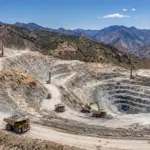
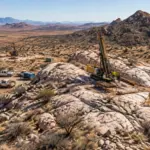
At the heart of the project is a massive halloysite-hosted clay deposit west of Utah Lake. From an operational standpoint, the deposit offers distinct advantages. The PEA identifies 83.2 Mt of Indicated and 247.0 Mt of Inferred resources, which can be extracted with a remarkably low 0.2:1 strip ratio.
Critically, the material requires no drilling or blasting. This not only lowers the carbon footprint and operational costs but also streamlines the permitting process: a major hurdle for many mining news stories in recent years. The project is designed to process 2.0 million tonnes per annum (Mtpa) of halloysite concentrate, feeding directly into Ionic MT’s downstream facilities.
Scaling in 2026: From Pilot to Commercial Powerhouse
Ionic MT is not starting from zero. The company already operates a 74,000 sq ft processing facility in Provo, Utah. Following a successful $29 million Series B funding round, the company is ramping up production of its IonAl™ high-purity boehmite alumina.
The 2026 target is clear: transition from pilot-scale production to commercial shipments and positive cash flow. By processing the halloysite in-state, Ionic MT satisfies one of the core tenets of Utah's "Mission Critical" framework: ensuring that the value of the minerals remains within the domestic economy.

Cleanroom mineral sorting system in operation.
Geopolitical Winds: The Utah Pivot
The Silicon Ridge project does not exist in a vacuum. Its development coincides with a massive policy shift in Utah, catalyzed by federal and state-level urgency. Governor Spencer Cox’s "Mission Critical" framework aims to have Utah supply 25% of U.S. critical mineral demand by the end of the decade.
The project is further bolstered by the geopolitical environment. References to Trump-era land orders and the current administration’s focus on decoupling from foreign dependencies have created a "permitting express lane" for strategic projects. In early 2026, Utah’s Senate Bill 254 (S.B. 254) established Critical Minerals Zones, providing infrastructure incentives and accelerated reviews for projects like Silicon Ridge.
This policy tailwind is what makes the region a focal point for critical minerals stocks to buy 2026. Investors are looking beyond traditional lithium plays like Lithium America’s Thacker Pass to more complex, polymetallic assets that offer broader market exposure.
Data Table: Silicon Ridge Project Metrics
| Metric | Value |
|---|---|
| After-Tax NPV (8%) | $12.1 Billion |
| Internal Rate of Return (IRR) | 69% |
| Initial Capex | $1.1 Billion |
| Payback Period | 1.5 Years |
| Mine Life | 44 Years |
| EBITDA Margin | ~87% |
| Annual Feed Rate | 2.0 Mtpa Halloysite |
| Strip Ratio | 0.2:1 |
Linking to the Broader Rare Earths Supply Chain
Silicon Ridge enters the market at a time when global supply chains are fracturing. While Brazilian rare earth projects are showing high grades, and Malawi's Kangankunde is confirming high extraction rates, the U.S. domestic market has been slow to catch up.
The Silicon Ridge PEA changes that narrative. By providing a secure, domestic source of 19 critical minerals: including the amorphous nano-silica essential for next-generation silicon-anode batteries: Ionic MT is positioning itself as a central pillar of the North American energy transition.

Satellite-style view of Utah critical minerals zones.
Risks and Realities
Despite the robust PEA, the path to full-scale production remains steep. Approximately three-quarters of the resource used in the study is classified as "Inferred," meaning significant additional drilling is required to upgrade these to "Measured and Indicated" categories. Furthermore, the $1.1 billion capex will require substantial project financing, likely involving a combination of equity, debt, and potential federal grants or loans.
However, with Citigroup engaged as a market adviser and a fully permitted initial mining site already in hand, the momentum is undeniably with Ionic MT.
Looking Ahead
The Silicon Ridge Project represents a new blueprint for American mining. It combines favorable geology with aggressive state policy and a high-margin downstream processing strategy. As the rare earths supply chain 2026 landscape continues to evolve, Silicon Ridge stands as a testament to Utah’s growing status as a critical minerals powerhouse.
Social Media Snippet (LinkedIn/X):
Utah's Silicon Ridge is rewriting the rules of domestic mining. Ionic Mineral Technologies has just dropped a PEA showing a massive $12.1B NPV and 69% IRR for its multi-product critical minerals project. With no drilling or blasting required and a 44-year mine life, this is more than just a mine; it's a strategic asset for the U.S. battery and rare earths supply chain. #MiningNews #CriticalMinerals #RareEarths #EnergyTransition #UtahMining #IonicMT