By Charles Pitts

Mariana Minerals has officially commenced the deployment of Boston Dynamics’ Spot robot at its Copper One facility near Moab, Utah, marking a significant milestone in the industry’s push toward full operational autonomy. The quadruped robot is now integrated into the site’s daily inspection routines, tasked with navigating hazardous environments and collecting high-fidelity data essential for the production of high-purity copper cathodes.
The deployment represents the first instance of a mine demonstrating “end-to-end autonomy,” according to company officials. By removing human operators from high-risk zones: such as highwalls, underground galleries, and high-voltage refinery areas: Mariana Minerals aims to redefine safety standards while simultaneously addressing the intensifying global demand for copper driven by the AI and data center sectors.
Autonomous workflows at Copper One
The Copper One project, situated in the rugged landscape of San Juan County, is designed as a software-first operation. Central to this strategy is MarianaOS, a proprietary operating system that serves as the central nervous system for the mine. In this ecosystem, the Spot robot functions not merely as a remote-controlled tool, but as a mobile, self-directed sensor node.
Previously, routine inspections at the Moab site required personnel to manually traverse several miles of industrial infrastructure, often in extreme heat or near heavy machinery. These “walk-downs” are now being automated. Spot utilizes its industrial inspection suite: including thermal imaging, acoustic sensors, and a 30x optical zoom pan-tilt-zoom (PTZ) camera: to identify anomalies such as overheating bearings, gas leaks, or structural fatigue.
More Read

The data captured by Spot is streamed in real-time to the central control room and ingested directly into MarianaOS. This integration allows the system to trigger maintenance work orders or adjust process parameters without human intervention, creating a closed-loop operational environment that maximizes uptime.


Copper demand AI data centers 2026: A supply-side response
The acceleration of autonomous mining technology arrives at a critical juncture for the global copper market. As we approach 2026, the intersection of artificial intelligence and grid-scale electrification is fundamentally altering demand profiles.
More Read

Current market intelligence suggests that AI-driven data centers will add approximately 110,000 tonnes of incremental copper demand by 2026. Total data center demand is projected to reach between 400,000 and 500,000 tonnes annually within that same timeframe. This surge is a primary driver behind a projected refined copper deficit of roughly 150,000 tonnes in 2026.
For operators like Mariana Minerals, the focus on autonomy is a strategic response to these market pressures. To meet the volume and purity requirements of the “AI economy,” mines must operate with a degree of precision that manual processes struggle to match. The data Spot collects is particularly vital for the electrowinning phase of production, where maintaining specific environmental conditions is necessary for high-purity cathode output.
Technical hurdles and rugged terrain
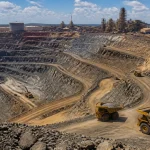
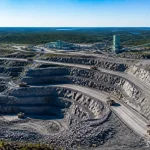
The choice of a quadruped robot over traditional wheeled or tracked drones was dictated by the topography of the Copper One site. The facility spans 10,000 acres of uneven, rocky ground that can be impassable for standard robotic platforms.
Spot’s ability to climb stairs, navigate narrow catwalks, and maintain balance on shifting slopes allows it to reach areas of the refinery and the open-pit benches that were previously inaccessible to automated systems. During the pilot phase, the robot successfully navigated the facility’s conveyor networks, identifying three instances of premature roller failure that would have likely resulted in significant unplanned downtime if left undetected by manual rounds.

Operational impact and ESG goals
Beyond the immediate efficiency gains, the deployment at Copper One aligns with broader ESG (Environmental, Social, and Governance) mandates that are increasingly influential in the mining sector.
- Safety: By automating inspections in “red zones,” Mariana Minerals significantly reduces the Total Recordable Incident Frequency (TRIF). This is particularly relevant as the industry faces scrutiny over worker safety in increasingly complex operating environments.
- Environmental Monitoring: Spot is equipped to perform environmental data collection, including air quality monitoring and leak detection. Early detection of fluid leaks in the solvent extraction plant prevents soil contamination and reduces chemical waste.
- Data Reliability: Manual inspections are often subject to human error or inconsistent logging. Spot provides a timestamped, high-resolution digital twin of the facility’s health, which is essential for auditability and predictive maintenance models.
According to the latest Skillings Mining Intelligence newsletter, the integration of AI and robotics into the “mine of the future” is no longer an optional innovation but a survival strategy. As midstream bottlenecks become immediate economic threats, the ability to extract more value from existing assets through technology is paramount.
The Moab project: Timeline and future outlook
The Copper One facility is currently ramping up its production capacity, with a focus on delivering “green copper” that meets the stringent ESG requirements of tech-sector buyers. The deployment of Spot is part of a multi-phase technology roadmap that will eventually include autonomous haulage and AI-optimized blasting sequences.
While the primary focus is on the 2026 production targets, the success of the Spot deployment at Moab serves as a proof-of-concept for the wider industry. As critical mineral supply chains face a $6.5 trillion risk, the efficiency gains realized through end-to-end autonomy could be the difference between meeting the AI demand surge or facing a prolonged supply crunch.

Strategic takeaway for investors and operators
The deployment at Copper One highlights a shift in the mining value chain where software is becoming as critical as the ore itself. For investors, Mariana Minerals represents a new class of “tech-enabled” miners that are less vulnerable to the labor shortages and safety-related shutdowns that plague traditional operations.
For the wider industry, the message is clear: the path to securing the copper required for the AI revolution runs through automation. As we move toward 2026, the companies that successfully bridge the gap between heavy industry and robotics will be the ones that define the next supercycle.