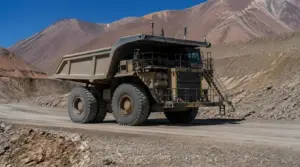
A lepidolite lithium operation in Jiangxi province, China.

By Charles Pitts
CATL’s prolonged shutdown of the Jianxiawo lithium mine in Jiangxi is tightening a market that had been expected to remain well supplied, raising the risk that lithium carbonate could move into deficit if the disruption extends and other regional mines face similar permitting problems.
Battery-grade lithium carbonate is currently holding around $18,000 per tonne in market indications, while bullish scenarios discussed by participants and analysts place prices as high as $28,000-$35,000 per tonne if supply losses spread across Jiangxi and demand from electric vehicles and energy-storage systems accelerates.
The central question for operators and investors is no longer simply when CATL can restart Jianxiawo. It is whether the mine’s absence, combined with tighter regulatory scrutiny of other lepidolite producers, removes enough marginal supply to change the market balance.
CATL shutdown removes a significant source of Jiangxi supply
Jianxiawo is one of China’s largest lepidolite lithium operations. The mine, located near Yichun in Jiangxi province, suspended mining after its permit expired. CATL has said it was seeking the necessary approvals, but reports indicate that environmental and regulatory requirements have continued to delay a full restart.

Reuters reported that the mine remained closed while CATL pursued environmental approval. The company had earlier secured a safety permit to resume operations, according to a separate Reuters report, but the approval process has not translated into an immediate return of production.
The scale of the mine makes the delay important. Fastmarkets estimates Jianxiawo’s annual capacity at approximately 65,000 tonnes of lithium carbonate equivalent (LCE), equal to about 5,000 tonnes of LCE per month. That represents roughly 7% of China’s monthly LCE production, according to Fastmarkets’ analysis.
Benchmark Mineral Intelligence previously estimated Jianxiawo’s 2025 output at approximately 40,000 tonnes of LCE. If the suspension persisted through the second half of that year, Benchmark calculated that about 20,000 tonnes of LCE could be removed from the market, reducing the global surplus by roughly one-quarter.
That earlier assessment did not establish a structural deficit. It did, however, show how quickly a single mine can affect sentiment when inventories and producer margins are already under pressure.

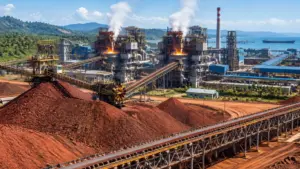
Processing infrastructure used to convert lithium-bearing ore into battery materials.
The wider risk is a Jiangxi supply cascade
The market impact could be larger if Jianxiawo becomes part of a wider licensing review across Jiangxi’s lepidolite sector.
SMM has reported that eight mines involved in the regional licensing issue account for at least 75% of Jiangxi’s lepidolite supply. The consultancy estimated that CATL’s shutdown could reduce lithium carbonate-equivalent supply by approximately 9,000-10,000 tonnes per month, depending on how the feedstock is measured and how quickly inventories are depleted.
If the other seven operations are also required to suspend production or renew their licenses, SMM estimates that the combined reduction could reach 15,000-16,000 tonnes per month, or roughly 20% of China’s national monthly output.
Those figures are scenario estimates rather than confirmed production losses. The companies involved have not all disclosed the status of their permits or reserve reports. Still, the possibility has changed the way traders are assessing supply risk.
| Supply scenario | Estimated impact | Potential market effect |
|---|---|---|
| Jianxiawo remains offline temporarily | About 5,000-10,000 tonnes LCE per month | Tightens supply and supports prices |
| Jianxiawo shutdown extends for six months or more | Up to about 30,000-35,000 tonnes LCE in total | Reduces surplus and increases import demand |
| Wider Jiangxi licensing disruption | About 15,000-16,000 tonnes LCE per month | Creates a credible risk of a short-term deficit |
SMM’s more conservative scenario assumes that Jianxiawo resumes after several months and that other mines remain active. Under that case, inventories and additional imports could cushion the market.
The more severe scenario assumes that regulatory reviews extend for six months or longer, while other Jiangxi producers face similar restrictions. That outcome would leave converters and cathode producers competing for alternative feedstock at a time when supply chains are already sensitive to shipping schedules and overseas mine availability.
China lithium futures amplify the shock
The supply concern has been reflected most visibly in China’s lithium carbonate futures market.
When the Jianxiawo shutdown was first confirmed, the most-traded contract on the Guangzhou Futures Exchange, or GFEX, reached the daily price limit. SMM reported a move to 81,000 yuan per tonne, while Fastmarkets recorded the September contract opening at 80,560 yuan per tonne, an increase of more than 11% from the previous session’s opening level.
Fastmarkets also reported that the contract had risen from 67,680 yuan per tonne at the start of the earlier trading week to 76,640 yuan by the end of Friday trading. The move illustrated how quickly Chinese futures prices can respond to a change in mine-permit expectations.
The futures market is not only pricing physical supply. It is also pricing the probability of a restart, the timing of regulatory approvals, the availability of imported spodumene and the willingness of converters to release inventory.
That makes lithium particularly vulnerable to sharp reversals. Futures can rise when a shutdown is confirmed, then fall just as rapidly when traders receive evidence that production may resume. The market’s response to CATL’s mine has therefore been driven by both fundamentals and expectations.
In earlier trading around the initial shutdown, Fastmarkets reported battery-grade lithium carbonate at 72,300-76,000 yuan per tonne in China, up from 67,000-68,920 yuan at the start of the month. The increase was significant, but Fastmarkets cautioned that speculative activity and existing inventories limited the immediate physical impact.
The current price environment is higher, with battery-grade carbonate indications around $18,000 per tonne. That level reflects a market that is treating the shutdown as more than a short-lived disruption. Whether it can be sustained will depend on actual production losses rather than futures positioning alone.

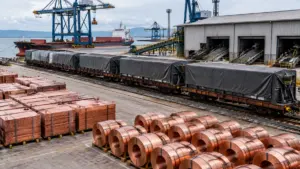
Battery-grade lithium carbonate is the key pricing reference for cathode and battery producers.
What the shutdown means for lithium prices
The immediate effect of the shutdown is supportive for prices. CATL has reportedly sought alternative feedstock to compensate for the lost production, potentially increasing demand for imported lithium chemicals and spodumene. Other Chinese converters may also bid more aggressively for raw materials if inventories begin to fall.
The longer-term effect is less certain.
A sustained move toward $28,000-$35,000 per tonne would require more than Jianxiawo remaining idle. It would likely require several conditions to occur at the same time:
- A prolonged shutdown at Jianxiawo with no clear restart timetable.
- Additional licensing disruptions among Jiangxi lepidolite producers.
- Delays or reductions at overseas spodumene and brine operations.
- Stronger-than-expected EV and battery-storage demand.
- A decline in inventories held by Chinese converters and cathode manufacturers.
- Limited ability for higher prices to bring marginal supply back online.
The $18,000-per-tonne area can therefore be viewed as a market stress level, while $28,000-$35,000 represents a bull-case range tied to a broader supply shock. It is not yet evidence that a structural deficit has been confirmed.
The bearish counterargument is that higher prices can reactivate idle capacity, encourage additional imports and prompt producers to draw down inventories. China’s spodumene-based lithium carbonate operating rate had already begun to recover during the earlier disruption, according to SMM. That response could offset part of the Jiangxi shortfall if overseas shipments arrive on schedule.

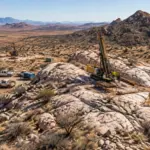
Industrial equipment at a lithium operation during a period of uncertainty over production permits.
The next signals for operators and investors
The most important indicators will be regulatory rather than financial.
Market participants will be watching for confirmation of CATL’s environmental approvals, a formal restart schedule and evidence that mining and refining have resumed at commercial rates. A permit alone may not restore supply immediately; extraction, ore processing and chemical conversion each require time to reach normal output.
The market will also track reserve-report submissions from other Jiangxi producers, Chinese converter operating rates, imported spodumene arrivals and changes in domestic inventories.
For battery manufacturers, the shutdown increases the value of diversified feedstock contracts and inventory visibility. For miners and chemical producers, it improves the near-term pricing environment but also highlights the regulatory exposure of low-grade lepidolite operations.
For investors and policymakers, the episode is a reminder that China’s lithium supply is not determined only by nameplate capacity. Permitting, environmental review, ore quality and regional industrial policy can remove meaningful volumes from the market with little warning.
The Jianxiawo shutdown has not conclusively created a global lithium deficit. It has, however, narrowed the margin for error. If CATL remains offline and other Jiangxi mines are drawn into the review process, the market could move from surplus management to shortfall management faster than many producers had expected.
This report draws on reporting and analysis from Benchmark Mineral Intelligence, Fastmarkets and SMM. Read more critical-minerals coverage at Skillings Mining Intelligence.