Parliament House complex in New Delhi, India.

Byline: Sonny Rollins
India’s Parliament has passed legislation giving the central government wider authority over mineral-bearing lands and placing new limits on state taxes and levies linked to mineral rights.
The Mines and Minerals (Development and Regulation) Amendment Bill, 2026, cleared the Lok Sabha on Aug. 12 and the Rajya Sabha on Aug. 13, according to PRS Legislative Research. It will become law after receiving the President’s assent.
The government says the changes will reduce uncertainty for mining companies, standardize mineral-related charges across India and accelerate exploration of critical and strategic minerals, including lithium, graphite, nickel and cobalt.
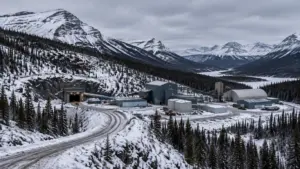
The legislation also shifts part of the balance between New Delhi and India’s states. It gives the Centre a stronger role in determining how mineral-bearing land is regulated and restricts states from independently imposing certain taxes, cesses and other levies on mineral rights and mineral-rich land.

What the Bill changes
The amendment updates the Mines and Minerals (Development and Regulation) Act, 1957, India’s main law governing mining and mineral development.
Under the existing framework, the central government regulates major minerals and sets broad rules for mineral concessions, royalties and auctions. State governments generally grant mining leases and collect royalties and other payments. States also retain authority over minor minerals and have constitutional powers to tax mineral rights, subject to limits imposed by Parliament.
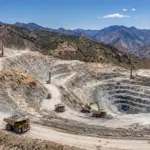
The amendment adds mineral-bearing lands to the scope of the central government’s regulatory authority. It defines mineral-bearing land as land containing mineral content according to parameters prescribed by the Centre.
That definition leaves important practical questions to rules that have yet to be issued, including how mineral-bearing land will be identified and how the new central authority will interact with state land, environmental and local-government powers.
The Bill also prevents states from imposing taxes, cesses or other levies on mineral rights or mineral-bearing lands based on mineral quantity, mineral value, royalty or another measure, except under conditions or restrictions prescribed by the central government.
The restrictions apply to future levies and also address older liabilities. Unpaid or unrecovered state dues from before the amendment’s commencement will be treated as invalid. Amounts already paid or recovered, however, will not be refunded.
| Provision | Practical effect |
|---|---|
| Central control extended to mineral-bearing lands | New Delhi gains a wider role in setting the regulatory framework for mineral-rich areas |
| Limits on state taxes and cesses | States cannot independently impose specified mineral-related levies outside central conditions |
| Treatment of past dues | Unpaid or unrecovered qualifying dues are invalidated; recovered amounts are not refunded |
| Lease flexibility for critical minerals | Existing lease holders can seek to add specified minerals without an additional payment in many cases |
| Broader exploration mandate | The national exploration trust can support mine development as well as exploration |
The changes follow a 2024 Supreme Court ruling that held states have the power to tax mineral rights and mineral-bearing land. The court also held that Parliament could limit states’ authority to tax mineral rights through legislation, while questions remained over whether it could restrict taxation of land under the Constitution’s separate land-taxing powers.
PRS has identified that constitutional question as one of the Bill’s central issues.
Government says states will retain revenue rights
The Union government has rejected the argument that the amendment removes the states’ ownership or revenue rights over minerals.
The Press Information Bureau said the legislation would not take away states’ rights over land, minerals or taxes collected by states. It said roughly 90% of taxes and statutory payments from mining currently accrue to states and would continue to do so.
Mining Minister G. Kishan Reddy, speaking during the parliamentary debate, said the objective was to ensure more uniform mineral rates across the country. He said states would continue to regulate 49 minor minerals.
The government’s position is that the legislation targets inconsistent and sometimes retrospective charges that can raise the cost of mining after an operation has begun. The Statement of Objects and Reasons cited by PRS lists multiple taxes and levies, non-uniform rates between states and retrospective demands as factors that can discourage extraction and make projects commercially unviable.
The Opposition has challenged that interpretation. Several parties argued that the Bill weakens fiscal federalism by allowing the Centre to determine the conditions under which states may tax mineral rights and mineral-bearing lands. Critics also raised concerns about the effect on tribal communities and local governments in areas where mineral-rich land overlaps with customary or environmentally sensitive areas.
The constitutional position could therefore remain contested even after the Bill receives assent.
Implications for mining companies
For miners, the immediate attraction is greater potential predictability in the fiscal framework.
Large mining projects can operate for decades, and unexpected state-level cesses or surcharges can change project economics after capital has already been committed. A more standardized regime could make it easier for operators to compare projects across states, prepare feasibility studies and estimate long-term costs.
The effect will depend on the rules issued by the Centre. If central rules establish clear limits and consistent procedures, companies could face fewer state-specific compliance requirements. If the rules are delayed or leave substantial discretion to different authorities, uncertainty could continue.
Companies with existing leases may also gain a faster route to develop additional minerals. The Bill allows lease holders to approach state governments to add minerals to existing leases.
For critical and strategic minerals, and for specified minerals including lithium, graphite, nickel, cobalt, gold and silver, lease holders will not be required to pay an additional amount for inclusion under the reported framework. For other minerals, an amount equivalent to the applicable royalty would generally apply. Mines awarded through auctions may also face the relevant auction premium for an additional mineral.
That provision could be important where exploration reveals more than one economically recoverable mineral within an existing lease area. It may reduce the need to wait for a separate auction or concession process before evaluating by-products and associated deposits.
The amendment also removes the existing 50% ceiling on sales from captive mines after end-use requirements are met, according to reporting by The Economic Times. That could provide additional flexibility for captive mine operators, although the commercial impact will depend on implementing rules and market conditions.
Why critical minerals are central to the policy
India is seeking to expand domestic supply of minerals needed for batteries, electronics, renewable energy systems, electric vehicles and defense applications.
The country has historically relied on imports for several critical minerals and faces competition from manufacturers and technology companies seeking secure supplies. Exploration remains difficult because many deposits are deep, technically complex or insufficiently mapped.
The Bill attempts to address those constraints in several ways.
First, it makes it easier for existing lease holders to include additional critical minerals without paying a separate upfront amount. That could encourage companies to reassess old exploration data and examine waste streams, by-products and deeper geological formations.
Second, it expands the mandate of the National Mineral Exploration Trust. The trust is expected to support mine development as well as exploration, broadening the use of funds collected from the mining sector.
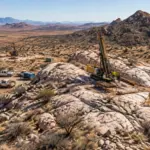
Third, the legislation provides flexibility for deep-seated mineral deposits. For minerals found more than 200 metres below the surface, the area covered by a composite licence may be expanded by up to 30%, while a mining lease may be expanded by up to 10%, according to The Economic Times.
These provisions will not automatically create new supply. Exploration still requires drilling, permitting, infrastructure, processing capacity, financing and community support. But they could shorten the path from discovery to development if agencies issue clear rules and states process lease modifications efficiently.

Geologists examine mineralized drill core in an Indian exploration facility.
The next test is implementation
The Bill’s passage establishes the policy direction, but its commercial consequences will be determined by the rules that follow.
The Centre will need to define the parameters for mineral-bearing land, establish the conditions governing state levies and clarify how the new provisions interact with existing mining leases, auctions and state permissions.
For states, the most immediate issue is revenue planning. The invalidation of unpaid or unrecovered past levies could affect outstanding claims, while the new framework may limit states’ ability to respond independently to local infrastructure, environmental or social costs associated with mining.
For miners, the priority will be reviewing lease terms, tax exposure and geological data. Companies may need to assess whether existing concessions contain additional critical minerals and whether those minerals can be added under the new rules.
Legal challenges are also possible. PRS has questioned whether Parliament can regulate mineral-bearing land through the MMDR Act and whether the retrospective treatment of unpaid levies could conflict with the Supreme Court’s 2024 judgment or constitutional protections.
The amendment therefore offers India a more centralized framework for mineral policy, but not an immediate solution to its supply gap. Its success will depend on whether uniformity improves without creating new approval bottlenecks, and whether faster exploration is matched by processing, infrastructure and responsible engagement with communities.
For investors, operators and policymakers tracking India’s critical-minerals strategy, the next milestone will be the publication of the central rules: and the response of state governments, mining companies and the courts.
Sources: PRS Legislative Research bill analysis, Ministry of Mines updates, Economic Times report, and The Hindu report.