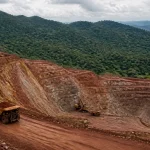
The Dos Amigos project sits in Chile’s Atacama Region, between La Serena and Vallenar.

Sumitomo Corporation and the G Mining Group have taken a combined 25% stake in Tintina Mines through a jointly funded special-purpose vehicle, giving the partners indirect exposure to the Dos Amigos copper-gold project in northern Chile.
The investment formed part of Tintina’s C$91 million subscription-receipt financing, which closed after the company completed the acquisition of the remaining minority interest in its Chilean subsidiary. Tintina now owns 100% of Dos Amigos, formerly known as the Domeyko Sulfuros project, and plans to use the financing to advance the asset through drilling, feasibility work, permitting and environmental studies toward a final investment decision.
The transaction gives each partner an effective economic interest of approximately 12.5% in the project through the 50:50 investment vehicle. The structure also creates a new ownership model for an exploration-stage copper asset: a strategic mining investor provides capital and commercial reach, while a mine-development group contributes engineering, construction and project-delivery expertise.
Sumitomo and G Mining share Tintina exposure equally
The special-purpose vehicle subscribed for approximately C$48 million of Tintina’s financing and now holds about 25% of the company’s issued and outstanding shares on a non-diluted basis.
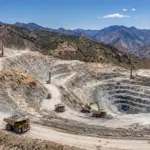
Because Tintina owns the project outright, the vehicle has an equivalent look-through economic exposure to 25% of Dos Amigos. Sumitomo and the G Mining Group each fund half of the vehicle, resulting in the following effective interests:

| Ownership component | Interest |
|---|---|
| Sumitomo Corporation’s interest in the SPV | 50% |
| G Mining Group’s interest in the SPV | 50% |
| SPV interest in Tintina | Approximately 25% |
| Effective project interest held by the SPV | Approximately 25% |
| Effective interest attributable to Sumitomo | Approximately 12.5% |
| Effective interest attributable to G Mining Group | Approximately 12.5% |
The investment was developed through G Mining Capital, a platform established and operated by Sumitomo and the Gignac family. The G Mining Group includes G Mining Services, G Mining Ventures and G Mining Capital.
In its announcement, Sumitomo said the partnership is intended to originate and structure upstream copper investments by combining its resource-sector network and project-financing capabilities with G Mining’s mine-development experience.
The group has been involved in the development of mines including Tocantinzinho in Brazil, Greenstone in Canada, Fruta del Norte in Ecuador and Merian in Suriname, according to the release.

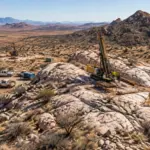
Exploration drilling is expected to form part of the next phase of work at Dos Amigos.
C$55 million earmarked for project advancement
Tintina raised the funds through a non-brokered private placement of subscription receipts priced at C$0.68 each. The financing included approximately C$48 million from the Sumitomo-G Mining vehicle, with the balance subscribed by other investors, including Franco-Nevada and parties associated with G Mining Capital.
Approximately C$36 million of the proceeds was used to acquire the remaining 26.25% interest in Andean Belt Resources SpA, the Chilean subsidiary that holds the project. That transaction consolidated ownership of Dos Amigos under Tintina.
The remaining net proceeds, estimated at approximately C$55 million, are allocated to the project’s next development phase. Planned work includes:
- Optimization of the existing Preliminary Economic Assessment.
- Infill and exploration drilling.
- Environmental baseline studies.
- Permitting and regulatory work.
- Community engagement.
- Preparation of a definitive feasibility study.
Tintina has described the work program as a path toward a final investment decision. The project remains pre-construction, however, and the financing does not represent a construction sanction or a production decision.
That distinction is important for investors and potential suppliers. A PEA identifies a conceptual development opportunity, but it typically carries a lower level of confidence than a feasibility study. The next phase must test the continuity of mineralization, confirm mine and processing assumptions, establish infrastructure requirements and refine capital and operating costs before a construction decision can be made.
Dos Amigos moves from PEA toward feasibility
Dos Amigos is an exploration and development property in Chile’s Atacama Region, an established mining jurisdiction with road, power and logistics infrastructure in the surrounding area. Tintina says the project covers 75 mining concessions over approximately 10,056 hectares.
The property contains the Dos Amigos, Tricolor and Maria Soledad targets, as well as a mineralized hydrothermal breccia. The primary exploration objective is to define copper-gold resources associated with porphyry systems and assess the district’s broader expansion potential.
Tintina released a PEA for the project in February, when it was still referred to as Domeyko Sulfuros. The study outlined a conceptual open-pit operation with a planned processing capacity of approximately 35,000 metric tons per day and a mine life of roughly 25 to 26 years.
The company reported the following PEA-level estimates:
| PEA indicator | Company-reported estimate |
|---|---|
| Measured and indicated resources | Approximately 101 million tonnes |
| Inferred resources | Approximately 256 million tonnes |
| Planned mine type | Open pit |
| Processing capacity | Approximately 35,000 tonnes per day |
| Estimated mine life | Approximately 25–26 years |
| Average annual copper production | Approximately 37,000 tonnes |
| Average annual gold production | Approximately 57,000 ounces |
| Estimated total copper production | Approximately 900,000 tonnes |
| Estimated total gold production | Approximately 1.4 million ounces |
These figures are projections from a preliminary assessment rather than production guidance. The resource base and mine plan will be subject to revision as drilling, engineering and metallurgical work progresses.
The project also has a historical operating component. CEMIN mined the shallow, supergene-enriched portion of the Dos Amigos deposit from 1996 until 2015, processing ore through heap leaching and solvent extraction-electrowinning to produce copper cathode. That operation ended after the depletion of secondary sulfide reserves.
The current development concept is focused on deeper primary sulfide mineralization within a copper-gold porphyry system. Previous drilling has identified mineralization extending to approximately 650 metres below the drill collars, according to Tintina’s project information.

Core logging and geological interpretation will help refine the resource and mine plan.
What the transaction signals for copper exploration capital
The transaction arrives as mining companies and strategic investors compete for exposure to new copper supply while the development pipeline remains constrained by long permitting timelines, rising capital costs and technical complexity.
For Sumitomo, the investment is a relatively targeted way to gain exposure to a copper project without acquiring the entire developer. The Japanese trading and investment company has a long history in mining, processing and resource-related infrastructure. Its participation can potentially support project financing, commercial relationships and future offtake discussions, although the announcement did not disclose an offtake agreement for Dos Amigos.
For G Mining, the transaction provides exposure to a copper-gold development opportunity alongside a potential role in advancing the project technically. The group’s stated capabilities cover mine design, economic evaluation, construction, commissioning, operational support and project origination.
That combination is increasingly relevant for smaller developers. Early-stage companies may control attractive deposits but lack the balance sheet, engineering capacity or execution record required to move from a PEA to construction. Strategic partnerships can fill some of those gaps while allowing financial and technical participants to share risk.
The structure also leaves Tintina with a clear development mandate. The company has consolidated project ownership, removed the former minority interest and secured funding for the next technical stage. It must now demonstrate that the PEA can be converted into a more robust feasibility case.
Key milestones for the market to monitor include:
- PEA optimization: Changes to the mine plan, processing route, recovery assumptions and operating costs.
- Drilling results: Confirmation of resource continuity, grade distribution and potential expansion areas.
- Metallurgy: Recovery performance for copper and gold in the primary sulfide mineralization.
- Permitting and environmental baseline work: Progress on water, land use, biodiversity and community requirements.
- Feasibility economics: Updated capital intensity, operating costs, construction schedule and financing strategy.
- Project execution structure: Whether G Mining takes a formal engineering, procurement or construction role.

Existing regional infrastructure is expected to support the project’s development studies.
Copper exposure remains contingent on execution
Dos Amigos offers several features that attracted the new partners: a large land position, historical mining activity, a completed PEA, access to regional infrastructure and exploration upside across a broader porphyry district.
The project also faces the risks common to advanced exploration assets. Its production profile remains conceptual, and the next studies could alter the resource classification, mine life, production rate or capital requirements. The project will also need to secure the necessary permits and demonstrate that its water, power, transport and processing plans are technically and economically viable.
Tintina says the project has no streams, royalties or offtake commitments other than Chilean state royalties. That may provide commercial flexibility, but it also leaves the company responsible for arranging the future funding and marketing strategy required for development.
The Sumitomo-G Mining investment therefore marks an important financing and ownership milestone, rather than the beginning of construction. Its broader significance is that strategic capital is moving into a Chilean copper-gold project before a final investment decision, with the partners seeking to combine geological upside, project finance and mine-building capability.
For the copper market, the next test will be whether that partnership can convert Dos Amigos’ PEA-stage resource and historical operating footprint into a financeable development plan.
Related coverage
- Copper exploration: Solstice hits 722 metres at Nanadie
- Skillings Mining Intelligence: copper records, M&A sequencing and streaming discipline
- Dos Amigos project overview and technical reports
- Tintina completes the strategic partnership transaction
Sources: Sumitomo Corporation announcement; Tintina Mines Dos Amigos project page; Tintina Mines PEA announcement.