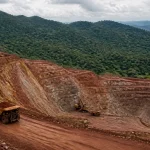
Tailings governance is becoming a core test of mining project readiness.

Mining ESG compliance is moving from annual-report language into the critical path for mine approvals, financing and operating costs. In 2026, the companies best positioned are not necessarily those with the most ambitious targets. They are the operators that can prove, site by site, how they manage water, tailings, closure liabilities, emissions and community commitments.
The distinction between regulation and voluntary standards matters. GRI 14: Mining Sector 2024 is a voluntary reporting standard, although it becomes effective for applicable GRI reports published from January 1, 2026. The Global Industry Standard on Tailings Management (GISTM) is also not automatically law worldwide, but it can become binding through permits, lender covenants, shareholder expectations or company commitments.
By contrast, laws such as California’s SB 253, the EU’s Critical Raw Materials Act (CRMA) and host-country environmental approvals create direct legal obligations for companies and projects within their scope.
This article sets out three 2026 scenarios for permitting, capital and operating costs. The numerical ranges are planning assumptions rather than universal industry averages.

The 2026 ESG compliance baseline
Several developments are converging:

- GRI 14 raises expectations for mine-site reporting on tailings, water, biodiversity, land disturbance, closure and Indigenous Peoples.
- California SB 253 requires qualifying businesses with more than $1 billion in annual revenue doing business in California to report global Scope 1 and Scope 2 emissions. Scope 3 reporting follows in 2027.
- Under the EU CRMA, recognized Strategic Projects face maximum permit-granting periods of 27 months for extraction and 15 months for processing or recycling. The time needed to prepare an environmental impact assessment is excluded, and the limits apply only to designated Strategic Projects.
- The GISTM implementation deadline for applicable ICMM member facilities was August 5, 2025. ICMM reported that 67% of member-operated facilities had reached full conformance and 33% remained in partial conformance at that point.
These rules and standards do not create one global ESG rulebook. They create a layered system in which the same information may be requested by a regulator, lender, customer, auditor and community group.
The practical consequence is that ESG data quality increasingly affects project schedules. A company that cannot reconcile its water balance, tailings inventory or community commitments may face additional information requests, permit conditions, financing delays or legal challenges.

Three scenarios for mining ESG compliance
The following framework is designed for operators, lenders and investors assessing project readiness.
| Metric | Bull case: evidence-led approval | Base case: compliance becomes normal | Bear case: ESG becomes a schedule risk |
|---|---|---|---|
| Permitting | Strategic-project limits of 15–27 months where applicable; EIA work remains separate | Roughly 2–5 years for major approvals in established regimes; complex projects can take longer | Five to 10 years or more, including redesign, appeals or permit challenges |
| Financing | Access to competitive debt; potential 5–25 basis-point SLL benefit when targets are met | Flat to roughly 50 basis points above the strongest peers, depending on jurisdiction and project risk | Approximately 50–150 basis points of additional risk premium, tighter covenants or delayed close |
| Operating cost | ESG systems and water efficiency add about 0.25%–0.75% to operating or sustaining costs | Recurring compliance, monitoring and assurance add approximately 0.5%–1.5% | Water treatment, tailings redesign, consultants and delays add 2%–5% or more |
| Water | Site-level balances, recycling and basin agreements are complete before approval | Monitoring improves, but data remains uneven across legacy sites | Scarcity, discharge concerns or competing community use trigger restrictions |
| Tailings | Facility inventory, independent reviews and GISTM gap plans are public | Most facilities are disclosed, but some remain on time-bound remediation plans | Incomplete records or high-consequence facilities trigger redesign, insurance or permit action |
| Community relations | Agreements, grievance systems and benefit-sharing are documented early | Consultation continues through construction and operations | Litigation, opposition or unresolved Indigenous rights issues delay approvals |
Bull case: ESG evidence shortens the risk cycle
In the bull case, regulators do not eliminate environmental scrutiny. Instead, they process complete applications more efficiently because the company has already answered the most difficult questions.
A project in the EU designated as a Strategic Project could benefit from the CRMA’s 27-month extraction or 15-month processing timetable. That does not guarantee approval, and it does not remove the need for an environmental impact assessment. It does, however, provide a clearer administrative clock once the project has entered the relevant process.
The strongest projects would submit:
- A defensible site-level water balance.
- A complete tailings facility register.
- Independent technical reviews and consequence classifications.
- A closure-cost estimate tied to financial provisions.
- Consultation records showing how concerns changed project design.
- Emissions data that can be reconciled to financial and operational records.
The capital benefit may be modest but meaningful. Sustainability-linked loan ratchets often sit in the range of 5–25 basis points, although mining-specific pricing evidence remains limited. The larger advantage is access: lenders may be more willing to finance a project when ESG risks are measurable, monitored and contractually controlled.
Base case: compliance becomes another operating system
The base case is not a low-regulation environment. It is one in which ESG compliance becomes routine but adds recurring work and cost.
Large miners will increasingly maintain a single evidence base for GRI, ISSB, customer questionnaires, California emissions reporting, lender covenants and local permits. That will require stronger controls between sustainability, operations, procurement, finance and legal teams.
The most visible cost categories include:
- Water meters, laboratory testing and basin-level monitoring.
- Tailings instrumentation, inspections and independent reviews.
- External assurance for emissions and selected sustainability indicators.
- Supplier data collection for Scope 3 reporting.
- Community engagement, grievance management and benefit-sharing administration.
- Closure and rehabilitation modelling.
- Cybersecurity and governance for environmental data systems.
The recurring cost range of 0.5%–1.5% of operating or sustaining expenditure is a planning assumption, not a sector-wide benchmark. Actual costs will vary substantially by commodity, geography, mine age and the quality of existing systems.
The financing effect is also likely to be uneven. Cross-sector research has associated stronger ESG performance with financing-cost advantages of roughly 30–110 basis points, particularly in energy and basic materials. That does not mean every well-reported mine receives a lower interest rate. Markets may reward credible risk reduction, while treating disclosure without operational improvement as immaterial.
Permitting will remain the main economic variable. Industry research has placed the average discovery-to-production timeline near 16 years, with some projects that have completed feasibility studies taking close to 30 years to reach production. Not all of that delay is caused by ESG issues, but water, biodiversity, tailings and community consent are increasingly central to the approval pathway.
For illustration, if a project expects $200 million in annual cash flow and uses an 8% discount rate, delaying that cash flow by one year reduces its present value by approximately $14.8 million. A two-year delay reduces the present value by roughly $27.4 million. That is before inflation, additional interest, contractor remobilization or commodity-price changes.

Water quality monitoring is becoming a permitting and financing input, not only an environmental metric.
Bear case: ESG gaps become balance-sheet liabilities
The bear case begins when a company treats ESG reporting as a communications exercise rather than a control system.
A weak tailings register can expose gaps in ownership, engineering records or closure funding. A weak water model can reveal that a project depends on a basin already under pressure from agriculture, communities or competing industrial users. A weak consultation record can create the basis for a legal challenge even after a permit has been issued.
The resulting cost is not limited to a larger sustainability budget. It can include:
- A two- to five-year schedule delay.
- Higher debt margins and additional reserve accounts.
- Redesign of water infrastructure or tailings facilities.
- More expensive insurance or limited coverage.
- Construction stoppages and contractor claims.
- Reduced flexibility during commodity downturns.
- Reputational damage with customers seeking traceable critical minerals.
This is why the GISTM deadline should not be viewed as a paperwork deadline. ICMM’s 2025 progress data showed that full conformance was still incomplete across a significant share of member-operated facilities. Companies with partial conformance need credible, public and time-bound remediation plans.
Which companies are best positioned?
A useful ranking should measure disclosure and control readiness, not declare which company has the best overall ESG performance.
Based on recent public reporting identified in the research, several companies stand out:
- Anglo American has explicitly structured its 2025 sustainability-related disclosure around GRI 14 waste and tailings topics, providing a useful benchmark for sector-standard integration.
- Capstone Copper reported 80% company-wide GISTM conformance in 2025, up from 48% in 2024, and has targeted full implementation across its tailings storage facilities by 2028.
- Lundin Mining reports water withdrawals, water discharges, community grievances and community investment using GRI-linked indicators.
- Hecla Mining has positioned its sustainability reporting with reference to the 2024 mining sector standard ahead of its effective date.
- Mineral Resources provides an example of a company that reports GRI-related data while acknowledging areas where information remains incomplete. That transparency is preferable to presenting an artificially complete picture.
The investment implication is not a direct buy or sell signal. The stronger screening question is whether a company can demonstrate:
- A complete tailings inventory.
- Water data by site and source.
- Closure-cost coverage and methodology.
- Independent assurance over material metrics.
- A documented process for community grievances.
- Clear accountability for each facility and permit.
- Time-bound plans for incomplete data or partial conformance.
Companies that score well on these tests may be better positioned to secure approvals and capital. They still face commodity prices, labor shortages, construction risk and geopolitical exposure. Strong ESG controls reduce one category of risk; they do not remove project risk.
What operators should do next
Mining companies should treat 2026 ESG compliance as a three-layer program.
First, map legal applicability. Determine whether each entity falls within SB 253, CSRD/ESRS, ISSB-based local rules or commodity-specific environmental requirements. Separate mandatory disclosures from voluntary GRI or GISTM commitments.
Second, build the site register. Include mines, tailings facilities, waste areas, water infrastructure, pipelines, roads, processing plants and closure obligations. Record ownership, operatorship, permits, capacity and accountable executives.
Third, connect ESG to capital planning. Water treatment, tailings monitoring, closure provisions and community programs should appear in feasibility studies, sustaining-capital budgets and financing models: not only in sustainability reports.
A company should also test its ESG data as if it were financial information. Can a reported water figure be reconciled to meters and invoices? Can a tailings disclosure be supported by engineering records? Can a Scope 3 estimate be traced to supplier activity data? Can a community commitment be tied to a budget, owner and completion date?

Integrated operational data systems can connect ESG controls with production and safety decisions.
Conclusion
The central ESG question for mining in 2026 is no longer whether a company publishes a sustainability report. It is whether its environmental and social claims are specific enough to support a permit, a loan agreement, an assurance opinion and a community conversation.
The bull case rewards companies that collect evidence early. The base case makes compliance a normal operating expense. The bear case turns water, tailings or community gaps into schedule and balance-sheet liabilities.
For decision-makers, the most defensible approach is to focus on measurable readiness: permit milestones, site-level water data, tailings conformance, closure funding, assurance scope and documented community outcomes. Those indicators provide a more useful view of mining ESG risk than broad rankings or headline commitments.
Further reading
- Mining ESG compliance: GRI 14 and SB 253 deadlines
- Mining ESG compliance: what it is, why it matters and the 2026 outlook
- GRI Sector Standard for Mining
- Global Industry Standard on Tailings Management
- California Air Resources Board corporate greenhouse-gas reporting program
- EU Critical Raw Materials Act
- ICMM Tailings Progress Report
LinkedIn snippet
Mining ESG compliance is becoming a permitting and capital-allocation issue. Our 2026 scenario framework examines how water, tailings, disclosure and community relations could affect approval timelines, financing spreads and operating costs. The key test is not the quality of a sustainability report: it is whether the underlying site-level evidence can withstand regulatory, lender and community scrutiny. #Mining #ESG #CriticalMinerals #Tailings #Water
X snippet
Mining ESG compliance in 2026 is moving into the project critical path. Three scenarios show how water, tailings and community risks could affect permits, financing and operating costs: and why site-level evidence matters more than broad ESG targets. #Mining #ESG #CriticalMinerals