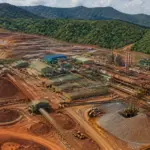
An ultra-class haul truck equipped with telemetry systems operates on a mine road.

By Penny Langford
Autonomous mining technology is moving from isolated pilot projects into core production systems, particularly in surface haulage and drilling. The operational case is increasingly measurable: more consistent cycle times, longer equipment utilization, reduced exposure to hazardous work areas and, in some deployments, lower fuel consumption.
The more difficult question for mining companies is no longer whether autonomy can move material. It is whether the mine has the roads, communications network, operating model, workforce and risk controls required to scale it without creating new bottlenecks.
A 2024 implementation guideline from the Global Mining Guidelines Group frames the challenge across three areas: people, processes and technology. That framework is important because autonomous equipment does not remove the operating system around a mine. It changes how that system works.

What the operating data shows
Reported results vary significantly by mine layout, equipment type, orebody, road conditions and level of automation. The strongest evidence comes from mature deployments, rather than broad industry averages.

The GMG guideline cites several operational outcomes:
- 7% less overbreak from automated or high-precision development drilling.
- 10% to 20% productivity gains on underground automated production drills.
- 10% to 20% faster development rates when tele-remote mucking continues during gas-clearance periods between shifts.
- Improved haul-truck utilization through more consistent dispatch and reduced nonproductive time.
A peer-reviewed study published in Communications Engineering provides a separate data point from an integrated autonomous operation at Yimin open-pit mine in Inner Mongolia. The study reported approximately 10% higher loading and unloading efficiency, a 35% increase in the maximum number of daily transportation shifts per truck, and more than 12% lower fuel consumption per tonne compared with manual operations in its long-term testing.

Those results should not be treated as universal benchmarks. They came from a specific fleet, mine design and control architecture. They do, however, show where the gains are generated: reduced waiting, more accurate positioning, faster coordination between loading and hauling, and the ability to continue operating through shift changes.
The productivity case is built on utilization
Autonomy is often described as a labor-substitution technology. Operationally, its more immediate value is often utilization.
A manually operated truck or drill loses productive time during breaks, shift handovers, travel to and from work areas and changes in operating pace between individuals. An autonomous system can continue operating during some of those intervals, provided that the work area is controlled and the system remains within its approved operating envelope.
The Yimin study found that autonomous trucks could operate continuously and that the system’s daily transportation capacity benefited from the removal of approximately two hours of shift-change downtime. It also reported that the system could increase speed limits by 33% for empty trucks and 10% for fully loaded trucks under the conditions tested.
These gains are not simply a matter of driving faster. Dispatching software, high-precision mapping and vehicle-to-vehicle coordination allow the system to reduce queuing and improve the interaction between trucks, excavators, loaders and dumping areas.
That means the mine plan may need to change. If a haulage system can deliver more truck movements, the limiting factor may shift to shovel availability, crusher capacity, road maintenance, fueling, blasting or stockpile management.
Linkable comparison: where autonomous systems are delivering measurable value
| Mining function | Reported operational result | Primary source | Main constraint |
|---|---|---|---|
| Autonomous surface haulage | 35% higher maximum daily transportation shifts per truck in a Yimin study | Chen et al., Communications Engineering | Road quality, mixed traffic and communications reliability |
| Autonomous haulage fleet scale | More than 750 Komatsu autonomous haul trucks commissioned worldwide as of the company’s 2024 milestone announcement | Komatsu | Integration with mine planning and maintenance systems |
| Underground automated drilling | 10% to 20% productivity gain cited for automated production drills | GMG implementation guideline | Face access, data quality and work-area controls |
| High-precision development drilling | 7% reduction in overbreak cited by GMG | GMG implementation guideline | Geological variability and drilling accuracy |
| Integrated open-pit autonomy | More than 12% lower fuel consumption per tonne in long-term testing | Chen et al., Communications Engineering | Site-specific route planning and operating conditions |
| Longwall automation | 5% to 10% productivity improvement cited by CSIRO research | UQ human-centred automation white paper | Situation awareness, communications and underground complexity |
Reported figures are not directly comparable. Some are company or guideline citations, while others come from a specific research deployment.

A mine control room coordinates equipment, production and safety information across the operation.
Safety gains come from removing exposure, not eliminating risk
The safety case for autonomous equipment is clearest when it removes people from hazardous locations.
Autonomous haulage can reduce the number of people exposed to vehicle interactions on haul roads. Automated drills can remove operators from highwalls, bench edges, dust, vibration and extreme weather. Underground loader automation can reduce exposure to diesel particulate matter, vehicle collisions, whole-body vibration and falling ground around active drawpoints.
The University of Queensland’s 2024 white paper cites a more than 90% decline in the overall incident rate at BHP’s Jimblebar mine during the four-year period that included the introduction of autonomous haulage. The authors also note that Rio Tinto reported an order-of-magnitude difference in collision near-misses between autonomous and manual truck sites.
Such figures require careful attribution. They describe particular operations and time periods; they do not establish a single industry-wide reduction rate. They also do not mean that autonomous systems are risk-free.
The same white paper documents failure modes involving wet roads, loss of traction, communications disruption, incorrect autonomous boundaries, inadvertent mode changes and interactions between autonomous trucks and manually operated water carts or light vehicles.
This distinction matters for mine managers. Autonomy can reduce human exposure while introducing system-level risks that require different controls. A worker may be safer outside a truck cab but more dependent on a communications network, software interface, sensor package and control-room team.
Adoption milestones are becoming more operational
The adoption curve is advancing through several distinct milestones.
1. Single-machine automation
Mines typically begin with one drill, truck, loader or dozer in a tightly controlled area. This stage establishes whether the equipment can perform a defined task reliably and whether workers understand the new boundaries and procedures.
2. Mixed fleets
The next step is the interaction of autonomous and manually operated equipment. This is often where the most complex safety issues appear. Water carts, graders, service vehicles and light vehicles must understand autonomous permissions, exclusion zones and vehicle behavior.
3. Fleet coordination
At this stage, the value shifts from individual machine performance to system performance. Dispatching, loading, dumping, road maintenance and equipment availability are coordinated through a shared operating picture.
4. Remote operations
Control rooms and remote operations centers centralize supervision, but they also concentrate decision-making workload. The UQ white paper cautions that controllers may face relentless interruptions, multiple communication channels and responsibility for several machines at once.
5. Digital-twin and scenario testing
The Yimin research program used a virtual mine and digital-twin architecture to test routes, weather, obstacles, cooperative loading and unloading before applying operating logic in the field. This approach is gaining attention because rare but dangerous conditions are difficult and costly to reproduce physically.
The GMG guideline recommends lifecycle planning, commissioning and testing strategies, cybersecurity controls, performance metrics and change-management processes rather than treating autonomy as a conventional equipment purchase.
Underground mining remains the harder deployment environment
Surface haulage is relatively mature because routes can be mapped, traffic can be separated and operating zones can be more clearly defined. Underground mines present a more constrained environment.
Ventilation, changing faces, narrow headings, variable ground conditions, blasting cycles and limited communications create a more complicated operating context. Semi-autonomous LHDs have been used at more than 50 mines globally since 2006, according to the UQ white paper, but implementation has not always been straightforward.

An underground drill jumbo works inside a supported tunnel.
The report’s case study of CMOC Northparkes found that successful implementation depended on involving affected workers, refining interfaces with operators, limiting nonessential alarms and allowing crews to influence system design.
That experience points to a broader lesson: deployment readiness is not measured only by sensor accuracy or autonomous hours. It also depends on whether the operating workforce can interpret the system, intervene when necessary and recover safely from abnormal conditions.
A practical adoption framework for mine operators
Before scaling autonomous mining technology, decision-makers should track at least six operational measures:
- Autonomous utilization: productive operating time compared with scheduled time.
- Intervention frequency: how often remote operators must pause, redirect or manually recover equipment.
- Cycle-time consistency: variance between planned and actual loading, hauling and dumping cycles.
- Mixed-traffic events: interactions, near misses and permission-line breaches involving manual equipment.
- Network and system availability: downtime caused by communications, positioning, sensors or software.
- Human workload and competency: controller workload, training completion, emergency response performance and staffing adequacy.
Skillings has previously examined these issues in its analysis of six metrics for autonomous mining deployment readiness and the operational significance of the 1,000-truck adoption threshold.
A mine that reports high autonomous hours but frequent interventions, overloaded controllers or recurring network failures may not yet have achieved a robust deployment. Conversely, a smaller pilot with strong availability, clear governance and stable operator performance may provide a better foundation for expansion.
Outlook: from autonomous machines to autonomous operating systems
The next phase of adoption is likely to focus less on individual autonomous vehicles and more on integrated operating systems.
That includes fleet dispatch, digital twins, predictive maintenance, machine health, high-precision mapping, remote supervision and artificial intelligence tools that can optimize decisions across the mine. The most valuable systems will need to connect the pit, plant, maintenance department and control room rather than operate as isolated technology projects.
The evidence supports a measured conclusion. Autonomous mining technology can improve productivity and reduce exposure to hazardous work, with reported gains ranging from improved utilization to double-digit changes in selected operational metrics. But the benefits are highly dependent on mine design, process discipline and human-systems integration.
For operators and investors assessing adoption, the central question is therefore not how many autonomous trucks a company owns. It is whether the mine can convert equipment autonomy into reliable, safe and repeatable production.
Social snippets
LinkedIn:
Autonomous mining is moving beyond pilot projects, but scale depends on more than vehicle software. Reported deployments show gains in utilization, drilling precision and fuel efficiency, while research highlights new risks involving mixed traffic, communications and control-room workload. Our deep dive compares the measurable operating data and the milestones required for adoption.
X:
Autonomous mining technology is delivering measurable gains in haulage, drilling and underground operations. But the adoption test is broader than autonomous hours: utilization, interventions, network availability, mixed-traffic events and human workload determine whether the system can scale safely.
Sources
- Global Mining Guidelines Group: Guideline for Implementation of Autonomous Systems in Mining, Version Two
- Chen et al.: Autonomous mining through cooperative driving and operations enabled by parallel intelligence
- University of Queensland: Human Aspects of Automation and New Technology in Mining
- Komatsu: Major autonomous milestones
- Skillings: Autonomous mining technology deployment readiness