By Penny Langford

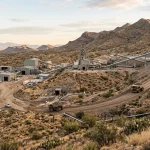
The operational landscape at the Canadian Malartic complex, one of North America’s largest gold producing assets, shifted abruptly this week. Agnico Eagle Mines Limited (TSX:AEM) (NYSE:AEM) reported a significant rock mass movement in the north wall of the Barnat open pit on July 3, triggering a suspension of in-pit mining operations. While the company maintains its long-term strategic outlook, the immediate impact is a projected 60,000 to 80,000-ounce reduction in gold production for the second half of 2026.
This geotechnical setback highlights the inherent risks of open-pit mining, where the balance between wall steepness: necessary for economic ore recovery: and stability is a constant engineering challenge. For investors and operators, the incident serves as a reminder that even Tier-1 assets are subject to the unpredictable nature of geological structures, particularly in areas identified as having "weaker" rock mass.
Geotechnical analysis: The Barnat wall movement
The rock mass movement occurred in a sector of the north wall that technical teams had already identified as having complex geological characteristics. Unlike sudden, catastrophic failures, this event was detected early due to the site’s comprehensive monitoring system. Agnico Eagle has historically employed advanced radar and prism-based monitoring to track slope stability in real-time, allowing the company to implement safety exclusion zones before the movement escalated.


"The safety of our employees is our primary concern," the company stated in its initial release. "Because the area was under enhanced monitoring, we were able to suspend operations in the affected zone without any injuries or equipment damage."

Geotechnical failures in large open pits like Barnat are often tied to structural discontinuities: faults, joints, or shears: that become unstable under the stress of mining deeper. The remediation process typically involves a detailed geotechnical assessment to confirm the current stability of the remaining wall and a redesign of the pit shell. This may require "pushing back" the wall to a shallower angle, which increases the stripping ratio (the amount of waste rock removed per unit of ore) and adds significant operational time and cost.
Production impact: Narrowing the 2026 guidance
Before the July 3 event, Agnico Eagle was tracking toward the mid-point of its 3.3 to 3.5 million-ounce (Moz) annual production guidance. The 80,000-ounce hit from the Barnat pit effectively pushes the 2026 outlook to the lower end of that range.

To mitigate the immediate production gap, Agnico is pivoting its processing strategy. The Canadian Malartic plant will now be fed with low-grade ore from existing stockpiles. While this ensures the mill remains at full capacity, the drop in head grade means fewer ounces will be poured per ton processed. This "stockpile strategy" is a common defensive move in mining, protecting volume while inevitably sacrificing margin.
The medium-term outlook for 2027 and 2028 is also under review. Initial assessments suggest that the geotechnical remediation could reduce production at Canadian Malartic by up to 150,000 ounces per year over the next 24 months. This deficit occurs at a critical juncture as the operation transitions from the Barnat pit to the Odyssey underground mine.
Financial analysis: AISC and margin compression
The most immediate financial concern for decision-makers is the impact on All-In Sustaining Costs (AISC). Agnico Eagle has not yet published updated cost guidance, which is expected with the Q2 2026 results later this month. However, the operational shifts at Canadian Malartic point to a clear upward bias for Q3 and Q4 costs.

Several factors will drive AISC higher in the near term:
- Grade Dilution: Feeding low-grade stockpiles instead of high-grade Barnat ore spreads fixed milling and corporate costs over a smaller number of ounces.
- Sustaining Capex: Geotechnical remediation: including potential wall re-profiling or additional monitoring infrastructure: will likely be classified as sustaining capital, directly inflating AISC.
- Logistical Inefficiencies: The sudden change in mining sequence forces equipment to be relocated, often leading to temporary drops in fleet productivity.
Recent market analysis from institutions like BMO Capital suggests the impact, while material at the asset level, is "relatively minor" in the context of Agnico’s massive corporate portfolio. With gold prices holding strong: as highlighted in our recent Friday Flash market highlights: the company’s overall cash flow remains robust, even if Canadian Malartic’s contribution dips in the second half of the year.
Operational shift: Transitioning to Odyssey
Despite the setback at the surface, Agnico Eagle’s long-term plan for the Canadian Malartic complex remains centered on the Odyssey underground mine. The company confirmed that the Barnat wall movement has no impact on the development or production schedule for Odyssey.
The transition to underground mining is the ultimate "de-risking" move for the site, as it moves away from the slope stability risks associated with massive open-pit walls. Odyssey is expected to reach full production in the early 2030s, targeting a steady state of roughly 1 million ounces per year for the complex.

Technological adoption remains a pillar of this transition. As detailed in our analysis of autonomous mining trends in 2026, Agnico is leveraging automated haulage and drilling in the Odyssey ramp-up to offset the labor and energy costs associated with deep-level extraction.
2026 Outlook: Base, bull, and bear cases
For investors assessing Agnico Eagle’s path forward, the Barnat incident creates three distinct scenarios for the remainder of 2026:
- Base Case: Production lands at 3.32 Moz (low end of guidance). AISC increases by 3-5% for the Canadian Malartic asset, but corporate margins remain protected by high prevailing gold prices and strong performance from the Nunavut and Australian divisions.
- Bull Case: Remediation at Barnat proceeds faster than expected, allowing a partial return to in-pit mining by Q4. Meanwhile, a surge in gold demand: explored in our audit of global refinery standards: drives prices higher, more than offsetting the 80k oz production hit.
- Bear Case: The geotechnical assessment reveals broader stability issues, requiring a multi-year pit redesign that removes Barnat from the mine plan entirely. This would force a total reliance on stockpiles until Odyssey reaches higher volumes, leading to sustained AISC pressure and potentially lower dividend growth.
Conclusion
Agnico Eagle’s Barnat setback is a localized geotechnical event with significant, but likely non-terminal, financial implications. The 80,000-ounce production hit is a clear headwind for 2026 guidance, yet the company’s proactive monitoring and existing stockpile strategy have prevented a more severe disruption.
For the broader mining industry, the event underscores the importance of geotechnical vigilance. As pits get deeper and geology becomes more complex, the ability to monitor, detect, and pivot becomes the defining characteristic of a Tier-1 operator.

Social Media Snippet (LinkedIn/X):
Agnico Eagle (AEM) has reported a rock mass movement at the Barnat pit (Canadian Malartic), leading to an 80,000 oz production hit for H2 2026. While safety systems worked as intended, the financial impact on AISC and the shift to low-grade stockpiles are now the focus for Q3. Read our deep dive into the geotechnical risks and what this means for the 2026 outlook. #MiningNews #GoldMining #AgnicoEagle #MiningFinance #Geotechnics
Related Industry Reading: