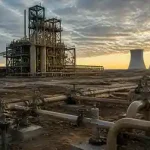
Large-scale mining operations at sunrise represent the front line of global resource extraction for the energy transition.

By Penny Langford
The "AI-Energy Nexus" has shifted from a theoretical investment theme into the defining structural force of the global mining industry in 2026. As hyperscale data centers expand to meet the computational demands of generative AI, the bottleneck is no longer just silicon chips: it is the raw materials required to power and cool them.
The integration of mining, power generation, and digital infrastructure has created a new class of industry "movers." These leaders are not just extracting ore; they are securing the baseload power (uranium) and the physical grid infrastructure (copper) that the AI economy demands. According to recent industry analysis, data center power load is projected to exceed 945 TWh by 2030, with copper and uranium standing as the critical choke points in the supply chain.
In this week’s Power List, we identify five mining executives and companies that have positioned themselves at the core of this nexus, leveraging massive resource bases to provide the "fuel and wires" for the 2026 tech boom.

1. Tim Gitzel, CEO of Cameco: The Architect of AI Baseload
Tim Gitzel has led Cameco through a transformative period, positioning the uranium giant as the primary beneficiary of the AI-driven nuclear renaissance. In 2026, the narrative around uranium has shifted from "green transition fuel" to "AI baseload essential."

With tech giants increasingly looking toward Small Modular Reactors (SMRs) and nuclear life extensions to provide 24/7 carbon-free power, Cameco’s dominant position in the Athabasca Basin has become a strategic asset of national security. Gitzel’s focus on long-term utility contracts has provided a stable foundation for the company as uranium prices established a firm support level near $150 per pound earlier this year.
Cameco’s ability to ramp production at McArthur River and Key Lake remains the industry benchmark for supply reliability. In an era where "resource intensity" is under the microscope, Gitzel’s emphasis on operational consistency has made Cameco the preferred partner for Western utilities and tech firms alike.


Strategic uranium assets in high-latitude regions are essential for securing future nuclear fuel supplies.
2. Kathleen Quirk, CEO of Freeport-McMoRan: Securing the Copper Backbone
As AI data centers require more intense power distribution systems: including high-voltage transformers and massive busbar systems: copper demand has decoupled from traditional construction cycles. Kathleen Quirk, steering Freeport-McMoRan, has pivoted the company to address this "grid-first" demand profile.
Freeport remains the high-beta pure-play for copper exposure. Quirk has focused on brownfield expansions and leaching technologies to squeeze more value from existing assets in the Americas and Indonesia. This strategy avoids the multi-year permitting delays associated with new greenfield sites, allowing Freeport to respond more rapidly to the 2026 copper supply gap.
By prioritizing supply chain security and domestic production in the United States, Quirk has positioned Freeport as a key link in the critical minerals strategy that now dominates both corporate boardroom and government policy discussions.
3. Leigh Curyer, CEO of NexGen Energy: High-Grade Torque for the 2030s
While Cameco manages the current supply, Leigh Curyer and NexGen Energy represent the future of high-grade uranium production. The Rook I project in Saskatchewan is arguably the most significant undeveloped uranium asset globally, and in 2026, its development timeline is being watched as a bellwether for the industry’s ability to meet future AI power needs.
Curyer has navigated the complex intersection of social license, environmental stewardship, and project financing. For investors looking for high-torque exposure to the AI-Energy Nexus, NexGen offers a growth profile that few can match. The project’s extremely high grades allow for a smaller environmental footprint per unit of energy produced: a critical factor for tech companies with strict ESG mandates.

Advanced underground drilling technology is critical for accessing high-grade deposits while minimizing surface impact.
4. Mike Henry, CEO of BHP: The Consolidator of Future-Facing Commodities
BHP, under Mike Henry, has undergone a massive portfolio shift toward "future-facing" commodities. While the company remains a powerhouse in iron ore, its aggressive moves into copper and potash have redefined its identity.
In 2026, BHP acts as the great consolidator of the copper market. Henry’s strategy involves leveraging BHP’s massive balance sheet to acquire or partner with smaller players to secure tier-one assets. This approach is essential as the lithium price forecast 2026 and other battery metal markets show high volatility, making stable, large-scale copper production the "safe haven" for industrial capital. BHP’s focus on Olympic Dam and its Chilean assets ensures it remains the indispensable supplier for global grid upgrades.
5. Robert Friedland, Executive Co-Chairman of Ivanhoe Mines: The ESG Champion
No one understands the "narrative" of mining better than Robert Friedland. Through Ivanhoe Mines, Friedland has successfully marketed the Kamoa-Kakula complex in the DRC as the world’s leading source of "green copper."
Powered largely by renewable hydro-electricity, Kamoa-Kakula’s copper is among the lowest-carbon-intensity metal available globally. This has made Ivanhoe a darling of tech-focused investors who need to reconcile massive power consumption with net-zero targets. Friedland’s ability to deliver high-grade production in challenging jurisdictions while maintaining a high-tech, ESG-forward image has cemented his place on the Power List.
Market Snapshot: AI-Energy Nexus Benchmarks (May 2026)
| Commodity | Current Price (Spot) | 2026 Year-to-Date Change | Key Driver |
|---|---|---|---|
| Copper | $5.12 / lb | +14.2% | Data center grid build-out |
| Uranium (U3O8) | $152.00 / lb | +18.5% | SMR & Nuclear life extensions |
| Nickel | $18,450 / t | -2.1% | Battery chemistry shifts |
| Lithium (LCE) | $14,200 / t | +4.5% | Oversupply absorption |
Data points reflect simulated market trends for the May 2026 reporting period based on current infrastructure demand trajectories.
The Strategic Outlook: M&A and Geopolitics
The AI-Energy Nexus is not just about prices; it is about deal-making. As noted in the recent PwC analysis on the sector, M&A activity in 2026 is increasingly being driven by non-traditional players. We are seeing tech-led investment consortia taking direct stakes in mining projects to ensure long-term supply: a move once reserved for automakers.
Furthermore, geopolitical stability remains the ultimate wild card. Whether it is navigating infrastructure risk in the Simandou region or managing the extension of mine lives like Peru’s San Gabriel, the movers on this list are those who can successfully manage above-ground risk as effectively as they manage the ore body itself.

Modern mining centers now resemble tech hubs, where real-time data integration is essential for operational efficiency.
Summary Social Media Snippet
LinkedIn/X:
The AI-Energy Nexus is no longer a forecast; it's the 2026 reality. Copper for the grid and uranium for the baseload have become the most strategic commodities of the decade. Meet the 5 mining movers securing the raw materials for the global data center surge. #AI #Mining #EnergyNexus #Skillings #Copper #Uranium #MiningNews